The Afterlives of Oratory: Entextualizing Gungthang Rinpoche’s Speech about the Death of the 10th Panchen Lama
Donyol Dondrup, Charlene Makley, and Paljor Tsering
བོད་མི་དམངས་ཀྱི་བདེ་སྡུག་གི་ཆེད་དུ་ང་ལ་ནག་ཉེས་དང་དཀའ་ངལ་ཅི་ཞིག་འཕྲད་ཀྱང་འགྱོད་པ་མེད།
Gungthang Tenpai Wangchuk[1]
In the early morning hours of January 28, 1989, an unimaginable catastrophe struck for many Tibetans living under Chinese Communist rule in Tibet, as well as for many in the Tibetan diaspora. The controversial yet beloved tenth Panchen Lama, Chökyi Gyaltsen (chos kyi rgyal mtshan, 1938–1989), second in the Geluk hierarchy of incarnate lamas only to the Dalai Lama, passed away suddenly at the young age of 51. The (in)famously outspoken lama had only recently been officially “rehabilitated” after spending a decade in prison for his unprecedented 1962 “70,000 Character Petition” to Chinese Communist Party (CCP) leaders, in which he had detailed Maoist atrocities in eastern Tibet.
In the winter of 1989, he had been visiting central Tibet to consecrate the rebuilt reliquary stupa housing the remains of the previous Panchen Lamas at his monastic seat of Tashilhunpo in Shigatse. That event had been the culmination of years of effort to replace and resacralize the remains of the lineage so defiled by the violence of Mao Zedong’s Cultural Revolution (1960s–1970s). Held on the auspicious fifteenth day of the lunar month, it should have been a culminating moment, the ripening of meritorious work by countless Tibetan lamas, monastics, and laypeople to realize the promise of yang dar, the post-Mao revitalization of Tibetan Buddhism, culture, and language that the tenth Panchen Lama had so fiercely advocated to cautious state officials in China’s new era of “reform and opening up,” beginning in the 1980s.[2]
Instead, in a staggering reversal, the Panchen Lama himself died in his sleep in his Tashilhunpo quarters just days after the lavish consecration ceremonies. News of his death stunned even his fierce opponents in Lhasa and abroad, and word traveled quickly across the Tibetan plateau. Some cried openly in the Lhasa streets,[3] while Arjia Rinpoche, one of the Panchen Lama’s closest disciples from Amdo’s Kumbum Monastery, recounted in his book that as he was rushing back to Tashilhunpo a few days later he saw roads lined with incense offering fires.[4] In the Panchen Lama’s home region of Amdo, where he was deeply revered, a dark fog of mourning settled over Tibetan communities as people struggled to make sense of this devastating turn of events. Murmured rumors grew louder that the Panchen Lama had actually been murdered, secretly poisoned by those who opposed his advocacy.
It was in those first few days of confusion and increasing menace that Tenpai Wangchuk (’jigs med bstan pa’i dbang phyug, 1926–2000), the Sixth Gungthang (gung thang) lama of the great Labrang Tashikhyil monastery in southeastern Amdo, arrived back in Labrang after his trip to Tashilhunpo for the Panchen Lama’s consecration ceremonies. Gungthang Rinpoché, one of the four “Golden Throne” incarnate lamas of Labrang, had traveled there with Labrang’s central lama, the Sixth Jamyang Shepa (’jam dbyangs bzhad pa ’jam dbyangs blo bzang ’jigs med thub bstan chos kyi nyi ma, b. 1948), who was Gungthang’s superior in the monastic hierarchy but his junior in years.[5] Gungthang had grown up with the Panchen Lama, and as fellow high incarnate lamas from Amdo, both he and Jamyang Shepa were part of the Panchen Lama’s inner circle in 1989. They participated in all public and private events leading up to the Tashilhunpo consecrations. Like Arjia Rinpoche, they too had been enroute home to Amdo when they received the news of the Panchen Lama’s death.
They quickly decided to split up. Jamyang Shepa would return in a few days to Tashilhunpo to represent Labrang, and Gungthang would immediately hurry back to bring the news to Labrang’s burgeoning monk assembly. With characteristic humility, Gungthang Rinpoché later said that Jamyang Shepa was trying to spare him the rigors of another trip up to Central Tibet. But there were other, more important reasons for the decision. As rumors that the Panchen Lama was murdered began to spread, these were highly unstable times in Sino-Tibetan relations.[6] By 1987, the Panchen Lama had parlayed his close relationship with some central Chinese leaders, and their aspirations for him to outshine the exiled Dalai Lama as a state-friendly, central authority over Tibetan affairs, to become perhaps the most powerful minority leader ever under CCP auspices.[7] Yet consternation grew among his opponents in the spring of 1987 when he famously upbraided central leaders about ongoing Chinese-Tibetan inequality amidst rapid economic development.[8]
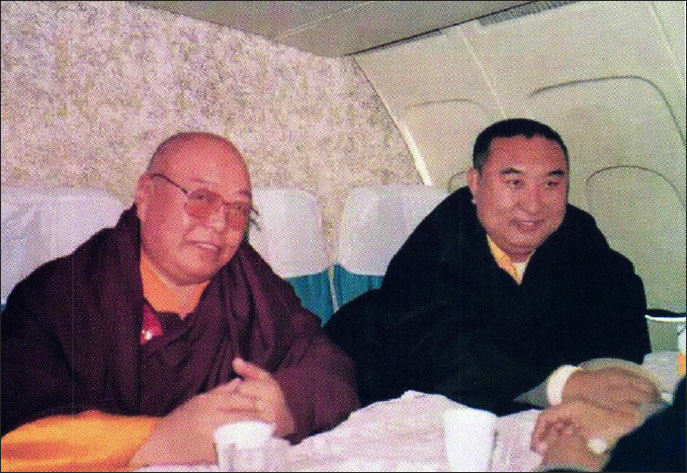
Figure 1. The Sixth Gungthang Rinpoché and the Tenth Panchen Lama fly together to Lhasa, c. 1985.
Meanwhile, just months after that speech, the first of what would become a series of protests by monks and nuns in Lhasa and then elsewhere erupted after the Dalai Lama presented his “Five-Point Peace Plan” stating that Tibet had been an independent country before the CCP arrived and calling for autonomous governance of Tibet within the PRC. The protests grew increasingly violent as police cracked down and tensions escalated. The Panchen Lama, incensed at evidence of police violence, was under great pressure to quell the unrest and thus was subject to criticism from all sides.[9] His sudden death in the midst of this geopolitical quagmire could not but have looked suspicious to many.
At Labrang, Gungthang Rinpoché was revered for his steadfast commitment to remaining a celibate monk during his twenty-one years of imprisonment (1958–1979), having been labeled a “feudal landlord” and a ringleader of anti-CCP rebellion in Amdo for refusing to take government positions, or to renounce Buddhism and the Dalai Lama.[10] After reforms, his vigorous post-Mao efforts to revitalize the monastery and support Tibetan uplift had elevated him to even higher reverence and prestige than the lay Jamyang Shepa.[11] The latter grew up during the Maoist years, was pressured to marry, and never studied in the great monasteries of Central Tibet like his predecessors. Gungthang was thus much better positioned than Jamyang Shepa to make some sense of the Panchen Lama’s passing to the Labrang assembly, so as to calm rising emotions and stave off any inclination monks there might have had to rise up in protest. Much was riding on the words and tone of voice he chose. Most importantly, he needed to convince the assembly that the Panchen Lama was not, in fact, murdered, but that he had died of a sudden heart attack, the result of the ripening of bad karma in an increasingly impure age. To pull that off, Gungthang needed to muster all the diplomatic skills he had honed over a long and storied career both before and after his two decades in Maoist prisons.[12]
The fifty-minute speech he delivered to the Labrang monastic community on January 31, 1989 thus had to do a lot of work. He needed the assembly to take his words to heart as they struggled to understand what they should do with losar, the lunar New Year fast approaching (Gannan prefecture officials had quickly announced a ban on mass losar activities in anticipation of unrest). As one of a handful of older, revered incarnate lamas from Amdo who had survived prison, Gungthang Rinpoché’s take on these devastating events would carry enormous weight. Even though he spent many more years in prison than did the Panchen Lama, the two lamas’ lives had intersected since they were young and their post-Mao lives followed parallel tracks.[13] Gungthang enjoyed a reputation as a good listener who would offer wise advice in soft tones; he did not share the Panchen Lama’s infamous penchant for angry outbursts. But both were known for their uncompromising advocacy for Tibetan autonomous governance and an agenda of revitalizing and modernizing Tibetan Buddhist monasticism under the leadership of lamas.
Gungthang had had more opportunities than the Panchen Lama to study the Geluk monastic curricula before his imprisonment, and he traveled widely across Labrang’s traditional territories, spending as much time with his patrons in pastoralist encampments as in more urban settings.[14] His estate at Labrang was thus the largest and wealthiest in the region.[15]
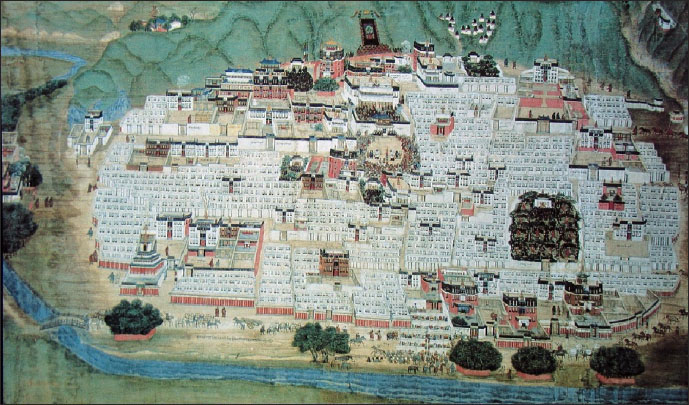
Figure 2. Nineteenth century painting of Labrang Monastery, Gungthang Rinpoché’s mansion and stupa on bottom left, courtesy of Himalayan Art Resources (HAR).
Unlike the Panchen Lama, Gungthang was qualified to offer the complex teachings of tantric Buddhist empowerments as a way to draw thousands of devotees together and thereby preserve endangered lineages of teachings. He famously insisted on giving massive Kalachakra empowerments across Amdo regions through the late 1950s, as Tibetan resistance to CCP reforms grew—until he was arrested in the military crackdowns of 1958.[16] When he addressed the Labrang assembly in 1989, he had just given his first post-Mao Kalachakra the year before, a huge affair up on the Amdo grasslands.[17]
As reforms slowly unfolded in the 1980s, Gungthang’s post-prison work in the Labrang region mirrored the Panchen Lama’s broader scale efforts. Argubly, Gungthang’s devotion to preserving the Dharma in the face of Communist encroachments later gave him the clout to successfully mediate multiple, festering grassland disputes among his pastoralist patrons. Unlike the Panchen Lama, who had to spend most of his time in Beijing, Gungthang was able to be there to mediate in person. Both lamas also toured extensively, offering blessings to patrons, giving teachings, meeting with and encouraging public school students, farmers, and workers, all the while receiving and redistributing patrons’ offerings to support Tibetan uplift.

Figure 3. Labrang Monastery in 1980. Courtesy of Dhondup T. Rekjong.
Like the Panchen Lama, Gungthang was given official state titles as a Buddhist cleric and he used those platforms to advocate for post-Mao Tibetan Buddhist revival.[18] At Labrang, he hosted the Panchen Lama’s 1980 and 1982 visits there, during which the Panchen Lama appointed him head of the Monastic Management Committee (Ch. siguanhui 寺管 会; Jamyang Shepa was made Honorary Head), making Labrang a model center of monastic revitalization in Amdo. Gungthang then spent the decade overseeing the rebuilding of the monastery, fundraising, recruiting monks, reclaiming its former lands in the valley, and replacing Buddha images, texts and temples looted and destroyed by villagers led by Red Guards during the Cultural Revolution.[19] So great was Gungthang’s divine clout as lama-protector that Tibetans in Labrang spoke of former local “activists” and collaborators who had violently exploited Maoist revolutionary fervor dying terrible deaths of unknown illnesses after reforms, all of which residents attributed to karmic retribution—and the wrath of Gungthang.[20]
Encountering the Afterlives of Gungthang Rinpoché’s Speech
In the early summer of 2018, my uncle Tsering sent me (Donyol Dondrup) an audio file on the Chinese social media app WeChat. “Hi, Donyol, find a quiet place and listen to this speech. It will bring tears to your eyes,” he said. Intrigued, I followed his suggestion and listened to Gungthang Rinpoché’s 1989 speech at Labrang on the untimely passing of the Tenth Panchen Lama. As I listened in a tranquil setting, I found myself transported back in time, picturing myself amidst the grieving crowd at Labrang. I was told by a few elder monks at Labrang monastery that it was a solemn scene, with some monks sobbing quietly and others murmuring prayers, united in a profound sense of loss and anger. In those moments, I felt strongly, Gungthang Rinpoché’s words provided solace and guidance, helping the monks at Labrang monastery navigate a world that had been shattered into inexplicable pieces.
That was how, thirty years after its performance, I entered into the ongoing, transmodal afterlives of Gungthang’s speech. Just like many of his spiritual songs that were reportedly still circulating in pirated forms after Gungthang’s death in 2000,[21] through my uncle, I learned that the 1989 speech, in audio form, had been circulating privately throughout the Labrang region for decades. Locals in the know made copies of the original cassette tape, lending it to others. When smartphones allowed for easy digitization, Labrang residents recorded the audio on their phones, ultimately uploading it for wider distribution to WeChat. When I finally had the chance to listen, I was deeply moved by Gungthang Rinpoché’s humble demeanor and compassionate composure as he addressed a mourning crowd. Instead of succumbing to the sadness that permeated the event, I felt compelled to transcribe his speech to preserve its significance. By so doing, I helped the speech begin a new media life as a written text. However, even as a native Amdo speaker, in my initial attempt at entextualizing it, I encountered difficulty understanding certain terms and phrases, which was compounded by unclear sections in the audio recording. Thus after I completed a preliminary transcription draft that summer, I sought assistance at Labrang monastery.
A relative of mine introduced me to Akhu Yeshé, a senior monk scholar at Labrang monastery.[22] Akhu Yeshé graciously offered to assist with transcribing and interpreting the difficult sections of the speech. He mentioned, “we monks truly appreciate this speech. We have listened to it many times.” He also pointed out that the speech was first recorded on a tape cassette, and emphasized that Gungthang Rinpoché delivered teachings in various forms. While Akhu Yeshé clarified numerous terms for me, he was slightly surprised, and perhaps amused, by some words and phrases in the speech that even he couldn’t fully comprehend. Akhu remarked, “I’ve listened to this speech countless times, and until now, I thought I understood everything!” We both shared a moment of laughter.
The Speech and its Significance
Gungthang’s speech to the Labrang assembly was a tour de force in artful Buddhist diplomacy, as much as a deeply compassionate expression of collective grief. It is unclear where it was delivered, but the scratchy cassette tape on which it was recorded by a monk disciple suggests it was indoors, perhaps in the soon to be completed Great Assembly Hall, which had inauspiciously burned in the mid-1980s after having survived the Cultural Revolution. Gungthang had presided over its reconstruction and was about to officially assume abbotship of the assembly.[23] He would have been seated on a raised throne above the rows of monks and lamas, and given how softly he speaks at times, the recorder must have been right next to him. Crucially, he strikes a humble persona, and positions himself to the gathered assembly as a quintessential Labrang local by speaking in the Amdo colloquial idioms and pronunciation characteristic of Labrang valley patois. In that voice, his speech is remarkably personal for a high incarnate lama speaking so publicly. He shares his own grief for his friend and teacher, reflects on the inevitable passing of himself and Jamyang Shepa, and holds up as a model for his heart-broken listeners his own ways of coping through Buddhist prayer, introspection, and meritorious work.
As a highly practiced orator, Gungthang Rinpoché seems to be speaking extemporaneously, with multiple asides. But his speech is in fact carefully organized. He begins and ends with summarizing explications of the reasons for the Panchen Lama’s death, and he expertly modulates his voice in speed and tone from slow, soft, and sad to louder and more adamant, only to conclude in the slow, soothing tones of reassurance. His main audience is of course the gathered monastic assembly, which at that time would have included lamas and official monks, but perhaps also unofficial monks.[24] Yet Gungthang knew full well that his speeches were usually recorded, transcribed, and circulated beyond the event,[25] and at that time cassette tapes of lamas’ teachings were coming into widespread popularity across Tibetan regions. Thus he must have had in mind a larger audience of Tibetan lay and monastic devotees across Labrang and Amdo.
For these Tibetan audiences, he carefully grapples with the awful ambiguities and karmic misfortune surrounding the sudden death of a revered incarnate lama. Incarnate lamas are supposed to be bodhisattvas who choose to transmigrate across multiple lives to benefit sentient beings. If the Panchen Lama was not murdered, then Gungthang must convince his Tibetan audience that he chose to leave at that time, for compassionate reasons that ordinary beings can not truly fathom. To this end, Gungthang shares a remarkable amount of detailed information about the events leading up to the Panchen Lama’s passing. This may well be the first public description of those events, even as central authorities sought to keep much of it secret. Many Tibetans to this day have not heard this account.[26]
Yet there was also another audience for this speech: state authorities. Gungthang knew that he and other lamas close to the Panchen Lama would be scrutinized by state officials at all levels for displays of their loyalty to the Chinese state in the wake of his death, especially since traditionally, the Dalai Lama is the only lama qualified to recognize the reincarnation of a Panchen Lama. Thus Gungthang’s diplomacy had to extend to the art of what the famous Amdo Tibetan comedian and writer Menla Kyap called “condensed meanings” (Tib. bsdus don), the ways Tibetans must find alternative idioms and modalities to imply things that are deemed politically sensitive to watchful authorities. As condensed meaning, Gungthang avoids any mention of the Panchen Lama’s increasingly embattled status for TAR and central CCP leaders, and uses his reassuring words to the monastic assembly to send a strong message to those state authorities: they should not renege on the policy promises they had made to the Panchen Lama to uphold constitutionally guaranteed Tibetan autonomous governance, to protect Tibetan Buddhism, and to support Tibetan cultural-linguistic and economic revitalization.
In this light, Gungthang’s January 1989 speech to the Labrang assembly was a first rehearsal for the fateful speeches he would give in Beijing a few months later. In the Labrang speech, and without mentioning the Dalai Lama, he consoles the assembly by insisting that the Panchen Lama would be quickly reborn and traditionally recognized by lamas. Their decision, he claims, would then be quickly confirmed by the central government. However, taking up the Tenth Panchen Lama’s legacy of straight talk, Gungthang used fewer condensed meanings in Beijing. As his close associate the Amdo lama Alak Tsayé Rinpoché recounted, Gungthang told a meeting of high lamas that if the Dalai Lama did not recognize the reincarnated Panchen Lama, the Tibetan people would not accept him. There could not be two Panchen Lamas.[27] Thus, even though Gungthang had worked hard to refute rumors that the Panchen Lama had been murdered, and thereby stave off escalating monk protests, central authorities never trusted Gungthang again. His movements were henceforth curtailed and he had to spend most of his time in Lanzhou, visiting Labrang only infrequently.
Dilemmas of Transcription and Translation
Right from the start, Akhu Yeshé and I (Donyol Dondrup) recognized the importance of transcribing the speech exactly as it was spoken, without making any modifications. When Charlene Makley and Paljor Tsering later carefully reviewed the transcription word by word, they too made a conscious effort to preserve the original speech. The main challenge we faced was how to retain, in both the transcription and the translation, an authentic sense of Gungthang Rinpoché’s unique Amdo expressions, as well as his humble tone, while also ensuring it would be intelligible to a wider Tibetan audience.
Contemporary Tibetan novelist Tsering Dondrup asks three questions of himself whenever he writes a story in Tibetan:[28] (1) If I write like this, will Tibetans in the three regions of Kham, Amdo, and U-Tsang understand it? (2) Does it read well? (3) Does it conform to Tibetan grammar? His main point is that as a writer, one should be acutely aware of the challenges of writing a story that does justice to how people speak in a particular region while also not alienating readers in other regions of Tibet. He argued that if our stories are not written in the language of a specific place and time, they cannot give a sense of reality and hence cannot serve as a mirror of those times and places. On the other hand, it’s better not to write something that most readers do not understand. How should we proceed then? Tsering Dondrup acknowledges that there is no standard way to do it. Instead, it’s essential to strive for a balance between the spoken and written Tibetan language as a creative and emergent work of art that relies on experience and wisdom.
We are impressed by Tsering Dondrup’s adept handling of Tibetan writing. Adapting his advice to oral performances, we think that in order to entextualize the spoken word, performative context is crucial in deciding the most suitable form of transcription, especially considering the intended audience for the speech. As mentioned above, Gungthang Rinpoché’s speech was primarily aimed at the gathered Labrang monks. He deliberately framed the speech as an informal conversation with them, immersing himself in his Labrang Amdo voice, thereby both demonstrating his solidarity and emphasizing his unique credibility with the monks as their mentor and local guardian.
During Donyol Dondrup’s visit to Labrang Monastery to consult about the transcription, some monks who identified as direct disciples of Gungthang Rinpoché, and thus as stewards of his collected works, expressed their interest in transcribing the speech themselves. Subsequently, they independently transcribed and published the speech before we completed our own transcription. To formally present their root lama’s speech, they elevated his speech by replacing the Amdo colloquial expressions with more standard and formal written language. Here, we emphasize that the Labrang monks’ transcription reflects a meaningful entextualization practice that holds deep significance for them. As such, their approach is an equally important transcription strategy that amplifies the historical and cultural significance of the speech.
However, our approach to transcription differs from their methods, not only because we think it is important to preserve Gungthang’s strategically colloquial Amdo voice, but also because formalizing spoken words can sometimes alter their meaning significantly. For instance, Gungthang opens his speech informally and with great delicacy, perhaps trying to soothe raw feelings by saying, “So everyone must be a bit sad” (ཐམས་ཅད་ཀྱི་ཐུགས་གཟིག་ཀེ་བདེ་གི་མེད་རྒྱུའོ་རེད). However, the Labrang monks chose to alter Gungthang’s statement to reflect instead how monks may actually have felt: “So everyone is feeling extreme grief and misery” (ཐམས་ཅད་ཀྱིས་ཐུགས་ལ་སྐྱོ་སྡུག་ཆེན་པོ་བྱད་གི་ཡོད་པ།). But that way does not allow us to appreciate how Gungthang was positioning himself from the outset as familiar and trustworthy, attempting to soothe monks as an intimate, paternal voice. As Tsering Dondrup pointed out, we were also mindful that it is better to write for larger Tibetan audiences. Therefore, we adopted standard written terms and grammar in many cases, and for some specific Amdo expressions not found in existing Tibetan dictionaries, we included footnotes referencing their written Tibetan counterparts. Finally, unlike the Labrang monks, we chose to preserve in our transcription the Chinese loanwords Gungthang used, and included the Chinese characters for reference. Such loanword usage was widespread in Labrang at the time and indicated the cultural-linguistic otherness of the changes CCP rule brought to the region. We hope that we have struck the balance that Tsering Dondrup calls for.
Ngũgĩ wa Thiong’o, in a discussion of language politics, emphasized the importance of retaining the musicality of language alongside its referential meaning.[29] Gungthang Rinpoché’s speech was truly impactful not only because of what he said, but also because of how he artfully expressed himself with humility and kindness at a time of collective crisis. Our transcription and translation aim to honor both the nonverbal aesthetic and referential meanings of Gungthang’s speech. The translation, for example, includes underlining to highlight places where Gungthang uses emphasis to make a point, and we offer a few notes in brackets indicating particular nonverbal moves he makes. Our entextualizations thereby present the speech first and foremost as oral performance and literature, one of a multitude of genres Gungthang communicated through, as evidenced in both his copious collected works and throughout his ritual career. Here, readers get a glimpse of his unique prowess as an orator above all.[30]
Coda
The ongoing afterlives of Gungthang Rinpoché’s 1989 speech to the Labrang assembly attest to its evolving significance in rapidly changing times. As the speech circulated on WeChat into the 2010s, it took on new audiences and new meanings as Tibetans mourned not only the loss of the tenth Panchen Lama, but also the increasingly stark erasure under Xi Jinping of his agenda for a Tibetan (Buddhist) modernity on Tibetan terms. I (Charlene) had the honor to meet Gungthang Rinpoché in the early 1990s, when he was vigorously attempting to carry on the Panchen Lama’s legacy. He had ambitious transnational plans for modernizing development projects and fundraising for Tibetan education.[31] To great fanfare, he completed the reconstruction of Labrang’s main assembly hall as well as his predecessor’s Great Liberation Stupa. And he gave his final Kalachakra empowerment, his largest ever, in 1994.
All that stopped however, after Gungthang Rinpoché, true to form, refused to follow most other high lamas in 1995 and publicly recognize the child chosen through the CCP-led process as the reincarnation of the tenth Panchen Lama. As such, he effectively refused to deny the child the Dalai Lama had previously chosen, merely stating that he hoped the two sides could come to an agreement. I (Charlene) heard many Tibetans in Labrang that year express their admiration for Gungthang’s temerity in face of intense political pressure. But there was a price to pay. His movements were further curtailed, he was stripped of his official titles, and his health began to decline rapidly.
Gungthang Rinpoché’s passing in 2000 was deeply mourned across Amdo, echoing the outpouring of sorrow, confusion and anger for his friend and teacher, the Panchen Lama (including rumors of murder).[32] Labrang friends told me (Charlene) of how his relics after cremation attested to his enlightened status as an emanation of Mañjuśrī.[33] And, just like for the Panchen Lama, one Tibetan friend insisted in 2002 that only Gungthang had had the clout to speak directly to Chinese authorities on behalf of Labrang. Now that he is gone, he said, there is little the monastery can do to stave off state interventions. “Now it’s all over,” he lamented. But the afterlives of both the tenth Panchen Lama and Gungthang Rinpoché, re-emerging in their multimodal forms, suggest that for Tibetans it is not at all over. In fact, in September 2023, Tenpai Wangchuk’s incarnation, the young Seventh Gungthang Rinpoché,[34] held his first Kalachakra empowerment in his hometown, Labrang’s traditional territory of Dzogé. To the consternation of local authorities, he drew devotees from across Tibetan regions in numbers that seemed to match, or even far surpass those of his predecessor.[35]

Figure 4. Attendees’ tents cover Dzogé grasslands at the Seventh Gungthang Rinpoché’s first Kalachakra empowerment, September 10–11, 2023. Photo circulated on Wechat.
Gungthang Tenpai Wangchuk’s speech to the monk assembly [at Labrang], January 31, 1989[36]
Precious Assembly, all old and young monks and teachers, who are all gathered here,[very very slowly, low pitch] today, Rinpoché [the sixth Jamyang Shepa] told me to come back here [from Tashilhunpo] to chat with all of you, the assembly. These days, due to karmic misfortune, a terrible catastrophe has happened to the Buddhism of us snowland Tibetans. We have lost the Panchen, the all-knowing one. So everyone must be a bit sad. [Rinpoché] told me to come up [to Labrang] and talk to you all,[37] to relate the news and to console the assembly. Here, I’ll give a short speech according to that order of his.
In general, at this time when Buddhism is in a very weak state, when the butter in the lamp of Buddhism is dwindling like water evaporating from a pond, these days, as Könchok Tenpai Drönmé said, “the Buddhadharma that most teachers hold is inglorious. Thus the protector deities become neglectful and the demon forces expand. I pray that the degeneration of this impure age be eradicated.”[38] This [loss of the Panchen Lama] is a clear sign of this impure age. Even though he was a great sage, and his activities benefited Buddhism and the happiness of sentient beings, yet it seems that those beneficial activities did not come at the right time.
[2] Alternatively, it seems that Buddhist sages, who care so much about the Buddhadharma and do incomparable things to benefit sentient beings, cannot achieve long life. If we look for the root cause of all that, it is a clear sign of the impure age. Otherwise, for all those great Buddhist sages, especially for example those like the Panchen Amitabha who achieved enlightenment a long time ago, the vajra body is not subject to birth and death. This is the way it is. However, from the perspective of ordinary phenomena, at a time when the karmic accumulations of sentient beings are diminishing, such events [as the Panchen Lama’s death] are inevitable.
For example, at that time [at Tashilhunpo], the Tashi Namgyal Ling was rebuilt, and it was amazing. In it, the reliquary stupas of the five incarnations of the Panchen, all-knowing one, were gathered together in one great reliquary stupa to the east of Tashilhunpo’s main offering shrine. As soon as [they] see it, the seed of liberation is sown in the karmic continua of sentient beings. It was rebuilt perfectly.
[3] There, the Panchen Lama conducted all [the proper rites] including, the consecration ritual called the Mandala of the Thirteen Deities of Yamantaka,[39] the Ngamé Jinsek,[40] as well as the Gelek Charbep consecration.[41] Everyone was ecstatically happy. Among the Tibetan spectators from all over, people said that there were famous lamas, leaders, and laypeople. There were also about twenty or thirty leaders from the province and from above [the central party and government]. Altogether, there were over one thousand guests. They all gathered together and [the Panchen Lama] gave a talk. Thinking back on that now, that was his last testament. If he were an ordinary person, it would be like an oral will.
[4] He gave a comprehensive speech for everyone gathered.[42] It was also a policy meeting. He gave a great speech, talking about policy issues, as well as about religious issues, addressing lamas from all traditions, including Sakya, Geluk, and Nyingma, as well as Jonang, Bon, and [unclear],[43] not speaking of regional interests like the three regions of eastern central [Tibet] and Tsang, or like they say, the “four rivers and six ranges,” but giving priority to the Buddhadharma. I heard that everything he said was transcribed so that they can publish and distribute it later. So you all will be able to see it.
Thinking back on these final activities [of the Panchen Lama], on the topic of Buddhism, he talked of three different kinds of things. As for the first, he addressed the lamas. He said, if a monastery has no lama, it is like the monastery has no head. So he made a request to the central authorities, and after much discussion, [5] the central authorities granted permission for [the Panchen Lama] to recognize the incarnations of all lamas from now on, as well as the authority to grant them monastic seats. [The central government] decided he was allowed to recognize lama incarnations. [The Panchen Lama] did everything he could for the Buddhadharma. This is his legacy for after he went to the Pure Land. When I consider this, it is due to the Panchen Lama’s great compassion that all lamas are allowed to reincarnate in order to preserve the Buddhadharma. Those were his final activities.
As for the issue of recognizing incarnations, whoever recognizes them and however they are recognized, as long as it is in line with the Panchen Lama’s own wishes, then the central government would not have any further concerns. From the time the Panchen Lama recognizes [an incarnation], they [the central government] would automatically agree to whatever monastic seat was granted. They said from now on no one other than the Panchen Lama was allowed to recognize [them].[44] That was the first topic he addressed.
[6] [His voice gets more adamant.] Moving on to the second topic [the Panchen Lama] addressed, it was mainly about developing Buddhism in Tibetan regions. As for that, the central authorities had made two major decisions. The first was that, whatever the sect, however one wanted to develop Buddhism, whoever wanted to increase the number of monks, from now on whoever wanted to build a new monastery or reopen a Buddhist site or build a temple or establish daily rules for monks, authority over all of that would be granted to the Panchen Lama. Secondly, the central authorities established a small guiding committee to take charge of developing Tibetan Buddhism, and they made the Panchen Lama the head of that group.[45] And on top of that, full authority [over that committee] would be put in his hands. That’s how they made two decisions.
The third topic [the Panchen Lama] talked about was mainly, as he has said before, “lamas and monk assemblies must think about the Buddhadharma. This is the impure age, and Buddhism is declining, thus if you are a learned geshé[46], [7] you should study hard, teach and read, and most importantly use wisdom to hold fast to [the Buddhadharma]. For lamas and incarnate lamas, all of your...these days you have achieved some political power and authority, but that is because you are lamas and not because, as they say, you have earned it through your own effort. You weren’t given that power because you are great. Because of that, you have to recognize who you are, and give more thought to the fact that you are the incarnation of a lama. Don’t let down the legacy of the great Buddhist sages [of your lineage].” On this, [the Panchen Lama] strongly urged them. That’s how it was.
Further, for any devotee, [he urged] them to respect themselves, and he said, “as for the saying ‘love your country, love your religion,’[47] you should respect your own religion, and follow its moral rules and discipline. Then on that foundation, [8] you can work and strive hard to do whatever religious activities, like chanting scriptures. These days wealth is abundant, everyone is lazy and can’t cope with suffering, thinking only of hedonistic pleasures. You [should be] different from that. If you ask what is the virtue of leaving home and becoming a monk, it is to benefit your future lives. Hold fast to the Buddhadharma. As for all sentient beings, accepting appropriate offerings from them, you should keep in your minds the ones who are deceased. Perfectly upholding your own lineage’s precepts, do not bring disgrace onto the Buddhadharma. You must hold fast to and protect the Buddhadharma.
You must raise up the Buddhadharma. You should closely follow your own moral discipline and practice. [The Panchen Lama] said, “To become a scholar, you must suffer.”[48] [He said that] you won’t be able to reside in comfort. For that reason, most importantly, as a Buddhist practitioner, you must cherish your own Buddhadharma. Don’t violate your own moral discipline. All practitioners must protect their moral discipline and listen carefully to their elders and respect their words. He spoke so much about these important issues.
[9] Having done that, that same day according to the Western calendar...on the 15th day of our [lunar calendar], they threw a party to celebrate the successful consecration of Tashi Namgyal.[49] The next day they held a meeting and talked a lot about policy.[50] I did not attend that event. As for what was said about policy, I did not hear much. But mainly, [he talked about] Tibetans needing to be united, to discuss affairs, to not indulge in banditry, stealing, and conniving, to not engage in quarrels. [He said that] all should respect the state’s rules, and “turn toward doing pure [lit. white] meritorious things and turn away from indulging in sinful [lit. black] things. Do not do anything sinful. Do meritorious things. Tame your own mind and practice. This is the essence of the Buddhadharma.”[51] If you have faith in the Buddhadharma, then do not do sinful things and engage in meritorious acts.
[10] That’s the most important thing he said about Buddhist affairs. The next day, [the Panchen Lama] held a meeting on religious affairs. This is what he talked about. Lamas from all regions, including Sakya, Geluk, and Nyingma lamas, many lamas offered opinions and ideas up to him. As for me, at the end, the Panchen Lama asked me to share mine. But I did not have a lot to say, and I told him, “if I need to share opinions with you, I will have time [later] at other meetings. Today I don’t want to waste everyone’s time. I just want to make a request.” The main gist of my request was: in this impure age when Buddhism is declining, and in these times, who will the Buddhadharma depend on but you?
[11] You are the protector and defender of us snowland Tibetans. Your longevity [lit: lotus feet] must remain firm. That was the main request I made. That was the first one. The second one was about the Great Protector, Rinpoché [the Dalai Lama]. [I told him,] we snowland Tibetans call you, “the two, the heavenly sun and moon,” and we use that metaphor of the sun and the moon to mean the victorious father and son [the Dalai Lama and Panchen Lama]. However these days, Rinpoché resides in another country, may he be able to quickly return. May you two, the father and son, the sun and the moon, unite. Further, may you two mutually agree, just like the mixture of milk and water. May you two act in mutual agreement such that you can address how to develop Buddhism and how to bring happiness to the snowland Tibetans. [12] Besides those two prayers, I did not share any opinions or ideas. The Panchen Lama was very pleased. That’s how it was.
Yet at that time, on the 17th [of the lunar month], Jamyang Shepa and I accompanied the Panchen Lama to worship and make offerings in the various temples of Tashilhunpo.[52] On the 18th in the afternoon we received the Panchen Lama’s blessing.[53] Then on the 19th, it was good for the Panchen Lama to rest.[54] He was extremely busy. He had to deal with all kinds of things, like religious matters, mundane affairs, Tibetan affairs, Buddhist affairs. In particular, as for Lhasa affairs, he took charge of offering a lot of wealth and managing some big projects.[55] If he were an ordinary person, [we would say] he was not getting proper meals in the day and not enough sleep at night.[56]
[13] He was extremely busy. [We told him], “take a rest, this morning just rest. We two won’t come to see you, we make this suggestion to you today.” We received his blessing and made prayers. Having done that, he was very pleased but did not say anything. He seemed extremely clear and healthy. Thus we were not worried and returned [to our quarters]. That was the situation.
Now, to get to the inside story of the causes of [his death] that day, when things take an unfortunate turn, when people’s merit is decreasing, disastrous events tend to continuously happen. At that time [the Panchen Lama’s] father [14] also became ill with a heart ailment.[57] The Chinese doctor kept saying it was very serious. So suddenly they were flying him in a helicopter to a hospital in Lhasa. That was harmful to [the Panchen Lama’s] state of mind. It was his own father. Coming as it did at the end of those auspicious events, and getting such a serious illness, it seemed that [the Panchen Lama] was a bit uneasy. On the day that we two arrived, a lama among those from Kumbum, Alak Chojé tsang’s car was driving a bit too fast [15] and turned over while trying to make a turn.[58] Chojé tsang was not badly injured. His face was cut somewhat by broken glass from the windows. Other than that he was not hurt. The nephew of the Panchen Lama’s teacher Gyayak tsang, who came as his assistant, broke his arms and legs. Because of that, someone reported this to the Panchen Lama. And people in his retinue quickly took another car to go [ask after them], [16] including the vice head of Tashilhunpo’s Monastery Management Committee (Ch. siguanhui 寺管 会), Lama Gyal Tsering. He was an excellent lama. [The Panchen Lama] sent him and the others to go ask whether or not Chojé tsang was hurt. That’s what happened.
When we first heard about this, people were saying it was someone from Labrang. Some central leaders in the Panchen Lama’s inner circle, when I met them later, said, “we thought it was one of you two Rinpochés!”[59] They were extremely concerned, and they seem to have reported this to the Panchen Lama. Thus the Panchen Lama was also very worried about this and sent the lama to ask about the accident.
[17] But when they were on their way back, the car was going a bit too fast and there was a truck in front of them that suddenly stopped. Their car went underneath [the truck] and thus the driver, the lama’s monk assistant, and the lama were all killed on the spot. Thus the Panchen Lama’s anxiety and upset were a bit extreme.
Due to these events, suddenly [he suffered] in Chinese what is called xinji gensai (心肌梗塞, a heart attack), the blood suddenly stopped flowing through his heart. That’s how it happened. He could not say anything and did not recognize himself or others. He stayed in that state for two days.
[18] We two [Jamyang Shepa and Gungthang] had gone to Lhasa, and then we returned from Lhasa. The following day, his body...he had taken that action [of passing away]. But the central leaders insisted that we not say anything about it. If we said something, these days Lhasa has been very complex.[60] At that time, that’s what they said, that it would not be good to say anything and it should be kept secret. They said that the central leaders had not heard yet. In the end, on the 29th [of January] we two bought a plane ticket to leave [for Chengdu]. When we arrived at the airport, several leaders there were secretly saying that the Panchen Lama was very ill [19] and that it was very serious. So the central government sent a plane with many doctors, around thirty people. But [they said] his body was so strong, that he was not like other people, and that we could relax. Whatever the case, as fate would have it, when we arrived down in Chengdu, that afternoon, the Panchen Lama, the all-knowing one, from the perspective of our ordinary senses, passed away.[61] In general, if we consider the [future prosperity] of Buddhism and Tibetan affairs, if we think about it, we used to have someone [for us] at the central level, [20] someone at the reins of the horse, an object of hope and protection, someone on whom [we] could rely to care about Tibetan affairs and Buddhism. But now, due to the decline in people’s karma and merit, things have not worked out.
As for our monastery [of Labrang], we have requested funds to rebuild the great assembly hall, and these days, as for the gold we need for the roof tiles, once I arrived in Lhasa, I talked it over with the Panchen Lama and he agreed to donate it. As for the decision, [21] he promised to give thirty-five kilograms[62] of gold—we had requested seventy kilograms. Out of what we had requested, [the state] said they will give only thirty kilograms, but the Panchen Lama, acting as mediator, negotiated fifty kilograms of gold. As for the remainder, he said there is no rush. If it is not enough, we will request more later. He dealt with the issue without my having to say anything. As for our monastery, the Panchen Lama first said that Tashilhunpo and Labrang Tashikhyil are absolutely the same to him. Secondly, ever since [time of] the two incarnations, Jamyang Shepa Jikmé Wangbo [22] and the Panchen Lama Yeshé Penden,[63] for all subsequent incarnations, their vows to each other never wavered, they served as each others’ lamas and students. Because of that, the Panchen Lama took this issue [of the gold for Labrang] very seriously for the current [incarnations]. That’s how it was.
But despite that, we two lamas [Gungthang and Jamyang Shepa] feel extremely hopeless. Nonetheless, our hopelessness does not benefit anything. From the perspective of mundane affairs and ordinary senses, he [the Panchen Lama] took this action [of passing away], but the essential reality is that once he has taught all those with the karma to receive his teaching, and he arrives in the Pure Land, I hope that he will quickly return in his reincarnation. There’s nothing else to do but console oneself in one’s own mind.
[23] Now my view is that Jamyang Shepa is relatively healthy, but he does have several ailments. Because of that, I told him he should not have too much regret. Whatever is the case, there’s nothing else we can do, and it is very important for you to have a long life. I said this to him again and again. We two lamas discussed this, and we thought we need to go back [to Lhasa]. From my perspective, the Panchen Lama cared deeply about this monastery [Labrang]. I would never think otherwise.
Reflecting on this, the lineages of incarnations have acted as each others’ lamas and students, then [24] we two should go back to Tashilhunpo to represent Tashikhyil. However, Jamyang Shepa said that you are much older, you saw many difficulties on this past trip, and you should protect your health. He said he would be worried about me and suggested I not go. He said he would represent both of us, as well as the monastery. He would go and I should return to the monastery and console the monk assembly and help everyone to calm down their minds. You should deal with monastic affairs like organizing the funerary rites. He said if he went back up [to Tashilhunpo], he would talk to them and they would have no complaints or jealousies [towards Labrang]. So he went back.
[25] That is the main reason I came back to Labrang. Now that I am here, you all have sought prophecies from lamas such as Alak Takyu tsang, Alak Rapten Gyatso tsang, and whatever the Monastery Management Committee prepared for the funeral aligns well with our [Jamyang Shepa’s and my] ideas.
Besides that, we received a telegram from up there [Tashilhunpo, confirming the Panchen Lama’s death]. Whatever has happened, what’s done is done. [The Panchen Lama] is not an ordinary person, he is a great sage.
[26] It would be impossible that he would not reincarnate in the future. It would be impossible that he would give up on Buddhism, or that he would not have pity on sentient beings. Thus, he must have been thinking from a broader perspective all along. And looking at his activities these days, nowadays he has had so many duties to deal with in the central government, and he usually resided in Beijing. If he were an ordinary tulku, and according to ordinary perception, if he passed away, if he had died in Beijing, it would have been extremely difficult to take his remains back up [to Tashilhunpo], and the offerings and funeral rites would have been very hard to carry out. Instead, he was able to go to Tashilhunpo and passed away in his own monastic seat, in his own bedroom.
[27] This makes building a reliquary stupa for him very convenient.[64] Looking at all that, he definitely needed to do that deliberately. That’s how it was. So given this, precious assembly, do not be too sad. Mainly, for the funeral, just as we have funeral customs for ordinary people, we here at Tashikhyil should do that. Later, when we report up to [Tashilhunpo], we will need something to say. We will need something to report to all the patrons who are so deeply involved with the two monasteries. When that time comes, each college should conduct self-initiation rites. I especially appreciate that everyone has [28] taken on the burdens and difficulties of that chanting practice the best they can. This is a sign of your pure faith; it is a sign of your unstained vows. This will make us two lamas [Jamyang Shepa and Gungthang], and [especially] Jamyang Shepa himself very happy in the future. I will report this [to him] later when I go down [to Chengdu]. [Your practice] will be extremely good for us two in all respects, as well as for the accumulation of your own merit. It will also be essential to the future auspiciousness of Tashikhyil. Since you all have done this, taking on the burden, it is good for both the monastery and for oneself. This is a great expansion of merit.
As for the funeral rites, after today, they are coming to a close. We need to finish them. Tomorrow is the last day left. The day after tomorrow [29] is Losar. Whatever is the case, besides needing to chant the forty-nine days [of the funeral rites], or the rites after a full year has lapsed,[65] and the prayers for a quick reincarnation and the recitation of the history of the monastery, engaging in funeral rites for two years would be inauspicious. Since we did the funeral rites up to Losar, it would be okay to stop after that. Besides that, as for covering up the monastery’s golden roof ornament,[66] the thirteenth Dalai Lama, Thupten Gyatso, passed away when I was nine years old. At that time, it was said that that was the traditional practice, to wrap up the ornament by winding [a cloth] around it.
When the last incarnation of Panchen Amitābha, Thupten Chökyi Nyima,[67] [30] passed away, he had given a huge Kalachakra empowerment to us here at Tashikhyil; we are all his students. Thus the great fifth Jamyang Shepa sent down an order that [the roof ornament] should be covered. So this time, we two lamas [Gungthang and Jamyang Shepa] sent down here a telegram saying that the roof ornament should be covered. This is a traditional custom. Further, this practice represents the wishes of all snowland Tibetans; it is a sign of mourning. So that’s why the [fifth Jamyang Shepa] ordered the roof ornament wrapped. From today on, we can take it off.
[31] Yet our own lama, Rinpoché, the all-knowing one [the sixth Jamyang Shepa] is healthy and is doing very well. [Wrapping the roof ornament] is thus for the general good of the Dharma. From the perspective of our own monastery, it doesn’t matter if we wrap it or not.[68] Whatever the case, we wrapped it for the general good of the Dharma. From today on, we’ll take it down. This will show that we have come to the end [of mourning rites].
As for Losar, yesterday I heard that the Gannan prefecture government distributed a document banning Losar. I find that such an effort to ban Losar is unnecessary. What Losar truly is [32] is a chance to have a little party, make some noise, play together, and have a good time. This time, we two lamas are thinking that for our monastic community, for you all personally if you have some good food, then enjoy it, if you want to visit each others’ homes, then that is just fine to go. There’s no need for special or extreme forms of mourning during the New Year. [Unintelligible][69] It is fine to celebrate it at your own home. Besides that, in general, [33] jumping onto the stage, laughing loudly, playing basketball, if someone saw this they would think all monks are happy, and that would not be good. In general, right now snowland Tibetans are all suffering. Thus it would be good not to collectively make a big noise and set off fireworks, laugh loudly and play basketball. The sixth Jamyang Shepa Rinpoché said this, for everyone to keep this in mind. So if personally, in your own home you have good food, it’s okay to eat and drink, and if you want to go around and visit others, there’s nothing wrong with that.
[34] The most fundamental thing, the best thing to do, is to make offerings. Thus it is extremely important to follow the Panchen Lama’s teachings. So you should all be thinking, what did the Panchen Lama teach? Which teachings did he give? Have that in your minds. It’s what I have told you earlier today, during his final activities, [the Panchen Lama gave advice] for ordinary people, which was like his final testament. As I just reported to all of you, it was about monastic affairs. Thus, monastic communities should remain united and hold fast to discipline.
[35] On this, we should definitely preserve the monastic teachings and practices that the great lamas of old established. That itself is the offering of practice, just like back then. On that foundation, you will accumulate merit. You should then dedicate [that merit] to swiftly fufilling the supreme, pure wishes of the great and pure sages [to help all sentient beings]. Even more than that, during this time of the weakening of the Buddhadharma, you should definitely offer the prayers for the quick return of the omniscient Panchen in an inconceivably supreme incarnation. If you do the prayers well, you do not even need to do a funeral ceremony. You should all keep this in mind.
[36] [Pause, shift topic. His voice begins to get stronger, faster, higher pitch] When I think about it, in general, the Buddhadharma is facing a great crisis. Now from the things the [Panchen Lama] did in the past few years, [we see] he was very concerned about [this situation]. He petitioned in various ways again and again and again to the central authorities, until finally they came to a decision: as for deciding on incarnations and increasing the number of monks in monasteries, and as for [monastic leadership retaining control over] monastic discipline and the monastic system, all of that the central authorities won’t change what they agreed.
[37] So, at the end, [the Panchen Lama] also said that—we all were chatting at the end—and finally, when he reached the conclusion [of the meeting] he said, “everyone should not worry. The Buddhadharma will not perish easily,[70] it is not only [under] the Chinese Communist Party, but nowadays [even] in the Soviet Union the Buddhadharma has been reviving. The revival of the Buddhadharma (yang dar) will come. All of you should not be worried.” That’s what he said at the very conclusion of his speech. So you all [the Labrang assembly] should also not be worried. The Buddhadharma... the omniscient Panchen’s passing away [38] is of course a crisis for the Buddhadharma in general. So [people] are thinking, now that this has happened, won’t the Buddhadharma disappear? Will it never again be like it was in the past, or even nowadays, like the past few years? There is no need to think like that. The central authorities’ policies cannot change like that. They won’t change. Keep all that in mind. [pause] Now the main thing, according to what I just said, is to “love your own country, and love your own religion.” As for affairs related to loving your country and loving your religion, most importantly, when you don’t uphold [the rules] of your own religion, [39] who else will uphold them? So uphold the rules of the precious monastic community. Everyone should take great care of this exceptional monastic assembly [at Labrang].
[Switching topics] So then, when I went to Lhasa and visited all the monasteries,[71] and compared to those same monasteries a few years ago, this year they have greatly improved, and the number of monks is increasing, and the lives of the monks have also gotten better, the temples have been rebuilt, and the statues and scriptures have been restored. Even the oldest ones have been extensively reconstructed.
[40] In particular, this year, in the coming new year, next year they decided to begin rebuilding Ganden monastery. If [the Panchen Lama] were still alive...for this, the central authorities had given a one-time grant of 100 million yuan. That’s what they had given, so [they had planned] to reconstruct all the monasteries of Lhasa. Because they have done that, the Buddhadharma will be okay, and you should be happy. You should all keep that in mind. But still, for us, for myself, when I am saying the prayers, [41] [I pray that] if any of the great sages have obstacles...I’m already sixty years old, and it is said that “in your sixties, you have to lean on something, in your seventies, you’re already on your pillow;” I’m already there, so if I’m going to die, it’s appropriate. So I’m always praying that the obstacles of younger lamas will come to me instead. Thus, whoever it is, even ordinary lay people, good people, good children, those admired ones, they die, while often those whom we think it would be appropriate to die, they don’t. This is a pattern.
[42] [He is speaking more smoothly, still informally.] So those like myself, like the elders, to take this monastery as an example, other than a few lamas like us, they say there are very few left. We are very few, except for a few they are all gone. But still, I don’t want to die because I pray not to die if can bring even a little benefit to the Buddhadharma. But if I can’t benefit the Buddhadharma, not even a little bit, or if I bring harm to it, then it would be good to die very quickly. This is how I think. But still no matter what, I should serve the monastic assembly well.
[43] When we finish the Great Assembly Hall, next year or the year after, we will hold a great celebration.[72] At that time, the highest lamas from Lhasa said that, when you finish your assembly hall, we will all come. So once they have stated their plans, there’s no way to tell them not to come. Rinpoché [the sixth Jamyang Shepa] also warned that, “however, if we want to have the celebration and we don’t have a lot of funds, we won’t be able to do it.” That’s how it is. I really hope to see it happen. Then, Gungthang Tsang’s...[44, speeding up, enthusiastic] Könchok Tenpé Drönmé’s Great Liberation Stupawas destroyed.[73] I also want to find a way to rebuild it. I don’t want to die until those things [are done]. However, [if I am able to serve the precious assembly,][74] I will do my utmost to help, to serve the Omniscient Lama [Jamyang Shepa]. I will be the servant of Rinpoché. I will do whatever I can to do that. The existence of a [lama] called Gungthang tsang in Amdo is due to my [previous] prayers to help expand the teachings of the omniscient Jamyang Shepa.
[45] That’s how I prayed. Now I am not that kind of incarnate lama, but it seems that I have previously accumulated that merit. This time when I went to Lhasa [for the consecration ceremonies], I thought about this. Unexpectedly, when we visited the top of the Potala, and when we all wanted to take a photo together, I said to Jamyang Shepa that it is because of my accumulated merit and the wishes of the previous [Gungthang] lama incarnations, that someone like me became enthroned [as an incarnate lama].
[46] If we look at it this way, when they said let’s take a picture together, we were all there, all of Jamyang Shepa’s closest disciples, all of whom he held very, very dearly in his heart. There was his disciple Ngawang Tashi, Setsang was also there, as well as the incarnation of Dewa Losang Döndrup, Dewa tsang. There was also the abbot of Ganden Monastery, Gendun Phuntsok, the one whom Jamyang Shepa had scolded, saying “I came to this world for your sake!” He is the eldest disciple. The next one in line [as most senior disciple] was me.
[47] [I said that] If we think about it, this is all due to our accumulated merit. That’s how I was thinking. So what I’m saying is that the whole assembly should keep this prayer in your hearts. The second thing I brought up [to Jamyang Shepa at the Potala] was that this was the first time he had visited Lhasa. [I said that] since it’s your first time, I have visited Lhasa several times before; this is my third time. Even though I said I wouldn’t go again, I still came three times. I have become a bit familiar with the people and the place. [48] So from beginning to the end [of the trip], I’ll do my utmost to help you. So as his servant, I went with his entourage [to Lhasa], along with other incarnate lamas. Further, [I said] it would be very good for all of us if the Omniscient One [Jamyang Shepa] went to Central Tibet, and if the whole journey was successful and auspicious. And it was very successful. He stayed very healthy and none of us got sick, and we peacefully visited the great three monasteries, Sera, Ganden and Drepung, and their various surrounding pilgrimage sites like [49] Sakya, Nyetang, and Shalu. We made pilgrimage to all those sites. As for Sera, Ganden and Drepung monasteries, the monks and lamas gave us an exceptional welcome. Wherever we went to worship, all the monk officials of the various monasteries would guide us and invite us to tea offerings. In particular, when we made pilgrimage to Gomang, almost all the monks from Ganden and Drepung came to pay respects, and they all received blessings.[75] On top of that, Jamyang Shepa also gave funds to the monastery as a whole.[76] Having given such excellent funds, at Gomang they asked him to give a speech, which he did.
[50] At other places, at other monasteries, because he doesn’t speak Lhasa dialect very well, he asked, “please speak for me briefly.”[77] As I wanted to take on that work for him, whatever it was, I was very willing to speak according to his teachings. Because of that, for the most part I was the one who talked. Jamyang Shepa did speak on his own to the Gomang assembly, I didn’t say a word. I had spoken with Rapten Gyatso about holding a debate in the debate yard when we went to Drepung to create good auspices.[78] So previously, he had prepared by [51] bringing a couple geshés from here, as well as a few other scholars. I thus told Rapten Gyatso that it would be auspicious if we would hold a debate at Gomang. So he said yes, please do come here, we have prepared for it. However, Jamyang Shepa said he would not come to the assembly, so I acted as his representative and led the debate. Thus when we held the debate, Gomang monks came from all over, and by the end almost all of the monks from Drepung were there.
[52, increasingly animated] So having done that, the debate was extremely engaged, people were saying, “I’ll get up [and debate], you get up [and debate]!” In every aspect, both sides did amazingly well. At the end, we all did telké[79] together, and after that, the monks chanted the ten barma prayer,[80] as well as the prayers for the long life of the Buddhadharma. As for all this, [I heard] that all the Drepung monks were extremely happy. I was told this later when lamas like Tsador tsang and other high lamas had visited Drepung and returned. After that, I also spoke with Alak Yonten Gyatso tsang,[81] [53] [and I told him that] when Rinpoché [Jamyang Shepa] goes back [to Labrang], it would be good if the Labrang assembly offered a long life ceremony [for him]. [Adds an aside to the Labrang assembly:] In my own view, it seemed like that was not Jamyang Shepa’s idea, because he had been very pleased to visit the debate yard, so wasn’t that how he was thinking?[82] Hence when he gave his speech to the Gomang assembly, [he said], “no matter what, Tashikhyil is the son monastery, and Gomang is the mother monastery. For both son and mother monasteries, their mutual religious faith and worldly love is great. [54] This is why it has been so auspicious for us to have made pilgrimage here. I am very happy. Your preparations and hosting have been elaborate and elegant, I thank you for that.” After that, he did not say much more. He himself said, “I don’t have much else to say, but I hope you will keep in mind and pray that the seventh Jamyang Shepa will be able to come and attend the assemblies of this monastery. That’s all I have to say.” That’s how it ended. So in my view, [55] Rinpoché went to the assembly and having experienced that, he thought that it would be very auspicious if [his incarnation] came to study in the assembly at that monastery. I think he was saying that he wished to take his next rebirth in that way. However, he is still very young. There is no need to be talking about the seventh incarnation. So do keep all this in mind, and I think that in the future it will be good for us to do a long life ceremony [for him]. [56] That’s my way of thinking. So after that...[changes topics] Jamyang Shepa said, “it would too difficult for me to give individual funds to monks of all the assemblies because this kind of individual offering is not something that becomes a Dharma practice.[83] If we go out into the mundane world, people will say that Jamyang Shepa did not give suitable funds, and they’ll say [he] gave too little. If I gave a lot, all those material goods are for the monastery, and we shouldn’t give carelessly. It’s for the monastery and selfish offerings are a hindrance.[84] Those material goods were raised from the common people from all over, so anyway, [57] there will be a lot of gossip. As for me, if I am to accumulate merit, if I am not to get caught up in the eight worldly concerns, I don’t want the reputation of giving individual funds to monks.”[85] So he did not distribute individual funds to monks, except at Tashilhunpo. Instead, he gave excellent general funds to each assembly, making all the assemblies very happy. Ultimately, they said they would return to Tashilhunpo later, and told me the day before yesterday that they have safely returned to Chengdu. [58] I received their phone call. So today...yesterday if they were able to buy plane..train tickets, they will arrive in Lanzhou [today]. They are thinking that after the New Year, on the 4th, 5th or 6th, they will go back up [to Lhasa]. That’s the plan. I served as the advance party to offer condolences to the assembly. At the same time, I came to see how your preparations are going. So as for myself, [I would say that] the Omniscent One’s [Jamyang Shepa’s] trip up [to Lhasa] this time was very successful; all of the desired tasks were completed.
[59] [Summing up, speeds up, takes on soothing tones as he goes] In general, such a disaster has come to Buddhism, it has come, but no matter what, the central government...[inserts a comment] the reincarnation of [the Panchen Lama] will very quickly be born. When he is reborn, the lamas will all gather and discuss it, and the very day that they decide on the final candidate, the central government will also approve it. They said they will recognize that incarnation of the Panchen Rinpoché. They have already decided all this. Recently, the Chinese have greatly praised [the Panchen Lama]. There has never before been such a minority leader. [60] They say it is historically unprecedented for them to have raised [such an official] up so high like that. So such [status] for him is pretty good for us monks. Yet, in recent years in Lhasa all the monks feel...[he stops and explains] so many bad things are happening[86] that people from places like Sichuan, the Chinese are saying hateful things when they see a monk. They say things like, “[monks] do nothing but make trouble,” they are constantly saying things like, “if we don’t crack down on them...”. It’s coming to the point where it is hard to be seen as a monk. So when we traveled to Lhasa last time, if you say you’re a monk, [61] they won’t give you a room. In the old days, if you said you were a monk, they would most definitely give you a room. Now if you say you’re a monk, they are reluctant to give you a room. That’s what it has come to. Because of this, [the Chinese] up [in Lhasa] do have some [biased] views toward monks and lamas. So now, the fact that they greatly praise [the Panchen Lama] in this way, that they raise him up like that, is in general an auspicious sign for the Buddhadharma. It’s a very good thing. It is also beneficial to lamas and monks. So [ 62] as the Panchen Rinpoché said, all of you should be at ease. The Buddhadharma will not perish easily. There will not be a repeat of the great disasters to the Buddhadharma as happened in the past few years. Everyone should be at ease. It is okay if you feel happy for the New Year, [pauses] and from now on, you all should see if you can keep in mind making offerings as your lamas request. And during the Great Prayer Festival, do offer many prayers. Since the Panchen Rinpoché is the Protector and Final Refuge of the Buddhadharma, pray that his incarnation will quickly return. I thank you very much in advance for offering all of those prayers.
[63] I came [back] up immediately to tell the monk assembly about the situation. As soon as I finish reporting, I’ll go back tomorrow [to Lanzhou].[87] If I stayed here, I really wouldn’t feel like celebrating the New Year. In my deepest heart, to be honest, to speak as a mundane person, when the omniscent Panchen was young, when he was twelve, Jamyang Shepa and I got to know him. We all became very close friends. For him, we were like very intimate family members. On the other hand, to think generally about Buddhism [64] and us Snowland Tibetans, today [we] have lost him like this, and I also feel very sad. I have absolutely no great desire to celebrate the New Year.[88] But if I say I won’t celebrate the New Year and stay here, then it will be as if I don’t have a choice. According to custom, there are things like people will come to worship and when they come, they’ll probably bring things like sweets. So even though one doesn’t celebrate the New Year, it will be as if one has. So I’m thinking that I will go back [to Lanzhou] this time. That’s the way I’m thinking. So I will go back tomorrow morning. Today, on my part, [65, inserts an aside] I myself accumulated merit. When the Panchen Lama was performing the consecration ritual [for the rebuilt reliquary stupa of the previous Panchen Lamas at Tashilhunpo], the omniscient Panchen took the auspicious moment in the monastery and with him I received the self-initiation ritual. Together we also made burnt offerings and did all the self-empowerments, so I was fortunate to carry out these rituals with him. [Back to his original point] So for my part, today, I completed the self-empowerment prayers as mourning [for him] like we had done [together]. Once I finish speaking to the precious assembly, my goal for coming here will be fulfilled. Everyone should keep this in mind. What is of utmost importance is [66] most generally, the Buddhadharma, and most particularly, the well-being of all sentient beings. This depends on the Buddhadharma; it is the source of all benefit and happiness. [The most important thing] is the Buddhadharma. Disseminating the Buddhadharma depends on the Sangha community. So you all should, while upholding all the precepts, practice the threefold trainings and study the three types of scripture.[89] Whatever you do, you should strive hard in them. I don’t have much else to say other than what I’ve said. So everyone should keep this in mind. There is absolutely no benefit at all in feeling agitated. Rather than get agitated, you should recite your own scriptures well, and offer your prayers well. That will be good no matter what. Do keep this in mind. I have nothing else to say.
གུང་ཐང་བསྟན་པའི་དབང་ཕྱུག་གིས་གྲྭ་མང་ལ་གནང་བའི་གསུང་བཤད།
(1989)
[1] ད་དེ་རིང་གྲྭ་ཚང་རིན་པོ་ཆེ། གྲྭ་རྒན་གཞོན་དགེ་བའི་བཤེས་གཉེན་ཐམས་ཅད་པོ་ལྷན་གཅིག་ལ་འཛོམས་ས་པོ། རིན་པོ་ཆེ་ཡིས་ང་ཕྱིར་ར་སོང་ང་། གྲྭ་ཚང་ཚོ་ཁ་བརྡ་རེ་བྱོས། དེ་རིང་གནང་ཀ་དུས་དབང་གིས་འུ་ཚོ་བོད་ཁ་བ་ཅན་སངས་རྒྱས་ཀྱི་བསྟན་པ་ཆགས་སྒོ་ཆེན་པོ་ཡོང། པཎ་ཆེན་ཐམས་ཅད་མཁྱེན་པ་འུ་ཚོར་མ་དབང་ནི་རེད། དེ་ན་ཐམས་ཅད་ཀྱི་ཐུགས་གཟིག་ཀེ[90]་བདེ་གི་མེད་རྒྱུའོ་རེད། ང་ཕྱིར་ར་ཡོང་ནས་གྲྭ་ཚང་ལ་སེམས་གསོ་ཟེར་ན་འདྲ་གི གནས་ཚུལ་ཞུས་རེ་ཟེར་ན་འདྲ་གི ཞལ་བརྡ་ཞིག་བྱོས་གསུང་གི དེའི་གསུང་ལྟར་གི་དེ་རིང་གྲྭ་ཚང་རིན་པོ་ཆེ་ཁ་བརྡ་ཕྲན་ཚགས་རེ་བྱ་རྒྱུ། སྤྱིར་ན་སངས་རྒྱས་ཀྱི་བསྟན་པ་ཉག་ཕྲ་བའི་དུས་སངས་རྒྱས་ཀྱི་བསྟན་པ་སྣུམ་ཟད་ཀྱི་མར་མེ་ཟག་བྱེད་ཀྱི་རྫིང་བུ། དེ་རིང་གནང་ཀ་དཀོན་མཆོག་བསྟན་པའི་སྒྲོན་མེས་ཀྱང་བསྟན་འཛིན་ཕལ་ཆེར་བསྟན་པའི་དབུ་འཕང་སྨད།།བསྟན་སྲུང་གཡེལ་བས་བདུད་ཀྱི་དཔུང་ཚོགས་དར།། དུས་ངན་སྙིགས་མའི་རྒུད་པ་བསལ་དུ་གསོལ།། དུས་ངན་སྙིགས་མའི་རང་རྟགས་རེད། སྐྱེས་བུ་དམ་པ་ཞིག་ཡིན་ན་ར་མཛད་པ་ར་སངས་རྒྱས་ཀྱི་བསྟན་པ་ཕན་ཐོགས། སེམས་ཅན་གྱི་བདེ་སྐྱིད་ལ་ཕན་ཐོགས་པའི་བྱ་བ་མཛད་རྒྱུར། དུས་དང་བསྐལ་བ་མེད་ནི་འདྲ་འདྲ། ཡང་ན་བསྟན་འཛིན་གྱི་སྐྱེས་བུ་དམ་པ་ཚོ་་་ [2 (1:56)] སངས་རྒྱས་ཀྱི་བསྟན་པ་འདི་ལ་ཐུགས་ཁུར་ཆེ་བཞེས་རེ་གནང་། སེམས་ཅན་གྱི་འགྲོ་དོན་དཔག་དུ་མེད་པ་མཛད་བཞིན་པ་ཚོ། སྐུ་ཚེ་རིང་མི་ཐུབ་ནི་འདྲ་འདྲ། དེ་ཚོ་ཐམས་ཅད་པོ་ཕར་དེད་ནས་སོང་ན། དུས་སྙིགས་མའི་རྟགས་ཡིན་ནོ་མ་གཏོགས། བསྟན་འཛིན་གྱི་སྐྱེས་བུ་དམ་པ་འདི་ཚོ་ཐམས་ཅད་ལ། ལྷག་པར་དུ་པཎ་ཆེན་སྣང་བ་མཐའ་ཡས་ལྟ་བུ་ཞིག་ལ་མཚོན་ན། སྔོན་བསྐལ་བ་དཔགས་དུ་མེད་པའི་སྔ་རོལ་ནས་མངོན་པར་རྫོགས་པར་སངས་རྒྱས་ཟིན་ན་རྡོ་རྗེ་སྐུ་ལ་སྐྱེས་འཆི་མེད་གི་མོད། ཡིན་ནའང་ཐུན་མོང་སྣང་ཚུལ་ལ། སེམས་ཅན་གྱི་ལས་ཟད་པའི་ཐད་ཚོད[91]་། མཛད་པ་དེའི་མོ་གཟིག[92]་མ་མཛད་ཐབས་མེད་རེད། ད་ད་དུས་གཟོ་ཡིན་ན་ར། པཎ་ཆེན་ཐམས་ཅད་མཁྱེན་པ་སྐུ་ཕྲེང་ལྔ་གི་སྐུ་གདུང་ལྷན་གཅིག་ལ་བསྡུས། སྐུ་གདུང་མཆོད་རྟེན་ཆེན་པོ་གཟིག་བཀྲ་ཤིས་ལྷུན་པོ་མཆོད་ཁང་ཤར་བཀྲ་ཤིས་རྣམ་རྒྱལ་གླིང་གསར་བཞེང་མཛད་ནས། ཅིག་ཡ་མཚར་པ། མཐོང་བ་ཙམ་གྱིས་སེམས་ཅན་གྱི་རྒྱུད་ལ་་་ [3 (3:01)] ཐར་བའི་ས་བོན་བསྐྲུན་ནི། དེའི་མོ་ཡང་དག་པ་གཟིག་བཞེངས། དེའི་སྟེང་གི་ཁོང་རིག་གིས་ཡིན་ན་ར། རབ་ཏུ་གནས་པའི་ཆོ་ག་གཟིག་མཛད། དཔལ་རྡོ་རྗེ་འཇིགས་བྱེད་ལྷ་བཅུ་གསུམ་མའི་དཀྱིལ་འཁོར་བདག་འཇུག་གཟོ་བྱས། རྔ་མས་སྦྱིན་སྲེག་འབུལ། ཪབ་གནས་དགེ་ལེགས་ཆར་འབེབས་གཟིགས། ད་དུང་ཚང་མ་གནང་ནས། ཧ་ཅང་ཐམས་ཅད་ལ་དགའ་དགའ་བསོ་བསོ་བྱས། ཕྱོགས་ཡས་མས་ཀྱི་ད་བོད་ཁ་བ་ཅན་ལ། བླ་མ་མཚོན་ན། དཔོན་པོ་མཚོན་ན། མྱི་མཚོན་ན། བོད་ཁ་བ་ཅན་ན་ཅིག་ཡོད་ནོ་ཟེར་གོ་གི ད་ཞིང་ཆེན་གྱི། ཧྲིན་ཅུའི་གན་པུའུ (省级干部)་ཡན་ཆད་ཀྱི་གཟོ། ཕན་ཆེར་མི་མགོ་ཉི་ཤུ་སུམ་བཅུ་བུད། ཕར་ཚུར་གཉིས་ཀ་མགྲོན་པོ་ཕལ་ཆེར་སྟོང་གཟིག་ར་ཁན་ལྷག་གཟོ་ཡོད་ནོ་འདི་མོ་རེད། འདི་ཐམས་ཅད་པོ་འཚོགས་ནས་དེའི་སྟེང་གི་ཞལ་བརྡ་གཟོ་གནངས། ད་དེང་སང་འདང་བརྒྱབ་ན་ཐ་མའི་ཞལ་འཆམ་རེད། མི་གཟོ་ཡིན་ན་ར་ད་ཁ་འཆམ་འདྲ་འདྲོ། ཕལ་ཆེར་ཐམས་ཅད་པོ་ [4 (4:11)] རྒྱ་བྱིངས་རྒྱས་པ་གནང་། ཆབ་སྲིད་ཀྱི་སྟེང་གི་ཚོགས་འདུ་འཚོགས། དེ་ཆབ་སྲིད་ཀྱི་བྱ་བ་ཆོས་ལུགས་ཀྱི་སྟེང་གི་བླ་མ་རྣམ་པ། ས་དགེ་རྙིང་གསུམ་ཇོ་བོན་ཏོག་གསུམ་གྲུབ་མཐའ་རིས་མེད་ཀྱི་བླ་མ་ཚོ་ཡོད་ཡོད་པོ། ད་མདོ་དབུས་གཙང་གསུམ་ཟེར་རྒྱུ། ཆུ་བཞི་སྒང་དྲུག་ཟེར་རྒྱུ་མེད་པར་ད་ཡོད་གི་དེ་ཚོ་ཐམས་ཅད་ལ། སངས་རྒྱས་ཀྱི་བསྟན་པ་འདིའི་དོན་དག་ལ་ཞལ་བརྡ་རྒྱ་ཆེན་པོ་ཞིག་གནང། འདིའི་གནང་ནོ་ཞལ་གསུང་གཟོ་ཐམས་ཅད་དཔར་བཀོད་ལས། འོར་གི་འཕྲོ་བཀྲམ་མ་ཟེར། འདི་ཟེར་གོ་གི འོར་གི་གཟོ་ཁྱེད་རྣམ་པས་ར་གཟིགས་རྒྱོ་རེད། འདིའི་མཛད་པའི་མཐའ་མ་དེ་འདང་བརྒྱབ་བས་སོང་ན་ར། ཆོས་ལུགས་ཀྱི་སྟེང་གི་གསུང་རྒྱུ་སྣ་ཀ་གསུམ་གསུང་གོ་གི སྣ་ཀ་གཅིག་ལ་བླ་མ་རྣམ་པ་ཚོ་ཡིན་ན་ར། དགོན་པ་ཞིག་ཡིན་ན་བླ་མ་ཞིག་མེད་ན་དགོན་པ་དེ་མགོ་མེད་ནི་འདྲ་འདྲ་ཞིག་རེད། དེ་བས་ཁོང་རིག་རིག་གིས་ར། ཀྲུང་དབྱང་ལ་ཡར་ལ་སྙན་ཞུ་འབུལ། གྲོས་མོལ་བསྡུར་གསུམ་བྱས་ནས་ཀྲུང་དབྱང་གིས་ར་ཆོག་མཆན་བཀོད་ནས་དེང་ཕྱིན་ཆད་བླ་མ་ཚོ་་་
[5 (5:23)] ཐམས་ཅད་ཀྱི་སྤྲུལ་སྐུ་ཐུགས་ཐག་གཅོད་རྒྱུ་ཡིན། གདན་ས་བཀོད་རྒྱུ་ཡིན། དེ་བཀོད་ན་ཆོག་ནོ། སྤྲུལ་སྐུ་ཐུགས་ཐག་བཅད་ན་ཆོག་ནོ་དེ་ཐག་བཅད། དེ་ར་ཁོང་རིག་གིས་ཅི་ཡིན་ན་ར་དགོངས་པ་རྫོགས་ནས་དག་པའི་ཞིང་ལ་ཕེབས་རྒྱུའི་ཐད་ཚོད་ཤུལ་ལ། ཅི་ཡིན་ན་ར། སངས་རྒྱས་ཀྱི་བསྟན་པའི་དོན་དག་ལ་བླ་མ་སྤྲུལ་སྐུ་ཚོ་ཐམས་ཅད་ལ་ར་བཀོད་ཆོག་ནོ་ཡོད་ནོ། དེ་ར་ཁོང་རིག་གི་བཀའ་དྲིན་རེད། མཐའ་མའི་མཛད་པ་རེད། སྤྲུལ་སྐུ་ཚོའི་དོན་དག་ཐག་གཅོད་རྒྱོ་ཡིན་ན་ཀྲུང་དབྱང་གིས་ཐག་བཅད་ནོ་ཡིན་ན་ད། སྤྲུལ་སྐུ་གང་ཐག་གཅོད་ན། ཅི་ལྟར་ཐག་བཅད་ན་ཐམས་ཅད་པོ། པཎ་ཆེན་ཐམས་ཅད་མཁྱེན་པ་ཁོང་རིག་གི་རང་གི་ཐུགས་མདུན་ནང་བཞེས་བྱས་བཏང་ན། ཀྲུང་དབྱང་ལ་འོར་གི་བསམ་འཆར་མེད་ཟེར་ནོ། དེ་ནས་ཁོང་རིག་གི་ཐུགས་ཐག་བཅད་ནི་ཞིག་ཡིན་དུས་གི་ནས་བཟུང་སྟེ། ཀྲུང་དབྱང་གིས་ར། བླ་མ་ར་སྤྲུལ་སྐུ་ཐོག་གོ་ས་ཅི་ཞིག་ཡོད་ན། ཁོ་ཚོས་རང་བཞིན་གྱིས་ཁས་ལེན་ན་ཟེར་ནོ། ཕྱིན་ཆད་ཀྱི་གཞན་པ་གཟིག་གིས་ཐག་གཅོད་མི་ཆོག་ཟེར་འདྲ་འདྲའི། དེའི་མོ་ཐག་བཅད་ཡོད་གི དེ་ཕྱོགས་གཅིག་རེད། [6 (6:33)] དེའི་ཕྱོགས་གཉིས་ཀྱི་སོང་ན། ད་གཙོ་བོ་འུ་ཚོ་བོད་ཀྱི་ས་ཆ་དར་ནོ་གི སངས་རྒྱས་ཀྱི་བསྟན་པ་འདི་གྲུབ་མཐའ་གང་ཡིན་ར་འདྲ་གི་འདི་དབང་ཆ་འདི་ཐམས་ཅད་པོ། ཆོས་ལུགས་ཅི་ལྟར་དར་དགོས་ན། གྲྭ་བ་གཟིག་ཇེ་མང་ལ་གཏོང་དགོས་ན། ཕྱིན་ཆད་ཀྱི་དགོན་པ་སོ་མ་ཞིག་གི་ཆོས་སྒོ་འབྱེད་དགོས་ན། ལྷ་ཁང་གསེར་ཁང་གཟིག་ཡིན་ན། གྲྭ་བ་གཟིག་གི་ཕེབས་སྲོལ་བཞུགས་སྟངས་གཟིག་ཡིན་ན། ཆ་ཐམས་ཅད་པོ་དེའི་དབང་ཆ་པཎ་ཆེན་རིན་པོ་ཆེ་ལ་འབུལ་ནི་ཡིན་ཟེར་ནས། ཀྲུང་དབྱང་གིས་ད་ཅི་ཡིན་ན་ར་བོད་ལ་དར་བའི་ཆོས་ལུགས་ཀྱི་འགོ་འདྲེན་ཚོགས་ཆུང་ཞིག་བཙུགས་ནས་དེའི་འགོ་འདྲེན་ཁོང་རིག་བཞུགས་རྒྱོ་བྱས་ནས། ཕན་ཆད་ཀྱི་ཁོང་རིག་གི་ཕྱག་ལ་དབང་ཆ་ཡོད་ནོ་བྱས་ནས། དེ་བྱས་ནས་ཐག་དེ་མོ་གཉིས་བཅད་ཡོད་གི གསུམ་ན་ཁོང་རིག་གིས གཙོ་བོ་གསུང་རྒྱོ་ཅི་རེད་ཟེར་ན། ད་སྔོན་གྱི་གསུང་ནོ་ལྟར་རེད། བླ་མ་གྲྭ་ཚང་གཟིག་ཡིན་ན། སངས་རྒྱས་ཀྱི་བསྟན་པ་འདི་ཐུགས་ལ་དགོངས་དགོས་ནོ། དུས་སྙིགས་མ་ཡིན་ནོ། བསྟན་པ་ཉམས་དམའ་ནོ། འདི་གི་སྟབས་གི་དགེ་བའི་བཤེས་གཉེན་གཟིག་ཡིན་ན། བསླབ་པ་་་ [7 (7:39)] སློབ་གཉེར་གནང་རྒྱོ། འཛིན་བསྐྱོར་སྦྱངས་བྱས་ནས། དཔེ་ཁྲིད་དཔེ་གཟིགས་བྱས་ནས། མ་ཁ་ཤེས་རབ་ཀྱི་སྒོ་ནས་སངས་རྒྱས་ཀྱི་བསྟན་པ་འདི་འཛིན་རྒྱོ[93]། བླ་མ་རྣམ་པ་གཟོ་སྤྲུལ་སྐུ་གཟོ་ཡིན་ན་ར། ཁྱོད་ཚོ་ཕ་གི་དེ་རིང་གནང་ཀ་ཆབ་སྲིད་ཀྱི་དབང་ཆ་གཟིག་ར་གོ་ས་ཐོབ་བྱེད་གོ ཁྱོད་བླ་མ་གཟིག་ཡིན་པས་ཐོབ་ནི་རེད་མ་གཏོགས། དེ་མིན་གྱི་ཁྱོད་དེ་ན་བུ་སྐྱེས[94]། ངར་དགོས་ཅིག་ངར་རེ་ཟེར་རྒྱུ་གཟིག ཁྱོད་ལག་ལ་དབང་ཆ་དེ་ར་གོ་ས་དེ་བཞག་ནི་མ་རེད་ཟེར་ནོ། དེ་ཡིན་ན། ཪང་གིས་རང་ཉིད་ངོས་ཟིན་གི་བཞག་ནས། ཪང་རང་གི་བླ་མ་གཟིག་གི་སྤྲུལ་སྐུ་ཡིན་ནོ་འདི་ལ་འདང་གཟིག་བརྒྱབ་ནས། བླ་མ་ར་ཡན་གི་སྐྱེས་བུ་དམ་པ་གོང་མ་གཟོའི་སྐུ་ཞབས་ལ་ཐུ་གུ་མ་འདྲེན[95]་ཞེས་དེའི་སྟེང་ལ་གཟིག་ཀེ་རེ་བཀའ་བཙན་སེ་རེ་གནང་ནོ། དེའི་མོ་རེད། ཚུན་ཆད་ཀྱི་གཙོ་བོ་ད་ཆོས་ལུགས་པ་ཡིན་ན་ར། ཪང་གིས་རང་གེ་རྩིས་མཐོང་བྱས། ད་རྒྱལ་གཅེས་ཆོས་གཅེས་ཟེར་ན། ཪང་གི་ཆོས་ལུགས་འདི་རང་གིས་རྩིས་སྐྱོང་བྱས་ན། འགྲིག་ལམ་ཀུན་སྤྱོད་བརྩི་དགོས་ནོ། སོང་བ་གཞིར་་་ [8 (8:42)] བཞག་གི་སྟེང་གི ཅི་ཡིན་ན། མདོ་སྔགས་མཆད་གཉེན་གྱི་བྱ་བ་གང་ཡིན་ན་ར། ཤུ་རེ་བྱས་ནས། འབད་པ་བྱེད་དགོ་ནོ། དེང་སང་གི་དུས་རྒྱུ་ནོམ་པ་ཆེ་ནོ། ཐམས་ཅད་ཀྱིས་ཚེགས་མི་འཐེག་ནོ། སྡུག་འདག་མི་ཐུབ་ནོ། སྐྱིད་རྒྱག་བསམ་ནོ། དེའི་མོ་མ་ལས་ཟེར་ནོ། ཁྱིམ་ནས་ཁྱིམ་མེད་པར་རབ་ཏུ་བྱུང་བའི་དགེ་བ་ཅི་རེད་ཟེར་ན། ཁྱེད་ཚོ་ཚེ་ཕྱི་མ་ཕན་ཆད་ཀྱི་དོན་རེད། སངས་རྒྱས་ཀྱི་བསྟན་པ་གཟུང་། མ་སེམས་ཅན་གྱི། ཅི་ཡིན་ན་ར། དཀོར་ཟས་བག་ཆགས་གཟིག་བླངས་ན་ར།འདི་གཟོ[96]་ཤི་བོ་ཐམས་ཅད་པོ་ཐུགས་ལ་འཛིན་དགོས་རྒྱུ་རེད་མོ། དེ་ཡིན་ན་ར། ཪང་རང་གི་རང་རྒྱུད་ཀྱི་བསླབ་ཁྲིམས་རྣམ་པར་དག་པར་སྲུང་བའི་སྒོ་ནས། སངས་རྒྱས་ཀྱི་བསྟན་པ་འདིའི་ཞབས་འདྲེན་མི་བྱེད་ལ། སངས་རྒྱས་ཀྱི་བསྟན་པ་འདི་འཛིན་སྐྱོང་གཟིག་བྱས། སངས་རྒྱས་ཀྱི་བསྟན་པ་འདི་ཡར་ལ་སྐྱོར་ནས། ཪང་གི་སྟེང་གི་སྒྲིག་ལམ་ཀུན་སྤྱོད་གཟོ་རྩིས། མཁས་བ་སློབ་པའི་དུས་ན་སྡུག་བདེ་མོ་སྐྱིད་པོ་གི་ཡོང་ནི་མ་རེད་ཟེར་ནོ། དེའི་རྒྱུ་མཚན་གྱི་སྟེང་གི་གཙོ་ཆེན་གཙོ་བོ་ཆོས་ལུགས་པ་ཞིག་ཡིན་ཕྱིན་ཆད། ཪང་གི་སངས་རྒྱས་ཀྱི་བསྟན་པ་འདི་གཅེས་སྤྲོས་བྱས་ནས། ཪང་གི་སྒྲིག་ཞིག་མི་ཉན་ཟེར་ནོ། བླ་མ་ལས་སྣ་གཟིག་ཡིན་ན། ཪང་གི་སྒྲིག་ཁྲིམས་སྲུང་དགོས་ནོ། ལོ་ལོན་གཟིག་གི་ཁ་ལེན་དགོས་ནོ། ཚིག་བརྩི་དགོས་ནོ། རྒྱུ་མཚན་དེ་ཧོན་བརྡ་གཟིག་གསུང་གི་་་ [9 (9:55)] དེའི་མོ་བྱས་ནས། དེའི་ཉིན་དཀར་ད་ཚེས་ཉི་ཤུ། ཡང་ལུའི་(阳历) གི འུ་ཚོའི་རྩིས་ཀྱི་ཚེས་བཅོ་ལྔའི་ཉི་མ། ཅི་ཡིན་ན་ར། མཆོད་ཁང་བཀྲ་ཤིས་རྣམ་རྒྱལ་རབ་གནས་སྒྲུབ་བས་དགའ་སྟོན་གནང་ནི་རེད། དེའི་ཕྱི་ཉིན་དཀར་ཅན་པོ་དེ་ཚོགས་འདུ་འཚོགས་ནས་ཆབ་སྲིད་ཀྱི་བྱ་བ་བཀའ་མང་ང་གནང་ཐལ། དེའི་ཉི་མ་ང་འགྲོ་རྒྱུ་མ་སོང་། ཆབ་སྲིད་ཀྱི་སྟེང་ནས། ཅི་གསུང་ནོ་ངས་དེ་འདྲ་མ་གོ་ར། ད་གཙོ་བོ་གཅིག་རེད། བོད་འདི་ཁ་འཆམས་རྒྱོ། གྲོས་འགྲུབ་རྒྱོ། ཇག་རྐུས་ཁྲམ་གསུམ་མི་བྱེད་རྒྱོ། མཁོན་འཛིང་རེ་མི་བྱེད་རྒྱོ། ཐམས་ཅད་པོ་རྒྱལ་ཁབ་ཀྱི་སྒྲིག་ལམ་བརྩི། དཀར་བོ་དགེ་བའི་ཕྱོགས་ལ་ཁ་འཁོར། ནག་པོ་སྡིག་པའི་ཕྱོགས་ལ་རྒྱབ་སྟོན། སྡིག་པ་ཅི་ཡང་མི་བྱ་ཞིང་། དགེ་བ་ཕུན་སུམ་ཚོགས་པར་ཤོག ཪང་གི་རྒྱུད་ནི་ཡོངས་སུ་འདུལ། འདི་ནི་སངས་རྒྱས་བསྟན་པ་ཡིན་གསུངས་། དེ་རང་རང་གཟོ། སངས་རྒྱས་ཀྱི་བསྟན་པ་དད་པ་ཡོད་ཕྱིན་ཆད། སྡིག་པ་མ་བྱེད། དགེ་བ་སྒྲུབ་ཟེར་ནོ་རྩ་བ། གཙོ་བོ་འདྲ་འདྲོ་་་ [(11:02)] དེ་ཡིན། དེའི་ཕྱི་ཉིན་དཀར་ཆོས་ལུགས་ཀྱི་བྱ་བའི་ཚོགས་འདུ་འཚོགས་ནོ། ཁོང་རིག་གིས་གསུང་ནོ་འདི་རེད། དེ་ཕྱོགས་ཡས་མས་ཀྱི་བླ་མ་ཚོ། ས་དགེ་རྙིང་གསུམ། བླ་མ་གཟོ་མང་པོ་གིས་ར། བསམ་འཆར་འདྲ་འདི་མོ་ཡར་ལ་ཡར་ཞུས་འབུལ་ཐལ། དེ་རང་རང་ཡིན་ན། ཁོང་རིག་གིས་དེའི་རྔ་མ་ཁྱོས་ར་ཅིག་ཤོད་གསུང་གི ད་ཅང་བཤད་རྒྱུ་དེའི་ཉིན་དཀར་སེམས་ལ་ཅང་། ཅང་ཨ་ཐུར་གི་ཤར་དང་རྒྱུ་ར་མེད་གི ངས་ཁོང་ཚང་ང་ར་དེ་ཞུས་ནས། ད་སྐད་ཆ་གཟིག་བསམ་འཆར་གཟིག་བཤད་ནས། ཅིག་བཤད་དགོས་ན་ང་བཤད་ཁོམ་ད་རུང་གཟིག་ཀེ་རེ་ཡོད་གི འོར་གི་ཚོགས་འདུ་ར་དི་མོ་རེ་བཤད་ས་ཡོད་གི དེ་རིང་སྡེ་བ་འདིའི་དུས་ཚོད་ངས་གཏོང་ཟད་ལ་མི་གཏོང་། ངས་སྐྱབས་འཇུག་གཟིག་ཞུས་ནི་ཡིན། སྐྱབས་འཇུག་གི་གཙོ་བོ་ཅི་ཡིན་ཟེར་ན། དེ་རིང་གནང་ཀ། སངས་རྒྱས་ཀྱི་བསྟན་པ་ཉག་ཕྲ་ནོ་འདིའི་སྐབས་འདིར་སངས་རྒྱས་ཀྱི་བསྟན་པ་སུ་ལ་རག་ལས་ཡོད་ན། ཁྱེད་ལ་་་ [11 (11:56)] རག་ལས་ཡོད་ནི་རེད། ཁྱེད་ནི་ངའི་ཐམས་ཅད། བོད་ཁ་བ་ཅན་གྱི་མགོན་སྐྱབས་ར་དཔུང་གཉེན་ན་སྐུ་ཚེ་ཞབས་པལ་བརྟན་རྒྱོ་འདི་ད། ངས་གཙོ་བོ་སྐྱབས་འཇུག་ཞུ་རྒྱོ་འདི་ཡིན་ཞུས་ནས། སྐྱབས་འཇུག་གཅིག་ཡིན། གཉིས་ན། སྐྱབས་མགོན་རྒྱལ་བ་རིན་པོ་ཆེ་ཡིན་ན་ར་། ད་ངེད་ཚོའི་བོད་ཁ་བ་ཅན་ན། ནམ་མཁའི་ཉི་ཟླ་གཉིས་ཀ་ཟེར་ནས། ཉི་ཟླ་གཉིས་ཀ་དཔེ་འཇོག་ས་བོ་རྒྱལ་བ་ཡབ་སྲས་གཉིས་ཀ་རེད། དེ་ཡིན་ན་ར་དེ་རིང་གནང་ཀ། རྒྱལ་བ་རིན་པོ་ཆེ། རྒྱལ་ཁབ་གཞན་ན་བཞུགས་ཡོད་ནོ་གན། མྱུར་བ་མྱུར་དུ་ཕྱིར་ར་ཅིག་བྱོན་ཐུབ་ནས། ཁྱེད་རྣམ་པ་གཉིས་ཀ ཡབ་སྲས་ཉི་ཟླ་ཟུང་འབྲེལ་ཞིག་ཡོང་། དེའི་སྟེང་གི་རྣམ་པ་གཉིས་ཀ ཐུགས་མཐུན་པོ། ཆུ་དང་འོ་མའི་འབྲེལ་བ་ཞིག་ཡོང་། དེ་ལ་བརྟེན་ནས་སངས་རྒྱས་ཀྱི་བསྟན་པ་འདི་ཅི་ལྟར་སྤེལ་དགོས་ན། བོད་ཁ་བ་ཅན་གྱི་བདེ་སྐྱིད་འདི་ཅི་ལྟར་ལས་དགོས་ན། རྣམ་པ་གཉིས་ཀ་ཐུགས་མཐུན་གྱི་སྒོ་ནས། བྱ་བ་ཞིག་ [12 (12:47)] ལས་རྒྱོ་སྐྱབས་འཇུག ངས་སྐྱབས་འཇུག་འདི་གཉིས་ཀ་མ་གཏོགས་འོར་གི་བསམ་འཆར་གཅིག་ར་མ་བཤད། ཁོང་རིག་ར་ཐུགས་དགྱེས་དགྱེས་གནང་གི དེ་གནས་ཚུལ་དེ་མོ་གཟིག་ཡིན། ད་ཡིན་ན་ར་དེ་དུས་ཐད་ཚོད་། ངའི་དཔོན་གཡོག་གཉིས་ཀ། རིན་པོ་ཆེ་ཚང་ལ། ངའི་དཔོན་གཡོག་གཉིས་ཀ། བཅུ་བདུན་གྱི་ཉི་མ་གྲྭ་ཚང་ལ་བསྐོལ་འདུག་བྱས། བཀྲ་ཤིས་ལྷུན་པོ། དགའ་སྟོན་རྟེན་འབྲེལ། བསྐོལ་འདུག་བྱས། ངེད་དཔོན་གཡོག་ཚོ་མཆོད་མཇལ་འདྲ་བྱས། བཅོ་བརྒྱད་ཀྱི་ཉི་མ། སྐུ་མདུན་ན་ཕྱི་དྲོ་ཅིག་མཇལ། ད་ཅི་ཡིན་ན་ར། བཅུ་དགུའི་ཉི་མ་གཟོ་སྐུ་མ་གཟིག་བླངས་ན་སྲ་གི ད་ཧོན་རྡ་སྐུ་ཚེགས་ཆེ་གི ཆོས་ཀྱི་བྱ་བ། འཇིག་རྟེན་གྱི་བྱ་བ། བོད་གངས་ཅན་གྱི་བྱ་བ། སངས་རྒྱས་ཀྱི་བསྟན་པའི་བྱ་བ། ཁྱད་པར་དུ་ལྷ་ས་གཟོའི་དོན་དག་ཡིན་ན། ད་ཁོང་ཚང་གི་རྒྱུ་ནོམས་པའི་སྟེང་གི་ཡིན་ན། ཆ་ཐམས་ཅད་ཀྱི་བྱ་བའི་རྒྱ་ཆེ་སོང་ནི་རེད། དེ་ཡིན་ན་ཐམས་ཅད་པོ་ཁོང་རིག་གི་འདི་ལས་དགོས་གི དེ་ཡིན་ན་བ་གི ད་འཇིག་རྟེན་གྱི་མི་གཟོ་ཡིན་ན། ཉིན་དཀར་གྱི་ལྟོ་དང་ནུབ་མོ་གི་གཉིད་བྱས་ནས་ཆད་བསྡད་་་[13(14:04)] ཁོང་ཚང་གི་སྐུ་ཚེགས་ཧོན་གི་ཆེ་གི་སྐུ་མ་གཟིག་གནོང་། ད་ནང་མོ་ངལ་གསོས་ནས། ང་དཔོན་གཡོག་གཉིས་ཀ་མི་ཡོང་། དེ་རིང་དགོངས་པ་ཞུས་ནི་ཟེར་ནས། དེ་ནས་མཇལ་ཁ་གཟོ་ཞུས། སྐྱབས་འཇུག་གཟོ་ཞུས། དེའི་མོ་བྱས་ན་ར། ཐུག་དགྱེས་དགྱེས་གནང་ནས་ཅང་ར་གསུང་རྒྱོ་མ་གསུང་ཐལ། སྐུ་གཟུགས་གཟོ་ར་ཧོན་གི་དྭངས་གི་བདེ་གི ད་སེམས་གཟོ་བདེ་མོ་བྱས་ནས་ངའི་དཔོན་གཡོག་ཚོ་ཕྱིར་ར་ཡོང་ནོ། གནས་ཚུལ་དེ་མོ་གཟིག་ཡིན། ད་སྣང་ཚུལ་ལྟར་ར་སོང་ན། རྐྱེན་འདྲ་འདྲོ་དེའི་ཉིན་དཀར་ཅིག་བྱ་བ་ར་ལས་ལམ་མ་མ་སོང་ང་ཡོད་དུས། སེམས་ཅན་གྱི་བསོད་ནམས་ཟད་ནས་འགྲོ་གོ་དུས། ཆགས་སྒོ་ཉམས་ང་ཧུག་གི[97]་རྒྱུན་མི་ཆད་ལ་བྱུང་རྒྱུ་གཟིག་རེད། སྐབས་དེར་ཁོང་རིག་གི་ཡབ་གཞི་་་ [14 (14:44)] ཨར་རྒྱ་ཚང་ལ། སྐུ་གཟུགས་ངན་པ་གཟིག་སྙུང་ནས། དེ་ར་སྙིང་གི་ནད་རེད། ཅིག་བ་གི་རྒྱ་སྨན་པ་ཚོས་བཤད་ན། ཅིག་དཀའ་གི་དཀའ་གི་ཟེར་རྒྱུ་འདི་མོ་གཟིག་བྱས་ནས། བློ་རྒྱག་ལ་ཀྲི་ཧྲིན་ཧེ་ཅི་(直升飞机) ཞིག་གི་ནང་ལ། ལྷ་ས་སྨན་ཁང་ནང་ང་བསྐྱལ་དང་། དེ་ར་ཁོང་རིག་གི་ཐུགས་ལ་གཟིག་ཀེ་གནོད། ད་ཪང་གི་ཡབ་རེད། རྟགས་བརྟེན་འབྲེལ་འདིའི་བྱ་བ་རྔ་མ་བུད་ནོ་ར་མཉམ་དུ། དེའི་མོ་གཟིག སྙུང་གཞི་ངན་པ་གཟིག་ཡོད་ན། གཟིག་ཀེ་གཟིག་ཐུགས་མ་བདེ་ནོའི་ཚུལ་འདི་མོ་གནང་གོ་གི དེའི་སྟེང་ང་ར་ངའི་དཔན་གཡོག་ཚོ་ཡོང་ནོའི་ཉིན་དཀར། སྐུ་འབུམ་གྱི་ཨ་ལགས་ཆ་བོའི་ནང་གི ཨ་ལགས་མཆོད་ཞེ་ཚང་གི་ཆུ་ཁྲེ (汽车) [15 (16:22)] གཟིག་ཀེ་གཟིག་རྒྱུགས་རྒྱོ་མང་སོང་ངེ། ཚུར་ར་སྐོར་ས་གཟིག་གི་ཆུ་ཁྲེ (汽车)་དབའ་རིས་སོང་ངེ། མཆོད་ཞེ་ཚང་ཁོང་རིག་ལ་ཅང་ཆེ་གཟིག་བཅོས་མེད་ཀི ངོ་རུ་ངོ་གཟོ་གཟིག་ཀེ་གཟིག ཤེལ་སྒོ་ཆགས་པོ་གི་ཙ་ཀ་གཟིག་ཀེ་སྐྱི་ཕྱིས་རེ་དོད་ཡོད་ནོ་མིན་གི་ཅང་མ་བཅོས་གཟིག ཁོང་རིག་གི་ཡོངས་འཛིན་རྒྱ་ཡག་ཚང་གི་ཚུའུ་གཟིག་ཞབས་ཞུ་བ་གཟིག་ཡོད་ནོ་དེའི། རྐང་ལག་གཟོ་གཟིག་ཀེ་བཅག་དང་གཟིག དེའི་སྟབས་གི དེ་ཡང་ཁོང་རིག་ལ་ཡར་ལ་ཞུས་གཟིག འདི་དཔོན་གཡོག་ཚོ། རེམ་མ་ཆུ་ཁྲེ་གཞན་པ་གཟིག་གི་ནང་ང་བསྡད་ནས་ཕེབས་སོང་ནོ་འཕྲོ་གི དེ་བཀྲ་ཤིས་ལྷུན་པོ་སུ་ཀོན་ཧེ་་་ [16 (16:02)] ཀྲུའུ་རིན་གཞོན་པ་(寺管会副主任) གཟིག་ཀ། བླ་མ་རྣམ་རྒྱལ་ཚེ་རིང་ཟེར་རྒྱུ་གཟིག་ཡོད། བླ་མ་ཨ་རྫ[98]་གཟིག་ཡིན། ཁོང་རྣམ་པ་གཟིག འདི་འདྲི་གི་མངག་ནས། ད་ཅི་ཡིན་ན་ར། མཆོད་ཞེ་ཚང་གཟོ། སྐྱོན་འདྲ་ཞིག་ཨེ་ཡོད་ལ་དེ་མོ་ཟེར་ནས། མགོ་མགོ་གོ་ཚུལ་གྱི་བླ་བྲང་རེད། དེ་མོ་གཟོ་ཟེར་ནས། ཁོང་རིག་གི་སྐུ་འཁོར་ན་ཡོད་ནོ་ཀྲུང་དབྱང་གི་འགོ་འདྲེན་ཆ་བོས། ང་རྗེས་གི་ཐུག་དུས་ཐད་ཚོད་། རིན་པོ་ཆེ་ཁྱེད་གཉིས་ཀྱི་གཅིག་ཡིན་བསམ་ནས། ཁོ་ཚོའི་སེམས་ཧོན་རྡ་མ་བདེ་ཟེར་ནས། ཁོང་རིག་ལའང་འདི་མོ་ཞུས་ཡོད་ཚུལ་ཡོད་གི དེ་ར་ཐུགས་ཚགས་འདྲ་འདྲ་གནང་། དེའི་ཚུན་གྱི་བླ་མ་དེ་འདྲི་ནི་མངག འདྲི་ནི་མངག་ནོ་རྗེས་མ་་་ [17 (16:42)] ཆོད་ལ། ཁ་ཕྱིར་འཁོར་རེ་འགྲོ་རྒྱུའི་ཐད་ཚོད་། ཆུ་ཁྲེ་རྒྱུགས་རྒྱོ་གཟིག་ཀེ་མང་། སྔོན་ན་ཁ་ཁྲེ (卡车)་གཟིག་ཡོན་ནོ། དེ་བློ་རྒྱག་ཀ་ཅིག་བསྡད་དུ་བྱས་ནས། ཆུ་ཁྲེ་དེའི་ཁ་འོག་ཀ་ཕར་ར་འཛུལ་སོང་གཟིག དེའི་སྟབས་གི་ཁ་ལོ་བ། བླ་མ་དེའི་གྲྭ་བ། བླ་མ་དང་བཅས་བ་གསུམ་པོ་ཁ་མ་དེ་གི་ཚར་སོང་གཟིག གཤེགས་སོང་། ཚད་དེ་ད་ཧོན་རྡ་ཐུགས་ཚགས་གཟིག་ཀེ་ཆེ་གཟིག་གནང་། ད་སྣང་ཚུལ་ལྟར་ན། དེ་རྐྱེན་བྱས་བསྡད་ཅག་ནས་ད། གློར་བརྒྱག་ཀ་རྒྱ་ཡིན་ན་ཞིན་ཆུའི་ཀུན་སེ་(心肌梗塞)་གཟིག་བྱས་ནས་སྙིང་གི་སྟེང་གི་ཁྲག་འགྲོ་རྒྱོ་དེ། གློར་རྒྱག་ཀ་བསྡད་དང་ནི། ད་དེ་མོ་གཟིག་གི་ཚུལ་མཛད་ནས། ད་ཅང་གསུང་ར་མི་འབྱོན་ནས། ཕར་ལྟོས་ན་ར་ཅང་། མི་ངོས་བདག་ངོས་འདྲ་འདྲ་མི་ཟིན་ནས། ཚུལ་དེ་མོ་གཟིག་བྱས་ནས་ད། ཉི་མ་གཉིས་བཞུགས་དང་། [18 (17:28)] ངའི་དཔོན་གཡོག་གཉིས་ཀ་ལྷ་ས་ཕེབས། ལྷ་ས་ནས་ཕྱིར་ར་ལྷ་ས་ཐོན་ནས་དེ་ཕྱིའི་ཉིན་དཀར་ཁོང་རིག་གི་སྐུ་གཟུགས་ཅིག དེའི་མོ་གཟིག་གི་མཛད་པ་དེའི་ཚུལ་མཛད་དང་གཟིག ཡིན་ན་ར། ད་ཀྲུང་དབྱང་ར་དེ་གཟོ་ཐམས་ཅད་གིས། ད་བཤད་མི་ཉན། བཤད་ན་ཡང་ལྷ་ས་གཟོ་དེ་རིང་གནང་ག་སྣོག་བསྡུར་གཟིག་ཀེ་རེ་ཆེ་གི དེ་སྐབས་དེ། དེ་མོ་བཤད་གི་བསྡད་ན་མི་བཟང་གི་ཟེར་ནས། གསང་དགོས་ཟེར། ངའི་གཟོ་ཐམས་ཅད་གི་ར་མ་གོ འདི་བྱས་གི་རྔ་མ་ད་ཅི་བྱས་ན་ར་ངའི་དཔོན་གཡོག་གཉིས་ཀ་༢༩་ཉིན་ཡང་ལུའི་ (阳历) གི་ཚེས་ཉེར་དགུའི་ཉི་མ། ཕྱིར་ལ་ཧེ་ཅའི་ཕུ་ཡོ་(飞机票) ཉོས་ནས་ཕར་ལ་ཧེ་ཅའི་ཐང་ (飞机场) ལ་ཐོན་དུས་ཐད་ཚོད། ད་དུང་དེ་གི་མགོ་འདྲེན་ཚོ་ཁ་ཁུར་གྱིས་ང་གསང་བའི་ཚུལ་དུ་ཁོང་རིག་གི་སྐུ་གཟུགས་བདེ་གི་མེད་གི་་་ [19 (18:16)] ངན་པ་གཟིག་རེད། ཀྲུང་དབྱང་གིས་ར་ཡར་ལ་ལྕགས་བྱ་ནང་གི་སྨན་པ་མང་པོ་ཁྱེར་ནས་ཡོང་ཐད་། མི་མགོ་སུམ་བཅུ་ཅིག་ཡོང་ཡོད་གི། ད་དེ་ཡིན་ན་ད། སྐུ་གཟུགས་སྲ་ནོ་སྐྱོན་མེད་མོ། གཞན་གཟིག་ར་མི་འདྲ་རྒྱོ་རེད། སེམས་བདེ་མོ་བྱས་ན་ཆོག་རྒྱོ་རེད། འདི་མོ་ཟེར་གི ད་ཅི་ཡིན་ན་ར། ལས་དབང་གི་མར་ལ་ཁྲིན་ཏུ་ཐོན་དུས་ཐད་ཚོད་དེ། ཕྱི་དྲོ་ད་ཅི་ཡིན་ན། ཁོང་པཎ་ཆེན་ཐམས་ཅད་མཁྱེན་པ་ཐུན་མོང་སྣང་ཚུལ་ལ་སྐུ་མྱ་ངན་ལས་འདས་པའི་ཚུལ་མཛད་དང་གཟིག། ད་མཛད་ན། སྤྱིར་ན་མདང་རྒྱབ་བས་སོང་ན། སངས་རྒྱས་ཀྱི་བསྟན་པ། བོད་ཁ་བ་ཅན་འདིའི་དོན་དག་ལ་འདང་བརྒྱབ་བས་སོང་ན། ད་ཀྲུང་དབྱང་གཟིག་ན་ཅི་ཡིན་ན། ནམ་ཡིན་ན་་་ [20 (18:57)] རྟ་ཁ་འདྲ་གི་སྟེང་ན་ཅིག་ཕར་སྐོར་ཚུར་སྐོར་བྱེད་ནི། བོད་འདི་བོད་ཀྱི་བྱ་བའི་དོན་ཡིན་ར་འདྲ་གི སངས་རྒྱས་ཀྱི་བསྟན་པའི་དོན་ཡིན་ན་ར་འདྲ་གི ཧ་ནེ་བོ་ཅིག་རེ་ས་སྐྱབས་ས། སེམས་བདེ་མོ་གཟིག་ཀ་ཅིག དེ་ན་དེའི་མོ་གཟིག་ཡོད་བསམ་མས་འདུག་རྒྱུ་གཟིག་ཡོད་ཐལ་ར། ད་ཡིན་ན་ར། ད་སེམས་ཅན་གྱི་ལས་ར་བསོད་ནམས་ཀྱི་སྟབས་གི་མ་བ་ནི་རེད། དེ་རང་རེའི་དགོན་པ་འདི་གཟོ་མཚོན་ནས་སོང་ན་ར། ད་ཚོགས་ཆེན་འདུ་ཁང་འདི་བཞེངས་སྤྱད་ཀྱི་དངུལ་སློང་རྒྱོ་ཡིན་ན་ཁ་སང་དེ་རིང་རྒྱ་ཕུབ་གྱི་གསེར་ར་ར། ཁོང་རིག་གིས་ང་ཁེ་ཉིན་ཡར་ཐོན་དུས་གི་ནས་བཟུང་སྟེ་བཤད་ནས་ད་གསེར་གྱི་ནས་བཟུང་སྟེ་སྟེར་རྒྱོ་ཐག་བཅད་ཡོད། ཐག་བཅད་ནོ་ནང་གི་གསེར་་་[21 (19:39)] གཟིག་ཀེ་གཟིག་བྱིན་ནོ་ནང་གི་སྔོན་ན་ཅིག་རྒྱ་མ་བདུན་བཅུ་སྤྱི་རྒྱ་གསེར་རྒྱ་མ་བདུན་བཅུ། བདུན་གཉིས་བཅུ་བཞི་རེད།[99] གསེར་རྒྱ་མ་བརྒྱ་ར་བཞི་བཅུ་སློང་ཡོད་ནི་རེད། སློང་ཡོད་ནོ་ནང་གི་སྤྱི་རྒྱ་སུམ་བཅུ། གསེར་རྒྱ་མ་དྲུག་བཅུ་མིན་གི་མི་སྟེར་ཟེར་ནས་ཁ་མི་ཉན་གི ཁོང་གིས་བར་འདྲ་འདྲོ་རྒྱབ་བས་བཤད་ནས། ཅི་ཡིན་ན་ར། རྒྱ་མ་བརྒྱ་ཐམ་པ་སྟེར་རྒྱོ་བྱས་ཡོད། འཕྲོ་མ་བོ་དེ། འོར་གི་ཁ་མཁོ་མ་ཐུག་ར། མི་འདང་ན་འུ་ཚོས་འོར་གི་སློང་ང་ཟེར་ནས། དེ་ཡང་ཐུགས་ཁུར་ཆེ་བཞེས་ཀྱི་སྒོ་གི་ཕར་ལ་མ་བཤད་ན། ཚུར་ར་གསུང་དེ་མོ་འདྲ་གནང་། དགོན་པ་གྲྭ་ཚང་འདི། དེ་དཔལ་བཀྲ་ཤིས་ལྷུན་པོ་ར་བཀྲ་ཤིས་འཁྱིལ་བ་གཉིས་ཀ་ཁོང་གིས་ར། དགོན་པ་འདི་ཧུག་གི་ཁྱད་མེད། གཅིག་ཡིན། འདི་མོ་འདྲ་གསུང་། ཀུན་མཁྱེན་འཇིགས་མེད་་་ [22 (20:31)] དབང་བོ་ར། པཎ་ཆེན་ཡི་ཤེས་དཔལ་ལྡན་གཉིས་ཀྱི་རིང་གི་རེད། རྣམ་པ་གཉིས་ཀ་སྐུ་ཕྲེང་ར་སྐུ་ཕྲེང་ང་དམ་ཚིག་ལ་སེར་ཁ་མ་ཤོར། བླ་མ་ར་སློབ་མ་བྱོས་ཕེབས་ནོ། དེའི་སྟབས་གི་ད་ཐེངས་གཟོ་ཞེས་གི་ཐུགས་འཁུར་ཆེ་བཞེས་གཟིག་གནང་ངེས་དེ་མོ་རེད། ད་ཡིན་ན་ར། ཅི་ཡིན་ན་ར། དེ་རིགས་དེ་གི་སྟབས་གི རིན་པོ་ཆེ་ངེད་གཉིས་ཀ་ཡིན་ན་ར་སེམས་ཧ་ཅང་ཕམ་གི ད་ཕམ་ན་ར་ཅི་ཡིན་ན་ར་ཕན་པ་མེད་གི འཇིག་རྟེན་གྱི་བྱ་བ་ཟེར་ནོ་རེད། ཐུན་མོང་སྣང་ཚུལ་ལ་ཁོང་རིག་གིས་མཛད་པ་དེའི་མོ་གཟིག་མཛད་དང་ནི་ཐད་ཚོད་། ངོ་བོ་གནས་ཚུལ་ལ་སེམས་ཅན་གྱི་གདུལ་བྱ་ཟད་ཅིང་ལས་གི་གདུལ་བྱ་འདི་རྫོགས་སོང་ན་དེ་དག་པའི་ཞིང་ཁམས་སུ་བྱོན་ནས། ཕྱིར་ར་སྤྲུལ་སྐུ་མྱུར་དུ་བྱོན་རྒྱོ་རེད་བསམ་རྒྱོ། ཪང་རང་སེམས་ལ། སེམས་གསོ་བྱེད་རྒྱོ་མ་གཏོགས་་་ [23 (21:20)] འོར་གི་ཐབས་ཅང་མེད་གི ད་ང་རང་གི་སེམས་མ་ཡིན་ན་ར། རིན་པོ་ཆེ་ཚང་། ཅི་ཡིན་ན་ར། སྐུ་གཟུགས་ར་མི་སྲ་རྒྱུ་མེད་གི་ར། དེ་ར་སྙུང་རྒྱུ་ཙ་ཀ་གཟིག་ཀེ་མང་གི དེ་གི་སྟབས་གི་ངས་ཁོང་ཚང་ང་ར་དེ་ལྟར་ཞུས་ནས། ད་ཅི་ཡིན་ན་ཐུགས་འགྱོད་ཆེན་པོ་མ་གནང། ད་ཅི་ཡིན་ན་ཐབས་ཅང་མེད་གི མ་ཁ་སྐུ་ཚེ་ཞབས་པད་བརྟན་རྒྱོ་གལ་ཆེ་གི ཡང་བསྐྱར་གི་ངས་ཁོང་ཚང་ལ་ཞུས། ང་དཔོན་གཡོག་གཉིས་ཀས་ར། བཀའ་གྲོས་ཞིག་བྱས་ནས། འུ་དཔོན་གཡོག་གཉིས་ཀ་ཕྱིར་ར་ཅིག་འགྲོ་དགོས་རྒྱུ་རེད། ད་ངའི་ཚ་གི་སོང་ན། ཁོང་གིས་དགོན་པ་གྲྭ་ཚང་འདིར་ཐུགས་ཁུར་ཆེ་བཞེས་མ་གནང་བསམ་པ་གཟིག་མེད། དེ་འདང་རྒྱབ་ན་སྐུ་ཕྲེང་རིམ་བྱོན་གྱི་ཕར་ཚུར་གི་བླ་སློབ་ཀྱི་འབྲེལ་་་ [24 (22:10)] བ་བསམ་ན་ཆ་ཐམས་ཅད་ལ་བཀྲ་ཤིས་འཁྱིལ་བ་ཚང་གི་ཚབ་བྱས་ནས་འུ་དཔོན་གཡོག་གཉིས་ཀ་ཅིག་འགྲོ་དགོས་རྒྱུ་རེད་ཟེར། རྔ་མ་ཁོང་རིག་གིས་ད་ཁྱོད་ལོ་ཚོད་ནམ་ཚོད་ར་ད་ཐེངས་དཀའ་ལས་ཧོན་རྡ[100]་རིག་བཏང་ང་། ད་ཕུང་བོ་ར་དྲིན་ཆེ་གི ཁོང་གི་སེམས་ར་མི་བདེ་གི ཁྱོད་མི་འགྲོ་རྒྱོ་བྱས་བཏང་ན། ཁོང་གིས་འུ་གཉིས་ཀྱི་ཚབ་བྱས་དགོན་པ་གྲྭ་ཚང་གཟོ་སེམས་གསོ་རེ་བྱོས། སེམས་གཟོ་ཐམས་ཅད་པོ་མར་ར་ཅིག་ཕབ། དེ་ནས་གདོང་མཆོད་ར་དེ་གཟོའི་བྱ་བ་ཐམས་ཅད་པོ་བཀོད་པ་རེ་བཞག དེ་བྱེད་རྒྱོ་བྱས་ན་ཡར་ར་སོང་ན། ད་ཅི་ཡིན་ན་མཁང་ར་ཕྲག་དོག་འདྲ་གི་སྟེང་ན་བཀྲ་ཤིས་ལྷུན་པོ་ཚང་ལ་མེད་རྒྱོ། ཁོང་གིས་ར་བཤད་ལ་གསུང་ནས་་་ [25 (22:51)] དེ་གི་ཁོང་རིག་ཕྱིར་ལ་ཕེབས། ང་དེའི་ཐུར་ལ་ཡོང་རྐྱེན་པོ་རྩ་བ་འདྲ་འདྲོ་འདི་མོ་གཟིག་ཡིན། དེ་ནས་འདིར་ཡོང་ན་ཁྱེད་རྣམ་པ་བླ་མ་རྣམ་པ་གཟོ་ཨ་ལགས་སྟག་གཡུ་ཚང་། ཨ་ལགས་རབ་བརྟན་རྒྱ་མཚོ་ཚང་གཟོ་ལུང་བསྟན་ཞུས། སུ་ཀོན་ཧེ་(寺管会) གི་ཡིན་ན་ར་གདུང་མདུན་གི་ཁ་སྐོར་ཐམས་ཅད་པོ་གྲ་སྒྲིག་བྱས་ནོ་ར། ངའི་དཔོན་གཡོག་གཉིས་ཀའི་སེམས་མ་ཤར་ནོ་ར་ཧ་ནེ་བོ་ཐོད་ཐུག་གི ཚུན་ཆད་གི་ཡར་གི་ར་ཕྲན་ཚགས་གཟིག་ཏེན་དཔའ་(电话) ནང་ང་ར་དེན་པོ (电报)་གཟིག་ར་རྒྱབ་ནས་འདི་བྱས་ཡོད་གི ད་དེ་ཡིན་ན་ཅི་ཡིན་ན་ར། སྔོན་མ་ཐམས་ཅད་ཚར་སོང་གཟིག དེ་ཡིན་ན་འདི་རང་ཁེ་མི་འདྲ་འདྲ་མ་རེད། སྐྱེས་བུ་དམ་པ་ཟེར་ནོ་རེད་འོར་གི་་་ [26 (23:38)] སྤྲུལ་སྐུ་གཟིག་མི་བྱོན་ན་ཟེར་རྒྱུ། སངས་རྒྱས་ཀྱི་བསྟན་པ་ཐུགས་གི་དོར་བཏང་ནས་ཟེར་རྒྱུ། སེམས་ཅན་སྙིང་མི་རྗེ་ཟེར་རྒྱུ་ཞིག་ཡོད་ལ་མི་སྲིད་གི དེ་ཡིན་ན་དེའི་ཚོད་གི་ད་ཆ་ཐམས་ཅད་གི་དགོངས་པ་དེའི་མོ་གཟིག ཐུགས་དགོངས་གནང་ནི་ཡིན་རྒྱུ་རེད། དེ་ཡང་དེང་ཁོང་རིག་གི་མཛད་པ་ལྟས་སོང་ན་ར། དེ་རིང་གནང་ཀ་ཀྲུང་དབྱང (中央) ་གི་བྱ་བ་དེའི་མོ་ཆེ་ནི་རེད། ནམ་ཡིན་ན་པེ་ཅིན་(北京) ན་བཞུགས་ནས་བསྡད་ཡོད་གི ད་སྤྲུལ་སྐུ་རང་ཁས་ཅིག་ཡིན་ན། སྣང་ཚུལ་ལྟར་ར་སོང་ན་སྤྲུལ་སྐུའི་དགོང་པ་གཟིག་རྫོགས་ན། པེ་ཅིན་(北京) གཟིག་གི་རྫོགས་སོང་ན། སྐུ་གདུང་ཡར་ར་ཁྱེར་རྒྱོ། མཆོད་དུས་ཡིན་ན་གདུང་མདུན་གཟིག་བྱེད་རྒྱོ་ཆ་ཐམས་ཅད་ལ་ར་དཀའ་མོ་གཟིག་རེད། ད་རང་གི་གདན་ས་བཀྲ་ཤིས་ལྷུན་པོ་ར་ཕེབས། རང་གི་གཟིམ་ཁང་་་
[27 (24:23)] ནང་གི་མཐའ་མ་དགོང་པ་རྫོགས་སོང་ན་དེ་རིང་གནང་ཀ་དམར་གདུང་གཟིག་ལས་ན་ཆ་ཐམས་ཅད་ལ་སྟབས་བདེ་བོ་གནང་ནས་དེ་མོ་གནང་བཞག་ཡོད་གི འདི་གཟོ་ལྟ་རྒྱུ་ན་ར་བསམ་བཞིན་དུ་མཛད་པ་དེ་སྟོན་དགོས་ནོ་གནས་ཚུལ་དེ་མོ་རེད། དེ་ཡིན་ན། གྲྭ་ཚང་རིན་པོ་ཆེ་ཡིན་ན་ར་ཐུགས་ལ་སེམས་སྡུག་མ་གནང། ད་གཙོ་བོ་གདུང་མཆོད་གཟིག་ཡིན་ན་ར་ཡང་འཇིག་རྟེན་གྱི་མི་འགྲོ་སྲོལ་གཟིག་ཡོད་ནི་རེད། དེའི་སྟབས་གི་དགོན་པ་བཀྲ་ཤིས་འཁྱིལ་བ་ཚང་གི་ར། དེ་བྱེད་འདི་བྱེད་གཟིག ཡར་གཟིག་ལ་འོར་གི་ར་ཞུ་རྒྱུ་གཟིག་དགོས་རྒྱུ་རེད། བཀྲ་ཤིས་ལྷུན་པོ་ར་དགོན་པ་གཉིས་ཀྱི་ནང་ཕན་ཚུན། སྐུ་རྩ་སྐུ་བདག་གཟིག་ཡིན་ན་ཐམས་ཅད་ལ་ཞུ་རྒྱུ་གཟིག་དགོས་རྒྱུ་རེད། དེ་དུས་ཡིན་ན་གྲྭ་ཚང་སོ་སོའི་བདག་འཇུག་འདྲ་གསུང་། ལྷག་པར་ཏུ་ཐམས་ཅད་གི་་་ [28 (25:10)] འཐེག་པ་ཁུར་བླངས། དཀའ་བ་བཏང་བླངས་གི་སྒོ་གི་སྐྱོར་སྦྱོང་མི་འདྲ་བ་གནང་ནོ་བཀའ་དྲིན་ཆེ་གི ཁྱེད་རྣམ་པར་དད་པ་དག་སྣང་ཆེ་ནོ་རྟགས་རེད། དམ་ཚིག་གཙང་ནོ་རྟགས་རེད། ངའི་དཔོན་གཡོག་ཚོ་ཡིན་ན་ར་རིན་པོ་ཆེ་ཡིན་ན་ར་འོར་གི་ཐུགས་དགྱེས་རྒྱོ་རེད། ང་མར་ལ་སོང་རྗེས་ཞུ། ངའི་དཔོན་གཡོག་ཚོ་ཧ་ནེ་བོ་ཧོན་རྡ་སྲ་གི་རང་རང་གི་བསོད་ནམས་ཀྱི་ཚོགས་རེད། བཀྲ་ཤིས་འཁྱིལ་བ་ཡིན་ན་ར་ཅི་ཡིན་ན། དེ་རྟེན་འབྲེལ་ཀྱི་གནད་གཟིག་ཡོད་རྒྱུ་རེད། ཁྱེད་རྣམ་པས་དེ་བྱས་ནས། ཐེག་པ་ཁུར་བླངས་གནང་ནོ། དགོན་པ་གྲྭ་ཚང་ལ་སྲ་གི ཪང་རང་ལ་སྲ་གི བསོད་ནམས་ཀྱི་ཚོགས་ཆེན་པོ་རེད། དེ་བྱས་ན་ད་གདུང་མདུན་གྱི་ཁ་སྐོར་གཟིག་ཡིན་ན་དེ་རིང་གི་ནས་དབ་ཚིག་ལ་མཇུག་མཐར་ཕྱིན་ནོ་ཚུགས་ཀ་བྱེད་དགོས་རྒྱུ་རེད། གནང་ཀ་གི་ཉི་མ་ཁེར་མོ་རེད། གནང་ཉིན་ལོ་སར་་་ [29 (26:00)] རེད། དེའི་ཕན་ཆད་ཀྱི། ད་ཅི་ཡིན་ན་ར། འོར་གི་ཞེར་དགུ་གཟོ་ཟེར་རྒྱུ་འདྲ་འདྲ། ཁ་གང་ནས་ཟེར་རྒྱུ་སྐབས་ཟེར་ཁ་འདྲ་འདྲ་དེ་མོ་ཙ་ཀ་གཟིག་ཀེ་རེད་ཟེར་ནི་མིན་གི སྤྲུལ་སྐུ་མྱུར་བྱོན་གི གྲྭ་ཚང་རིན་པོ་ཆེ་གི་རྣམ་ཐར་ཞིག་ཡོད་ན་འོར་གི་དེ་ཅིག་གསུང་དགོས་རྒྱུ་རེད་ཟེར་ན་མ་གཏོགས། ད་གདུང་མདུན་ལོ་གཉིས་བྱས་བཏང་ན། རྟེན་འབྲེལ་ལ་མི་སྲ་གི ལོ་གསར་བར་གདུང་མདུན་བྱས་བཏང་ན་ལོ་གསར་ཕན་ཆད་ཀྱི་མཚམས་བྱས་བཏང་ན་ཆོག་གི ཚུན་ཆད་གི་གསེར་ཏོག་གཟོ་དུམ་ནོ་ཡིན་ན་ར། སྔོན་ན་རྒྱལ་བ་ཐུབ་བསྟན་རྒྱ་མཚོ་ང་ལོ་དགུའི་སྟེང་གི་ཞལ་མ་བཞུགས་ཐལ། དེ་དུས་ཐད་ཚོད་སྔོན་གི་འགྲོ་སྲོལ་ཡིན་ཟེར་ནས། ཚོགས་ཆེན་འདུ་ཁང་གི་གསེར་ཏོག་གི་སྐེད་པ་གཟིག་ན་དཀྲིས། དུམ་ནས་འདི་མོ་གཟོ་རེད། པཎ་ཆེན་སྣང་བ་མཐའ་ཡས་་་ [30 (26:39)] སྐུ་གོང་མ་ཐུབ་བསྟན་ཆོས་ཀྱི་ཉི་མ་དགོང་པ་རྫོགས་དུས་ཐད་ཚོད་། བཀྲ་ཤིས་འཁྱིལ་བ་ཚང་ལ་ཧོང་གི་དུས་འཁོར་དབང་མོ་ཆེ་གནང་ནོ་ཐམས་ཅད་སློབ་མ་རེད། དེ་ར་ཀུན་མཁྱེན་སྐུ་ཕྲེང་ལྔ་བ་ཚང་གིས་བཀའ་ཕབ་ནས་དེ་ར་གཟིག་ཀེ་གཟིག་དུམ་ནི་རེད། འདི་ཡིན་ན་ད་ཐེངས་གཟོ་ཡིན་ན་ར། རིན་པོ་ཆེ་ངེད་དཔོན་གཡོག་གཉིས་ཀས་ར་མར་ལ་ཏེན་པོ་ནང་ནས་གསེར་ཏོག་གཟོ་གཟིག་ཀེ་དུམ་དགོས་རྒྱུ་རེད། སྔོན་གི་འགྲོ་སྲོལ་རེད། ཚུན་ཆད་ཐམས་ཅད་ལ་ད་བོད་ཁ་བ་ཅན་རང་རང་གི་སེམས་ཀྱི་མདུན་པ་རེད། མདུན་བྱས་ནོ་ཚུགས་ཀ་རེད། ཐུམ་ཟེར་ནས་མར་ར་བཀོད་པ་བཞག་ནོ་རེད། དེ་རིང་ཕན་ཆད་གི་ནས་བཟུང་སྟེ། གསེར་ཏོག་གཟོ་བླངས། ཪང་གི་བླ་མ་ཡིན་ན་ར་་་ [31 (27:39)] ཀུན་མཁྱེན་རིན་པོ་ཆེ་ཡིན་ན་ར། སྐུ་གཟུགས་གཟོ་བདེ། ཡག་པོ་བྱས་འདི་ལྟར་བཞུགས་ཡོད་གི འདི་བསྟན་པ་སྤྱི་རེད་ཟེར་ན་མ་གཏོགས་དགོན་པ་གྲྭ་ཚང་རང་རང་གི་མཚོན་ནས་སོང་ན། གསེར་ཏོག་དུམ་ན་ར་ཆོག་གི། མ་དུམ་ན་ར་ཆོག་གི་ར། ད་ཅི་ཡིན་ན་ར། སངས་རྒྱས་ཀྱི་བསྟན་པ་སྤྱི་ལ་འདང་རྒྱབ་བས་ཅིག་དུམ། དེ་རིང་ཕན་ཆད་གི་ནས་འདི་གཟོ་ར་བླངས། དབ་ཚིག་ལ་དེའི་སྐོར་དུ་རྫོགས་ནོ་ཚུགས་ཀ་འདི་ཡིན། ད་ལོ་སར་གཟོ་ཡིན་ན་ར་ད་ཁ་སང་ཀན་ནན་གཟོ་ར་སྲིད་གཞུང་གི་ར་ལོ་སར་བྱས་མི་ཆོག་ཟེར། ཁོ་ཚོས་འདི་མོ་ཡིག་ཆ་གཟོ་ཕུད་ཡོད་ཟེར་གི། ད་ལོ་སར་བྱས་མི་ཆོག་གཟོ་ཟེར་ཨ་ཐུར་གི་འདི་བྱེད་དགོས་སྤྱད་ལ་ར་མེད་གི ལོ་གསར་ནོ་ཟེར་ནོ་འདི་དེ་ངོ་མ་་་ [32 (28:35)] གཟིག་རེད། དེ་ལོ་སྔ་ཕྱི་ལོ་སར་བྱས་ནས་ཟེར་ནོ་དེ་ཅིག་དགའ་སྟོན། འུར་བརྒྱབ། རྩེད་མོ་རེ་རྩེད། ད་ཅིག་སྐྱིད་པོ་བྱས་ནོ་ཚུགས་ཀ་འདི་བྱས་ན། ད་ཐེངས་གཟོ་ངའི་སྤུན་གཉིས་ཀས་བསམ་ནོ་ཡིན་ན་གྲྭ་ཚང་གཟོ་ཡིན་གི་འཚམས་མས་ར་རང་རང་གི་ངོས་ཐད་ཀྱི་ཟ་རྒྱུ་བཞེས་རྒྱུ་རེ་ཡོད་ན་བཞེས། ཕར་འགྲོ་ཚུར་འགྲོ་གཟོ་ཡོད་ན་སོང་། དེ་བྱས་ན་མི་ཆོག་རྒྱུ་གཅིག་ར་མེད་གི ཁེར་རེ་མྱ་ངན་བྱས་ནས་ལོ་སར་མ་བྱེད་ཟེར་ནས་སྐྲག་བྱེད་དང་དགོས་སྤྱད་མེད། རང་རང་གི་ཡུལ་གྱི་ལོ་སར་བྱས་ན་ཆོག་གི ཚུན་ཆད་གི སྤྱི་ཁྱབ་གི་ད་རྡོ་ཆ་སྟེང་་་ [33 (28:58)] གཟོ་བུད། ཧབ་ཆ་རྒྱབ། ལྒང་ལུ་འདྲ་འཕང་། འདི་བྱས་ན་ཅིག་གི་ལྟས་བསྡད་ན་ར་ཧ་ནེ་བོ་ཨ་ཁུ་ཚོ་དགའ་ནས་བསྡད་ཡོད་ག་བསམ་སྤྱད་གཟིག་ཡིན་ན། ལྟས་ན་ར་མི་སྲ་གི སྤྱིར་ན་བོད་ཁ་བ་ཅན་གྱི་ད་རབས་གི་མགོ་སྡུག་འདི་མོ་གཟིག་ཡོད་ནི་རེད། འདིའི་ཐད་ལ་ཅིག་སྤྱི་ཁྱབ་གི་འུར་རྒྱབ། ཅིག་ཤོག་པོའུ་གཟོ་རྒྱག་ཁལ་འདྲ་འདྲ། ཧབ་ཆ་གཟོ་རྒྱག་ཁུལ་འདྲ་འདྲ། ལྒང་ལུ་གཟོ་འཕེན་ཁུལ་འདྲ་འདྲ། འདི་མོ་མ་བྱས་ན་སྲ་རྒྱུ་རེད། རིན་པོ་ཆེ་གི་ར་འདི་གསུང་གི རྣམ་པ་ཚོའི་ཐུགས་ལ་འདི་བཟུང་། ཪང་རང་གི་ངོས་ཐད་གི་རང་གི་ཡུལ་ནས་ཟ་རྒྱུ་ཞིམ་པོ་རེ་ཡོད་ན་བཞེས་ན་ཆོག་གི ཕར་འགྲོ་ཚུར་འགྲོ་རང་གི་ནང་གི་ལོ་སར་བྱས་ན་མི་ཆོག་རྒྱུ་་་ [34 (29:38)] མེད་གི ད་གཙོ་བོ་གཙོ་བོ་ཅི་རེད་ཟེར་ན། མཆོད་པ་ནི་མཆོད་པ་ཀུན་གྱི་མཆོག་རེད། དེ་ཡིན་ན་ཁོང་རིག་གི་གསུང་བརྩི་རྒྱོ་དེ། ཧོན་རྡ་གལ་ཆེན་རེད། ད་ཧ་ནེ་བོ་ཐུགས་ལ་པཎ་ཆེན་རིན་པོ་ཆེ་ཆི་མོ་གསུང་ཐད། གང་གསུང་ཐད། ཁྱེད་རྣམ་པ་ཚོའི་ཐུགས་ན་ར་ཡོད་ནོ། ངས་དེ་རིང་ར་ཐེངས་སྔ་མ་མཛད་པའི་མཐའ་མ་མི་གཟོ་ཡིན་ན། ཁ་འཆམ་འདྲ་གི་སྟེང་ན་གནང་ནོ། དགོན་པ་གྲྭ་ཚང་གི་དོན་དག ཁྱེད་དཔོན་གཡོག་ལ་ད་སོ་མ་ཞུས་ནོ་དེ་རེད། དེ་ཡིན་ན་བླ་མ་གྲྭ་ཚང་ཡིན་ན་རང་རང་ཅི་ཡིན་ན་ཐུགས་མཐུན་ཁྲིམས་གཙང་གཟིག་གནང་ངེས། དེའི་སྟེང་གི་་་ [35 (30:16)] བླ་མ་གོང་མ་རྣམ་པ་གཟོའི་བཙུགས་པའི་འཆད་ཉན་བཤད་སྒྲུབ་གྱི་བྱ་བ་མ་མཉམ་པ་གཟིག་གནང་ངེས། དེར་དེ་སྐབས་བཞིན་སྒྲུབ་པའི་མཆོད་པ་རེད། དེ་ལ་བརྟེན་ནས་རང་རང་གི་བསོད་ནམས་ཀྱི་ཚོགས། དེ་སྐྱེས་བུ་དམ་པ་ཆེན་པོ་དེ་ཚོའི་ཐུགས་ཟག་མེད་ཀྱི་དགོངས་པ་ཁྱད་པར་ཅན་མྱུར་དུ་རྫོགས་རྒྱུའི་རྒྱུར་བསྔོས་ནས། ཡང་ལྷག་པར་དུ། བསྟན་པ་ཉག་ཕྲ་བའི་དུས་ཀུན་གཟིག་པཎ་ཆེན་ཐམས་ཅད་མཁྱེན་པ་རང་གི་མཆོག་གི་སྤྲུལ་བའི་སྐུ་བསམ་གྱིས་མི་ཁྱབ་པ་གཟིག་མྱུར་དུ་བྱོན་རྒྱུའི་ཐུགས་སྨོན་རེ་གནང་ངེས། སྨོན་ལམ་ཡག་པོ་གཟིག་རྒྱབ་ན། དེའི་ཕན་གི་གདུང་མཆོད་མི་དགོས་གི ཁྱེད་རྣམས་པ་གཟོའི་ཐུགས་ལ་འདི་་་ [36 (30:50)] ཅིག་བཟུང་། ཅི་ཡིན་ན། ང་འདང་རྒྱབ་ན། སངས་རྒྱས་ཀྱི་བསྟན་པ་སྤྱིར་ན་ཆག་སྒོ་ཆེན་རེད་འདྲ། ད་ཡིན་ན། ཁོང་རིག་གི་ན་ནིང་གཞེས་ནིང་བྱས་བསྡད་བཞག་ནས། དེའི་དོན་དག་ལ་ཐུགས་ཁུར་ཆེ་བཞེས་རེ་གནང་ཀྲུང་དབྱང་གཟོ་ཐམས་ཅད་ལ་ཡར་ཞུ་འར་དང་འོར་ཡང་དང་ཡང་གི་ཡར་ཞུ་གསུང་གསུམ་འབུལ་ནས་ཕར་ཚུར་རྔ་མ་གི་ཐག་བཅད་ནོ་རེད། དེ་ཡིན་ན་སྤྲུལ་སྐུ་གཟོ་ཐུག་ཐག་གཅོད་རྒྱོ་དགོན་པ་གྲྭ་ཚང་གི་གྲྭ་བ་གཟོ་གཟིག་ཀེ་ཇེ་མང་ང་གཏོང་རྒྱོ། དེ་དགོན་པ་གྲྭ་ཚང་གི་འགྲིག་ལམ་གཟིག་ཡིན་ན་འགྲོ་ལུགས་འདུག་སྟངས་གཟིག་ཡིན་ན་འདི་གཟོ་ཐམས་ཅད་གི་སྟེང་གི ཀྲུང་དབྱང་གཟོ་ཡིན་ན་ར། ད་ཁས་བླངས་་་ [37 (31:26)] དམ་བཅས་བཞག་ཡོད་ནོ་སྟེང་གི་འགྱུར་ནི་མ་རེད། དེ་ཡིན་ན། ཁོང་ཚང་གིས་ར་རྔ་མ་དེ་གསུང་གི མཐའ་རྔ་མ་ང་ཚོ་ཐམས་ཅད་གི་ཁ་བརྡ་རེ་བྱས། དེ་ནས་རྔ་མ་ཁོང་རིག་གི་མཇུག་བསྡུ་དུས་ཐད་ཚོད་ཐམས་ཅད་པོའི་སེམས་བདེ་མོ་བྱས། སངས་རྒྱས་ཀྱི་བསྟན་པ་དེ་བྱས་འཇིག་ནི་མ་རེད། དེ་ཀྲུང་གོ་གུང་ཁྲན་ཏང་ཁེར་མོ་མ་རེད། དེང་སང་ཡིན་ན་སུའུ་ལན་གཟོ་ཡིན་ན་ར་ཕྱིར་ར་སངས་རྒྱས་ཀྱི་བསྟན་པ་དར་རེ་ཡོང་གོ་ནོ་དེ་རེད། བསྟན་པ་ཡང་དར་གཟིག་ཡོང་རྒྱུ་རེད། ཁྱེད་རྣམ་པ་གཟོ་ཧ་ནེ་བོ་ཐུགས་བདེ་མོ་བྱོས་གསུང་ནས། གསུང་གི་མཐའ་མ་མཐའ་མ་མོ་དེ་ཡིན། དེ་ཡིན་ན་ཁྱེད་རྣམ་པ་གཟོ་ར་ཐུགས་བདེ་མོ་བྱོས། སངས་རྒྱས་ཀྱི་བསྟན་པ་ཁོང་པཎ་ཆེན་ཐམས་ཅད་མཁྱེན་པ་སྐུ་མྱ་ངན་ལས་འདས་་་ [38 (32:02)] པའི་ཚུལ་མཛད་དང་ནོ་གི ཁེར་རེ་སངས་རྒྱས་ཀྱི་བསྟན་པ་ཆགས་སྒོ་སྤྱིར་ན་ལོས་ཡིན་ར། དེར་བརྟེན་པ་བྱས་ནས་ཡང་སངས་རྒྱས་ཀྱི་བསྟན་པ་ཅིག་བ་རྒྱུ་མ་ར། ཉིན་འདས་འདྲ་འདྲ་གཟིག ཁ་སང་དེ་རིང་འདྲ་འདྲ་གཟིག ན་ནིང་དོ་ཚིགས་འདྲ་འདྲ་གཟིག་ཡོང་རྒྱུ་མ་ར་བསམ་རྒྱུ། དེའི་མོ་སེམས་མ་ཤར་དགོས་ནི་མ་རེད། ཀྲུང་དབྱང་གི་གྲིན་ཚེ (政策 )་དེ་བྱས་ནས་འགྱུར་ཐུབ་ནི་མ་རེད། འགྱུར་ནི་མ་རེད། འདི་གཟོ་ཐམས་ཅད་པོ་ཐུགས་ལ་བཟུང་ད་མ་ཁ་གཙོ་བོ་ཐམ་བཤད་ནོ་ལྟར་གི རང་རང་གི་རྒྱལ་ཁབ་ལ་གཅེས་རྒྱོ། ཪང་རང་གི་ཆོས་ལུགས་ལ་གཅེས་རྒྱོ། རྒྱལ་གཅེས་ཆོས་གཅེས་གི་བྱ་བ་དེ་ལྷག་པར་དུ་རང་གི་ཆོས་ལུགས་ལ་་་ [39 (32:26)] རང་གིས་ད་བརྩི་སྲུང་མ་བྱས་དུས་ཐད་ཚོད། གཞན་སུ་ཞིག་གིས་བརྩི་སྲུང་བྱེད་རྒྱུའི། དེ་ཡིན་ན་དེ་གཟོ་གྲྭ་ཚང་རིན་པོ་ཆེ་གི་འགྲིག་ལམ་གཟོ་རྩིས། དགོན་པ་གྲྭ་ཚང་འདི་གཞན་དང་མི་འདྲ་བ་གཟིག་ཡོད་ནོ་འདི། ཧ་ནེ་བོས་ཐུགས་ཁུར་ཆེ་བཞེས་གཟིག་གནོང། ད་ད་ཐེངས་གཟོ་ལྷ་ས་གཟོ་སོང་ན་ར། གྲྭ་ས་གཟོ་ཐམས་ཅད་པོ་མཇལ་ན་གྲྭ་ས་གཟོ་ཀུན་པོ་ན་ནིང་གཞེས་ནིང་གཟོ་ལྟས་ན། དོ་ཚིགས་ཇེ་བཟང་ལ་ཡུར་གཟིག་སོང་ཡོད་གི གྲྭ་བ་གཟོ་ར་ཇེ་མང་ལ་འགྲོ་གོ་གི གྲྭ་བའི་འཚོ་བ་གཟོ་ར་སྲ་གི ལྷ་ཁང་གསེར་ཁང་ཟེར་ནོ་རྒྱུན་མི་ཆད་ལ་སྐུ་གསུང་ཐུགས་བརྟེན་གཟོ་ཐམས་ཅད་པོ་ཕྱིར་ར་བཞེང་ནས། ཧུག་གི་རྙིང་བ་གཟོ་ཉམས་་་ [40 (33:10)] གསོ་ཧོན་བརྡ་བྱེད་གོ་གི ལྷག་པར་དུ་དོ་ཚིགས་གི་ལོ་ད་ལོ་སོ་མ་བོ་ཟེར་གོ་གི ལོ་རྫ་མ་བོ་ནང་ང་། དགའ་ལྡན་ཕྱིར་ར་ཉམས་གསོ་བྱེད་རྒྱོ་བྱོས། ཁོང་རིག་བཞུགས་ཡོད་རྒྱུ་ན་དེའི་སྟེང་གི་ཀྲུང་དབྱང་གིས་ར་དགོན་པ་ཟེར་ཚད་པོ་སྟེར་ཚིགས་གཅིག་ལ་སྒོར་མོ་གཟོ་ཕལ་ཆེར་དུང་ཕྱུར་ལ་འབུད་ལ་ཁད། དེ་མོ་གཟིག་བྱིན་ཡོད་གི དེ་བྱས་ནས་ལྷ་ས་གི་དགོན་པ་གཟོ་རིགས་ཀ་ཉམས་གསོ་བྱེད་རྒྱོ་བྱས། དེ་མོ་བྱས་ནས་སངས་རྒྱས་ཀྱི་བསྟན་པ་སྐྱོན་མེད་གི་བསམ་སྐྱིད[101]་པོ་རེད། ཁྱེད་ཚོ་ཧ་ནེ་བོ[102]་ཐུགས་ལ་བཟུང་། དེ་ད་རུང་ཡིན་ན་ར་ངེད་ཚོ་འདྲ་འདྲ་གཟིག་རང་རང་འདྲ་འདྲོ་ཡིན་ན་ར། སྨོན་ལམ་གཟིག་རྒྱག་དུས་ཐད་ཚོད་་་་ [41 (33:46)] བསྟན་འཛིན་གྱི་སྐྱེས་བུ་དམ་པ་གཟོ་སུ་ཞིག་ཡིན་ན་ར་སྐུ་དགག་འདྲ་ཡོད་ན། ང་ལོ་ཚོད་ན་ཚོད་གི་ར་ཅི་ཡིན་ན་ར་ལོ་དྲུག་བཅུ་རྒན་པོ་ཚོ་བཤད་རྒྱུ་གཟིག་ག དྲུག་བཅུ་རྟེན་མ་བདུན་བཅུ་སྔས་མགོ་བྱས་བསྡད་ཡོད་གི ད་ཤི་ན་ཤི་ཚད་མིན་རྒྱུ་ར་ཅི་ཡོད། དེ་ཡིན་ན་སྐྱེས་བུ་དམ་པ་སྐུ་ཚེ་གཟིག་ཀེ་དགུང་ལོ་སྐུ་ན་གཞོན་ནུ་ཚོ་ཐམས་ཅད་གི སྐུ་དགག་དེ་རང་གི་སྟེང་ལ་ཡོང་རྒྱུའི་སྨོན་ལམ་འདི་མོ་བརྒྱབ་བས་བསྡད་ནི་ཡིན། ད་ཅི་ཡིན་ན་ར་འཇིག་རྟེན་གྱི་གྲོང་བ་གཟིག་ཡིན་ན་ར། མི་གང་བཟང་བོ། བྱིས་པ་གང་བཟང་བོ་ཅིག སེམས་ཅན་གྱིས་སྨོན་གི་འདུག་རྒྱུ་དེ་སེམས་ཅན་ལ་མི་དབང་། ད་རྒྱུན་དུ་ཤི་སོང་ན་ཁྲིག་སེ་ཡོད་གི་བསམ་རྒྱུ། ཤི་རྒྱུ་ར་མེད་ནི། འདི་མོ་གཟིག་ཡིན་རྒྱོ་དཔེ་རེད་་་ [42 (34:26)] ད་དེ་ཡིན་ན་ང་རང་རང་ལ་མཚོན་ན་ར། ད་རྒན་པོ་ཚོ་མ་ལོག་ན། དགོན་པ་འདིར་མཚོན་ན་ར་ཕལ་ཆེར་བླ་མ་འདི་རྣམ་པ་ཁ་རེ་ཁེར་གཟིག་ཟེར་ན་མིན་གི ཅི་ཡིན་ན་ར། ངེད་ཚོ་ཉུང་ཉུང་གཟིག ཆ་ཙིག་གཟིག་མིན་ནས་ཧ་ནེ་ཤུལ་ལ་ལུས་མེད་གི ད་ཡིན་ན་ར་ད་རུང་ཡིན་ན་ར་ཅིག ཤི་ན་མི་འདོད་གི སངས་རྒྱས་ཀྱི་བསྟན་པ་འདི་ཡིན་ན་ར་གཟིག་ཀེ་གཟིག་ཀེ་རེ་ཡིན་ན་ར་ཕན་ཞིག་ཐོགས་ན་མི་ཤི་ནའི་སྨོན་ལམ་རྒྱབ་ཡོད། དེ་སངས་རྒྱས་ཀྱི་བསྟན་པ་གཟོ་ཕན་མི་ཐོགས་རྒྱུ་ཞིག་ཡིན་ན། ཕན་གཟིག་ཀེ་གཟིག་ར་མི་ཐོགས་ན་ད་རུང་བསྟན་པ་གཟོ་གནོད་པ་གཟིག་ཡོད་ན་ད། མྱུར་བ་མྱུར་དུ་ཤི་ན་སྲ་གི ཪང་གི་བསམ་པ་འཛིན་སྲོལ་དེ་མོ་ཡིན། ད་ཡིན་ན་ར་ཅི་ཡིན་ན་ར་ད་རུང་ཡིན་ན་ར་གྲྭ་ཚང་རིན་པོ་ཆེ་་་ [43 (35:06)] ཡིན་ན་ར་སྐུ་གཡོག་ཞབས་ཞུ་གཟིག་བསྒྲུབ ཉིན་འདུས་ཚོགས་ཆེན་འདུ་ཁང་གཟོ་ར་མཐར་གཟིག་ཕྱིན། ལོ་བཟའ་མ་དེའི་བཟའ་མ་གཟོ་དུས་འུ་ཚོས་ར་སྟོན་མོ་གཟིག་བྱེད་དགོས་རྒྱུ་རེད། ད་ཐེངས་ལྷ་ས་གཟོ་གི་ར་མཐོ་མཐོ་དྲག་དྲག་བླ་མ་རྣམ་པ་གཟོ་ཐམས་ཅད་གིས་ཁྱེད་ཚོའི་འདུ་ཁང་ནམ་ཚགས་ན། དེ་དུས་ཡོང་རྒྱུ་ཡིན་ཟེར་ནས། རྒྱུ་མཚན་བཤད་གི ད་ཡོང་རྒྱུའི་ཟེར་དང་ན་ཁྱོད་མ་ཡོང་ཟེར་ས་ར་མི་འགྲོ་གི རིན་པོ་ཆེ་གིས་ར་དེ་མོ་གསུང་གོ་ཐད། ད་ཅི་ཡིན་ན་ར་འུ་ཚོ་ར་འོར་གི་གཟིག་ག་སྟོན་མོ་གཟིག་ག་ད་འགྲོ་སྒོ་ཆེ་གཟིག་མེད་ལ་བ་ས་མེད་གི་གོ་གསུང་གོ་གི དེ་མོ་འདྲ་འདྲ་བོ་རེད། དེ་གཟོ་ར་ཅིག་མིག་གི་རིག་ན་བསམ་གི དེའི་འཕྲོ་གཟིག་གི དེའི་གུང་ཐང་ཚང་གི་ར་ད་ [44 (35:43)] དཀོན་མཆོག་བསྟན་པའི་སྒྲོལ་མེ་གིས་མཆོད་རྟེན་མཐོང་གྲོལ་ཆེན་མོ་གཟིག་བཞེངས་ཡོད་ནོ་མེད་སོང་གཟིག དེ་ར་ཕྱིར་ར་ཅིག་བཞེང་ཐབས་བྱེད་ལ་བསམ་ཡོད། འདི་གཟོ་བར་རག་ལ་ཅིག་མ་ཤི་ན་བསམ་ཡོད། ཅི་ཡིན་ན་ར་གྲྭ་ཚང་རིན་པོ་ཆེ་ཞབས་ཞུ་གཟིག་སྒྲུབ་ཐུབ་ན་ད་ཅི་ཡིན་ན་ར། རང་གི་ར་གསེང་ན་ཡོད་ཚད་གི ཀུན་མཁྱེན་བླ་མ་སྐུ་གཡོག་ཞབས་ཞུ་གཟིག་སྒྲུབ་རོགས་རམ་འདའ་གཟིག་བྱེད། [གྲྭ་ཚང་རིན་པོ་ཆེ་ཅིག་ཞབས་ཞུ་གཟིག་བྱེད]་ཅི་ཐུབ་བྱེད་རྒྱོ་རེད། ད་གུང་ཐང་ཚང་ཟེར་ནི་གཟིག་མདོ་སྨད་ན་ཡོད་བྱེད་པོ་ར། སྨོན་ལམ་རྒྱབ་ནས་ཀུན་མཁྱེན་འཇམ་དབྱངས་བཞད་པའི་བསྟན་པ་སྤེལ་རོགས་་་ [45 (36:15)] འདི་མོ་གཟིག་ག་སྨོན་ལམ་རྒྱབ་གཟིག ད་ང་འདི་གཟོ་སྤྲུལ་སྐུ་གཟོ་ཅན་པོ་མ་རེད་ར། ད་མིན་ན་ར་སྔོན་བསགས་གི་ལས་དབང་གཟིག་ཡོད་ནི་ཡིན་ས་ཡོད་གི ད་ཐེངས་གཟོ་ལྷ་ས་སོང་ན་ར། སེམས་མའདི་མོ་ཤར་རྒྱུ་ཡོད་གི མ་བསམས་ས་གཟིག་གི ངའི་དཔོན་གཡོག་ཚོ་ཉིན་ཞིག་དེའི་པོ་ཏ་ལ་གི་རྩེ་སོང་དུས་ངའི་སྤུན་ཚོ་ལྷན་ན་པར་གཟིག་ལེན་བསམ་དུས་ཐད་ཚོད། ངས་རིན་པོ་ཆེ་ར་དེ་ཞུས་ནས། ད་སྔོན་བསགས་གི་བླ་མ་རྣམ་པ་ཚོའི་ཐུགས་སྨོན་ཟེར་ནོ། ད་ང་འདྲ་འདྲ་གཟིག་ཡིན་ན་ར། ཅིག་ལས་དབང་གཟིག་གིས་ཁྲི་ཁ་འདྲ་མ་འདི་མོ་གཟིག་གི་འགྲོ་དགོས་དང་ནོ། འདི་ལྟ་རྒྱུ་ཡིན་་་ [46 (36:49)] ན་ར། ངེད་ཚོ་ལྷན་ན་པར་གཟིག་ལེན་ཟེར་ན། ཀུན་མཁྱེན་འཇམ་དབྱངས་བཞད་པ་ཚང་ང་ཐུགས་སྲས་གཟིག་ཡོད་ནོ། ཐུགས་སྲས་ཅིག་ཁོང་ཚང་གི་ར། ནང་གི་ཅིག་སེམས་ན་ནང་ནང་ནང་གི་དགེ་དགེ་གཟིག་ཡོད་ནོ་རིགས་ག། སྲས་ངག་དབང་བཀྲ་ཤིས་གཟོ་ཟེར། བསེ་ཚང་ར་ཡོད་གི སྡེ་བ་བློ་བཟང་དོན་གྲུབ་ཟེར། དེའི་སྤྲུལ་སྐུ་སྡེ་བ་ཚང་ང་ར་ཡོད་གི ད་ཅི་ཡིན་ན་ར་ཁྲི་ཆེན་དགེ་འདུན་ཕུན་ཚོགས། ཀུན་མཁྱེན་འཇམ་དབྱངས་བཞད་པས་ར། ཁོ་འཇིག་རྟེན་ཁམས་མ་ཡོང་སྤྱད་པོ་ཁྱོའི་དོན་ན་ཡོང་ནིའི་གཟོ་ཟེར་ནས་ར་བཀའ་བཀྱོན་གནང་ནི་རེད། ཧོན་ད་ཐུགས་གི་སྲས་བོ་ཆེ་བོ་རེད། ད་དེའི་ཁྲི་ཁ་རྗེས་མ་སྐྱོང་ནོ་འདྲ་འདྲོ་ང་རེད། འདི་མོ་ཡིན་ན་ངེད་ཚོ་གཟོ་ར་ཐམས་ཅད་པོ་་་ [47 (37:23)] ལྷན་གཅིག་ལ་འཛོམས་ནོ། འདང་རྒྱབ་ན་སྔོན་བསགས་གི་ལས་དབང་གཟིག་ཡིན་རྒྱུ་རེད། བསམ་རྒྱུ་དེའི་མོ་བསམ་པ་ཤར་ཐལ། དེ་ནས་ཡིན་ན་ཅི་བཤད་ན། དེ་ནས་མཉམ་དུ་གྲྭ་ཚང་གི་ར་ཐུགས་ལ་སྐྱབས་འཇུག་འདི་གཟོ་བཟུང་། དེ་དོན་ཚན་འདྲ་འདྲོ་གཉིས་བ་བོ་ཕྱེ་སོང་ན་ད་ཅི་ཡིན་ན་ར། རིན་པོ་ཆེ་ད་སེང་ལྷ་ས་ཕེབས་ནོ་ལན་དང་པོ་མོ་རེད། ལན་དང་པོ་མོ་ཡིན་ན་ང་རང་གི་ར་ཁོང་ཚང་ང་ཞུས་ནས། ང་སྔོན་ན་ལྷ་ས་ཐེངས་མ་ཆ་ཅིག་ལ་བུད་སོང་གཟིག ད་ར་ཐེངས་མ་གསུམ་རེད། མི་འགྲོ་མི་འགྲོ་ཟེར་ཞོར་ར་ཐེངས་ང[103]་གསུམ་མ་བུད་སོང་གཟིག མི་ར་གཟིག་ཀེ་ཆ་ཡོད་ས་ར་གཟིག་ཀེ་རྒྱུས་ཡོད་འདྲ་འདྲོ་རེད། དེ་ཡིན་ན་ར། ཁྱེད་ཚང་ལ་་་ [48 (38:31)] སྐུ་གཡོག་ཞབས་ཞུ་དེ་ཐེངས་ད་ངས་མགོ་རྔ་མ་ཡོངས་རྫོགས་ལ་ངས་ཤུ་རེ་བྱེད་ལ་ཞུས། འདི་གི་སྟབས་གི་ཞབས་ཞུ་ཞུས་ནས་ངེད་དཔོན་གཡོག་ཚོ་སོང་ནས་ཨ་ལགས་རྣམས་པ་དེ་ཚོ་ར་ཡོད་ནོ་རེད། དེ་ཡིན་ན་ད་ཐེངས་འུ་ཚོ་རང་གི་ངོས་ཐད་ནས་མཚོན་ན་ཀུན་མཁྱེན་བླ་མ་སྟོད་དབུས་གཙང་ལ་ཕེབས་ན། མགོ་བཀྲ་ཤིས་རྔ་མ་ཕུན་སུམ་ཚོགས་པ་གཟིག་ཡོང་ན་སྲ་གི དི་གཟོ་ཡག་ག་ཡོན་ཏན་ཡོང་ཐལ། ཁོང་རིག་གི་ར་སྐུ་གཟིག་ག་ར་བདེ་མོ་འཚམས་པོ་ཚུན་ཆད་གི ངེད་ཚོ་སུ་དང་སུ་ཡིན་ན། ན་བ་ཚ་གསུམ་འདྲ་མ་བྱུང་། དེ་བྱས་ནས་བདེ་མོ་སྐྱིད་པོའི་ངང་གི་གྲྭ་ས་སེ་འབྲུ་དགེ་གསུམ་ཕྱོགས་ཡས་མས་ཀྱི་མཇལ་ས། ད་ས་་་ [49 (39:09)] སྐྱ་གཟོ་ཟེར་རྒྱུ། སྙེ་ཐང་གཟོ་ཟེར་རྒྱུ། ཞ་ལུ་གཟོ་ཟེར་རྒྱུ། དེ་ཐམས་ཅད་ལ་མཇལ་ནས། གྲྭ་ས་སེ་འབྲས་དགེ་གསུམ་གཟོ་ཡིན་ན་ར། ངེས་དཔོན་གཡོག་ཚོ་དགའ་བསུ་གཟོ་དཔེ་མེད་བྱས་ཐལ། གྲྭ་ས་གྲྭ་ས་གི་རང་གི་བླ་མ་ལས་སྣ་གཟོ་དཔེ་སྣ་བྱས་ནས་མཆོད་མཇལ་གང་ལ་ཕེབས་ན་དཔེ་སྣ་བྱས་ནས་དེ་བྱས་ནས་ཕེབས་ནས་གསོལ་ཇ་འདྲ་དྲངས། སྒོ་མང་ལྷག་པར་དུ་སྒོ་མང་གཟོ་མཇལ་ཁ་གཟོ། དེ་ཐམས་ཅད་པོ་ཕལ་ཆེར་དགའ་ལྡན་འབྲས་སྤུང་གི་གྲྭ་བ་ཡོད་ཚད་པོ་ཐམས་ཅད་པོ་མཇལ་གི་ཡོང་། མཇལ་ཁ་འདྲ་གནང་། དེ་བྱས་ནས་དེའི་སྟེང་གི་ད་སྤྱི་འཇོག་རེ་ར་། ཨ་རྫ་གཟིག་གནང་དུ་བྱས་ནས་སྒོ་མང་གྲྭ་ཚང་ལ། ཁོང་རིག་གི་གསུང་གཟིག་གནོང་ཟེར་ཁོང་་་ [50 (39:57)] རིག་གིས་ར་གནང་ཐལ། གཞན་པ་གཟོ་དགོན་པ་གཞན་པ་གཟོ་ད། ཁོང་གིས་བོད་སྐད་དུ་འདྲ་མི་མཁྱེན་ནོ་སྟབས་གི། ཁོའི་ཁེལ་མ་ཁྱོས་ཅིག་བདེ་མོ་བྱོས་ཤོད་ལ་ཐོང་གསུང་གི ཁོང་ཚང་གི་གསུང་བ་ལྟར་དུ་ངས་ར་ཅིག་རྩིས་འདྲ་འདྲོ་འཕྲོད་ལས། ཅིག་ཅི་ཡིན་ན་ར། ཁོང་རིག་གི་མཁལ་མ་བོ་ཚག་ལེན་པོ་ཉན་ན་ཉན་ནི་རེད་བསམ། དེ་གི་སྟབས་གི་ཕལ་ཆེར་ར་ངས་ཅིག་ཁ་བརྡ་བྱོས། སྒོ་མང་གྲྭ་ཚང་ལ་ཁོང་རིག་རང་གིས་ར་ཞལ་བརྡ་བྱོས་ཐལ། ངས་ཁ་མ་བླངས། ཪབ་བསྟན་རྒྱ་མཚོ་ཚང་ལ་ཞུས་ཡོད། ངེད་སྤུན་ཚོ་འབྲས་སྤུང་གཟོ་ཕེབས་དུས་ཐད་ཚོད་། འབྲས་སྤུང་གི་སྒོ་མང་ཆོས་རྭ་ནང་གི དམ་བཅའ་གཟིག་གཟོ་བཙུགས། ད་ངས་རྟེན་འབྲེལ་གྱི་ཁོང་རིག་གིས་སྔོན་གི་ནས་བཟུང་སྟེ། ད་གྲ་སྒྲིག་འདྲ་འདྲོ་འདི་་་ [51 (40:41)] ནས་ར་དགེ་བཤེས་གཅིག་གཉིས་གཟིག དཔེ་ཆ་བ་འགའ་རེ་ཡར་ར་ད་རབས་ཁྲིད་ཡོད་གི དེ་གཟོ་ཡིན་ན་སྒོ་མང་གི་རྟེན་འབྲེལ་གྱི་དམ་བཅའ་གཟིག་ཚུགས་ན་གསུང་གི དེ་སྲ་གི་ཞུས་ནས་ད་དེ་ཡིན་ན། ཁོང་རིག་གིས་ཚུར་ར་ཅིག་ཕེབས་ཞུས་ནས་ད་ཁོང་རིག་གིས་མཛད་པ་དེའི་མོ་གཟིག་མཛད་ཡོད་ཅན་པོ་བྱོས་ནས། ཁོང་གིས་གྲྭ་ཚང་གྲལ་ལ་མི་ཕེབས་གསུང་གི་དེ་ཡིན་ན། ངས་ཅིག་ཁོང་ཚང་གི་ཚབ་བྱས་ནས་ཅིག་དམ་བཅའ་གཟིག་གཟོ་འཛུགས་གི་བཅུག དེ་ཡིན་ན་དམ་བཅའ་གཟོ་ཚུགས་ན་ར་སྒོ་མང་བ་ཐ་ན་ལོག་གསར་ལུང་བ་གཟོ་གི་ནས་ཡོང་རྔ་མ་ད་གྲྭ་བ་གཟོ་འབྲས་སྤུང་གི་གྲྭ་བ་གཟོ་ཕལ་ཆེར་ཡོད། དེ་མོ་་་ [52 (41:16)] བྱས་ནས། དམ་བཅའ་གཟོ་ཅུང་ཧོན་གི་རྩོད་ཁ་འདྲ་བྱོས་ནས་ང་ཡར་ལ་ལང་རྒྱུའི། ཁྱོ་ཡར་ལ་ལང་རྒྱུའི་གཟོ་ཟེར། རྒྱ་ཤིང་རྒྱས་པའི་ངང་གི ཕར་ཚུར་གཉིས་ཀ་སྐྲག་སྐྱེད་ཡག་པ་ཡོང་ཐད། རྔ་མ་གཟོ་རང་ཚོས་ལྷན་ན་ཐལ་སྐད་རེ་གཟོ་བཏང་། དེའི་རྔ་མ་དགེ་འདུན་བསྟན་འབར་མ་རེ་གསུང་། བསྟན་པ་ཡུན་རིང་དུ་གནས་པའི་ཐུགས་སྨོན་རེ་གཟོ་གནང་། དེ་མོ་བྱས་ནོ། གྲྭ་ཚང་གཟོ་ར་ཧོན་རྡ་འབྲས་སྤུང་གཟོ་ར་ཧོན་རྡ་ཐུགས་དགྱེས་ཡོད་གི་ཟེར། རྗེས་གི་འབྲས་སྤུངས་ང་སོང་ནི་ཚོས། ཚ་རྡོར་ཚང་ར་བླ་མ་ཆེ་བོ་ཆེ་བོ་ཕྱིར་ར་ཡོང་དུས། ང་ཧོན་བརྡ་འདི་མོ་གསུང་གི ད་ཡིན་ན་ར། དེའི་མཐའ་མ་ཨ་ལགས་ཡོན་ཏན་རྒྱ་མཚོ་ཚང་ང་་་ [53(41:54)] ར་ཞུས་ཡོད། ད་འོར་གི་རིན་པོ་ཆེ་གཟོ་ཕྱིར་ཕེབས་དུས་ཐད་ཚོད་། གྲྭ་ཚང་ཡིན་ན་ཐམས་ཅད་གིས་བརྟན་བཞུགས་རེ་གཟོ་འབུལ་ན་སྲ་གི རང་སྟངས་ངའི་ལྟ་ཚུལ་ཡིན་ན་འདི་མོ་ཅིག་ཐུགས་དགོངས་མིན་ནི་འདྲ་འདྲོ་རེད། དེ་ཁོང་རིག་ར་ཆོས་རྭ་ནང་ང་ཕེབས་ནས་གཟིག་ཀེ་ཧོན་རྡ་ཐུགས་དགྱེས་ཡོད་གི དེ་རིག་འདི་གི་ཁོང་རིག་གི་ཐུགས་དགོངས་ང་ར། འདི་མོ་གཟིགས་དགོངས་ནི་ཨེ་ཡིན་ན། དེའི་སྒོ་མང་གྲྭ་ཚང་ལ་གསུང་བཤད་གནང་དུས་ཐད་ཚོད། ད་ཅི་ཡིན་ན་ར། བཀྲ་ཤིས་འཁྱིལ་བ་བུ་དགོན་རེད། སྒོ་མང་གྲྭ་ཚང་མ་དགོན་རེད། བུ་དགོན་གཟོ་མ་དགོན་གཟོ་ཆོས་ལུགས་ཀྱི་དད་པ་གི་སོང་ན། འཇིག་རྟེན་གྱི་དུངས་པ་གི་་་ [54 (42:28)] སོང་ན། ཕན་ཚུན་ཆེ་ནོ་རེད། དེ་གི་སྟབས་གི་འདིར་མཇལ་རྒྱུ་བྱུང་ནོ་བསྐལ་བ་ལྡན་ཐལ། ཐུགས་དགྱེས་ནི་ཡིན་གསུང་ཁྱེད་རྣམ་པ་གཟོ་ར། འདི་མོ་གྲ་སྒྲིག་བྱས། གནས་ལེན་གཟབ་རྒྱས་གནང་ནོ། བཀའ་དྲིན་ཆེ་གསུང་རྒྱུ། ཚུན་ཆད་གི་རྔ་མ་ད་མང་ང་མི་གསུང་གི ད་ཁོང་གིས་ར་བཤད་རྒྱུ་ཅང་མང་པོ་མེད། ད་འཇམ་དབྱངས་བཞད་པ་སྐུ་ཕྲེང་བདུན་པ་དགོན་པ་གྲྭ་ཚང་འདིའི་ནང་གི་ཚོགས་ཆོས་ར་ཕེབས་ནི་གཟིག་ཡོང་རྒྱུའི་ཐུགས་སྨོན་སྐྱབས་འཇུག ཐུགས་ལ་འཛིན་རོགས་གནོང། ཁོང་འདི་མིན་གི་གསུང་རྒྱུ་མེད་གསུང་ནས་རྔ་མ་དེ་གི་ཕུད་དང་ཐལ། དེ་ཡིན་ན་ད། རང་སྟེང་ངའི་བསམ་ཚུལ་་་ [55 (43:04)] ཡིན་ན། ད་ཆོས་རྭ་གཟོ་ཕེབས། དེ་མོ་བྱས་གཟིགས་ན་བོ་ད་འདིའི་དགོན་པ་གྲྭ་ཚང་ནང་ཚོགས་ཆོས་རྭ་འགྲིམ། བསླབ་པ་སློབ་གཉེར་བྱེད་ནི་ཞིག་ཡིན་ན། འདི་བྱས་མ་འོང་པ་ཕྱོགས་སྐལ་བ་བཟང་རེ་ཐུགས་ལ་དགོངས་ནས། དེའི་མོ་ཐུགས་དགོངས་གནང་ནས་ད་འོར་གི་སྐུ་ཕྲེང་རྗེས་མ་གཟིག་ག ཅིག་འདི་མོ་གཟིག་གི་སྐྱེ་བ་ལེན་རྒྱོ་ཟེར། ཐུགས་སྨོན་གནང་ནི་ཡིན་མོ་བསམ་གི ད་ཡིན་ན་ར་ཁོང་རིག་ད་རུང་དགོང་ལོ་འདི་མོ་གཟིག་ཆུང་གི སྐུ་ཕྲེང་བདུན་པ་གཟོ་ཟེར་ནས། ད་ལས་གཟིག་ག་གསུང་དགོས་དོན་མེད་ནི་འདྲ་འདྲ་གཟིག་རེད། དེ་གི་སྟབས་གི་དེ་གཟོ་ཐམས་ཅད་པོས་ཐུགས་འདང་རེ་དེ་གཟོ་གནོང་ང་། འོར་གི་གཟོ་བརྟན་བཞུགས་ར་དེ་གཟོ་འབུལ་ན་སྲ་གི་་་ [56 (43:37)] བསམ་གི དེ་ང་གི་རང་གི་བསམ་ཚུལ་ཡིན། དེའི་ཚུན་ཆད་དེ་ནས་ད་གྲྭ་ས་གཟོ་ཐམས་ཅད་ལ་ཅི་ཡིན་ན། གཏོང་སྒོ་བྱས་ནས་ཁོང་རིག་གིས་ར། ད་གཏོང་སྒོ་བྱས་ན་དཀའ་མོ་རེད། གཏོང་སྒོ་འདི་ཆོས་ཆོས་ཀྱི་འགྱུར་རྒྱུ་མ་རེད། འཇིག་རྟེན་གི་སོང་ན་ད་འཇམ་དབྱངས་བཞད་པས། གཏོང་སྒོ་ཨ་རྫ་གཟིག་མ་བྱས་ཐལ་ཟེར་ན་དེ་ཟེར་འདི་གཏོང་སྒོ་འདི་ཅིག་ཉུང་སོང་གཟིག་ཟེར་རྒྱུ། མང་ང་གཟིག་བྱས་ན་ཕྱག་རྫས་ནོམ་རྫས་གི་སྟེང་གི་སོང་ན་ར་ད་གྲྭ་ཚང་ང་ཅིག་ཡོད་ནོ། དེ་བྱས་རང་ང་ཚོད་ཚོད་ལ་འདི་བྱ་གཏོང་མི་ཉན། གྲྭ་ཚང་གི་རེད། དཀོར་ཟས་བག་ཆགས་རེད། རྒྱུ་རྫས་བེ་སངས[104]་གཟིག་ག ཅིག་སློང་མོ་འདྲ་གི་ཐོག་ན་བྱས་ཅི་ཡིན་ན་ར་ཐམས་ཅད་པོ་ཅིག བསྒལ་སེ་བསྒུལ་སེ་བྱས་ན་རེད་འདྲ་་་ [57 (44:18)]
བརྒྱ་ར་ཐམས་ཅད་པོ་བཤད་རྒྱུ་མང་རྒྱུ་རེད། ད་རང་གི་ངོས་ཐད་གི་ཚོགས་བསགས་དང་ན། འཇིག་རྟེན་ཆོས་བརྒྱད་ལ་མ་སོང་ན་ད་གཏོང་སྒོ་བྱས་ལས་མིང་དེ་མི་ལེན་གསུངས་གི དེ་གི་ད་གཏོང་སྒོ་མ་གནང་། བཀྲ་ཤིས་ལྷུན་པོ་གཏོང་སྒོ་གཟིག་བྱས་ནོ་མིན་གི ད་ཡིན་ན་ར་གྲྭ་ཚང་གྲྭ་ཚང་ལ་སྤྱི་འཇོག་གཟོ་ཨ་རྫ་བྱས་གྲྭ་ཚང་གཟོ་ཐམས་ཅད་པོ། ཐུགས་དགྱེས་ནོ་བྱས་ནས་བཞག་གེ ཅི་ཡིན་ན་ར། མཐར་ཕྱིན་སྲོལ་གི་རིམ་པ་འདི་ཡིན་ཅི་ཡིན་ན་དེ་ཁོང་རྣམ་པ་གཟོ་ཡིན་ན་ར་རྗེས་གི་ཡར་ར་བཀྲ་ཤིས་ལྷུན་པོ་འོར་ཕེབས་གཟིགས་གནང་ནི་རེད་། ད་ཡིན་ན་ར་འཚམ་པོ་བདེ་མོ་ར་ཁེ་ཉིན་དཀར་ཅན་པོ་ཕྱིར་ར་ཁྲིན་ཏུའུ་(成都)་ཕེབས་་་ [58 (44:55)] དང་ང་ཟེར། ང་ཏེན་དཔའ་(电话)་ཡོང་ཐལ། ད་དེ་རིང་ཁ་སང་ཕེ་ཅི་ཕེའོ་ཧོ་ཁྲེ་ཕོའོ་(飞机票火车票)་ཉོ་ཐུབ་སོང་ན་དེ་རིང་ད་ལན་ཀྲུ་(兰州)་ཐོན་རྒྱུ་ཡིན། ལོ་གསར་ནོ་འཕྲོ་གི་ཚེ་བ་བཞི་ལྔ་ལྔ་དྲུག་གཟིག་ག་ཕྱིར་ར་ཡར་ར་ཕེབས་རྒྱུའི་ཐུགས་དགོངས་དེ་ཡིན། བཀོད་པ་དེ་ཡིན། ང་སྔ་བ་གསུམ་གྱི་སྔ་མ་འདྲ་འདྲོ་བྱས་ནས། གྲྭ་ཚང་ང་ཐུགས་ཚགས་མ་གནང་ཞུ་རྒྱོ་ར། དེ་གི་འདིའི་བཀོད་སྒྲིག་གཟོ་ཅི་མོ་བྱས་ཡོད་གི་དེར་ལྟ་གི་ཡོང་ནོ་དེ་ཡིན། དེ་ཡིན་ན་ད་རང་རང་གི་ཅི་ཡིན་ན་ར་རང་གི་ངོས་ཐད་གི་སོང་ན་ཀུན་མཁྱེན་བླ་མ་ད་ཐེངས་ཡར་ར་ཕེབས་ནས་བྱ་བ་གཟོ་ཐམས་ཅད་པོ་ཐུགས་དོན་གཟོ་ཐམས་ཅད་པོ་འགྲུབ་ནོ་ཡིན་་་ [59 (45:35)] སྤྱིར་དུ་སངས་རྒྱས་ཀྱི་བསྟན་པ་ཆགས་སྒོ་འདི་མོ་ཆེ་གཟིག་ཡོང་ཐལ་ར་ད་ཡོང་ན་ར་ཅི་ཡིན་ན་ར་ཀྲུང་དབྱང་གཟོ་ཡིན་ན་ར་མྱུར་བ་མྱུར་དུ་ཕྱིར་ར་སྤྲུལ་སྐུ་འཁྲུངས་རྒྱོ། དེ་སྤྲུལ་སྐུ་འཁྲུངས་ན་དེ་བླ་མ་རྣམ་གསུམ་ར་འདི་གཟོ་ཐམས་ཅད་པོ་བཀའ་གྲོས་ཐུགས་བསྡུར་བྱས་གཅིག་ཐོག་ལ་བཞག་ནོའི་ཉི་མ་གཟིག་ག་ཀྲུང་དབྱང་གིས་ར་མཆོག་མཆན་བཀོད་ནས། པན་ཆེན་རིན་པོ་ཆེ་གི་སྤྲུལ་སྐུ་ཁས་ལེན་རྒྱུ་ཡིན་ཟེར་ད་ལས་གཟིག་གི་ནས་ཐག་དུ་བཅད་ཡོད། ད་ཁོང་རིག་ལ་ད་ཐེངས་རྒྱ་གཟོ་ཡིན་ན་ར་དཔེ་མེད་པའི་ཆེ་བརྗོད་ར་བསྔགས་བརྗོད་ད་འདི་མོ་གཟིག་ག་མི་རིགས་གྲངས་ཉུང་གི་འགོ་འདྲེན་་་ [60 (46:08)] གཟིག་ད་འདི་མོ་གཟིག་ག་འདི་མོ་ད་ལྟ་བྱས་མ་མྱོང་། ལོ་རྒྱུས་སྟེང་ན་མེད་ནོ་ཟེར། འདི་མོ་འདི་ཡར་འཇོག་བྱས་ཡོད་གི ད་དེ་ཡིན་ན་ཁོང་རིགས་ལ་འདི་མོ་བྱས་ནོ་སྤྱིར་འུ་ཚོ་གྲྭ་བ་གཟོ་ཐམས་ཅད་ལ་གཟིག་ཀེ་སྲ་གི འདི་མིན་གི ན་ནིང་དོ་ཚིགས་ལ་ལྷ་ས་གཟོ་ནས་གྲྭ་བ་གཟོ་ཧ་ནེ་སེམས་ནས་ཆགས་སྒོ་འདྲ་འདྲ་མང་ང་ཕུད་གི་བསྡད་ནོ་གི སི་ཁྲོན་(四川)་ཕྱོགས་གན་ཕྱོགས་ཚ་གི་རྒྱ་རིགས་གིས་གྲྭ་བ་གཟིག་རིག་ན་ཅིག་ཚིག་པ་འདྲ་འདྲ་ཟ་གོ་ནི་འདྲ་འདྲ། ད་ཅིག་འདི་ཚོ་གཏོར་བརླག་གཟིག་བྱེད་རྒྱུ་མིན་གི་མེད། ཟེར་གོ་ནི་འདྲ་འདྲ། ད་ཅིག་འདི་ཚོ་མགོ་མ་མནན་དུས་ཐད་ཚོད་བཤད་རྒྱུ་ཏག་ཏག་ཡིན་ཟེར་གོ་ཁ་འདྲ་འདྲ། གྲྭ་བ་གཟོ་ཅིག་རིག་ས་ཉན་གི་མེད་ནི་འདྲ་འདྲ་གཟིགས་གི་ལོག་གོ་ནས། ད་ལྷ་ས་གཟོ་ར་ཁེ་ཉིན་་་ [61 (46:47)] ཡར་ར་ངེད་ཚོ་སོང་དུས་ཐད་ཚོད་། གྲྭ་བ་གཟོ་ཡིན་ཟེར་ན་གནས་ཚང་ང་ར་མི་སྟེར་ནས། ཉིན་འདུས་གཟོ་ཡིན་ན་གྲྭ་བ་གཟིག་ཡིན་ཟེར་ན་ལྷག་པར་དུ་གནས་ཚང་སྟེར་ནོ་འདི་མོ་གཟིག་ཡིན། དེང་སང་གྲྭ་བ་གཟིག་ཡིན་ཟེར་ན། གནས་ཚང་གཏོང་རོགས་མི་ཆོད་ནོ་ཚད་འདི་མོ་གཟིག་གི་ལོག་ནས་བསྡད་ཡོད་གི དེ་གི་སྟབས་གི་ད་ཡར་ར་ར་བླ་མ་གྲྭ་བའི་སྟེང་ལ་ལྟ་ཚུལ་གཟིག་ཀེ་རེ་ཡོད་ནི་རེད། ཡིན་ན་ར་ད་རབ་གཟོ་ཁོང་རིག་ལ་ཡར་ར་འདི་མོ་ཆེ་བརྗོད། བསྔགས་བརྗོད་བྱོས། ཡར་འཇོག་འདི་མོ་བྱས་ཡོད་ནོ། སྤྱིར་ན་སངས་རྒྱས་ཀྱི་བསྟན་པར་དགེ་མཚན་གཟིག་རེད། དགེ་གཟིག་རེད། བླ་མ་གྲྭ་བ་ཚོ་ཡིན་ན་ར་གཟིག་ཀེ་རེ་ཕན་ཐོགས་ཡོད་ནོ་འདི་མོ་རེད། དེ་ཡིན་ན་་་ [62 (47:18)] ཐམས་ཅད་པོ་ད་པན་ཆེན་རིན་པོ་ཆེ་ཁོང་རིག་གི་གསུང་ནོ་ལྟར་གི་ཐམས་ཅད་གི་ཐུགས་བདེ་མོ་བྱོས། སངས་རྒྱས་ཀྱི་བསྟན་པ་འདི་བྱོས་འཇིག་ནི་མ་རེད། སངས་རྒྱས་ཀྱི་བསྟན་པ་ན་ནིང་གཞེས་ནིང་གི་ལད་མོ་བྱས་ཉམ་ཆགས་ཆེན་པོ་བྱུང་རྒྱུ་མ་རེད། ཧ་ནེ་གིས་ཐུགས་བདེ་མོ་བྱོས། ལོ་སར་གཟོ་སེམས་ཀྱི་ནང་གི་སྐྱིད་པོ་བྱོས་ར་ཆོག་གི དེ་ཕྱིན་ཆད་གི་ཐམས་ཅད་པོ་བླ་མའི་བཀའ་བཞིན་མཆོད་པ་རེ་ཨེ་ཡོང་གི་ཐུགས་ལ་ཟུངས་ང་། སྨོན་ལམ་གི་སྐབས་གཟོ་ཡིན་ན་ཐུགས་སྨོན་རྒྱ་གང་ཆེ་གཟིག་གནང། སངས་རྒྱས་ཀྱི་བསྟན་པ་འདིར་ཕྱིར་ར་ལས་མགོན་དང་དཔུང་གཉེན་པན་ཆེན་རིན་པོ་ཆེ་ཡིན་ན། མཆོག་སྤྲུལ་གཟིག་མྱུར་དུ་བྱོན་རྒྱུའི་ཐུགས་སྨོན་རེ་ཐམས་ཅད་གི་གནང་རྒྱོ་བཀའ་དྲིན་ཆེ་ཟེར་རྒྱོ་དེ་ཡིན་་་ [63 (47:57)] ང་ད་ཐེངས་མགྱོགས་མགྱོགས་གིས་ཡར་ལ་ཡོང་སྤྱད་པོ་གྲྭ་ཚང་ལ་རྒྱུ་མཚན་གནས་ཚུལ་འདི་ཅིག་ཞུ་གི་ཡོང་ནོ་འདི་ཡིན། ཞུས་ཚར་ནི་ར་ད་ཡང་ནངས་ཁ་ཕྱིར་ར་བུད་འགྲོ། འདི་གི་བསྡད་ན་རེད་དྲ། ལོ་སར་བྱས་ན་ང་ར་འདི་འདྲ་གཟིག་ཅང་ཨ་ཐུར་བྱེད་གི་བསམ་པ་འདྲ་འདྲ་ཅང་མེད་གི སེམས་གི་གཏིང་ན། དྲང་མོར་བཤད་ལས་སོང་ན། འཇིག་རྟེན་གི་མི་ངོས་ཐད་གི་སོང་ན། པན་ཆེན་ཐམས་ཅད་མཁྱེན་པ་ཁོང་རིག་སྐུ་ན་གཞོན་དུས་ཐད་ཚོད་དགུང་ལོ་བཅུ་གཉིས་ཀྱི་སྟེང་གི་ནས་ངེད་དཔོན་གཡོག་གཉིས་ག་ངོ་ཤེས། ཧ་ནེ་སེམས་ནས་བརྩེ་རོགས་དགའ་རོགས་བྱས་སྐྱིད་པོ་བྱོས་དེ་བྱས་ཁོང་རིག་གི་ཡིན་རུང་ས་ནས་ར་ནང་མི་ཨ་ཐུར་གི ཆེ་ས་བོ་ཚུགས་ཀ་འདི་མོ་གཟིག་རེད། ད་ཚུན་ཆད་གི་སངས་རྒྱས་ཀྱི་བསྟན་པ་་་ [64 (48:36)] བོད་ཁ་བ་ཅན་གྱི་སྤྱི་དོན་བསམས་མས་སོང་ན་ར། དེ་རིང་ཁོང་རིག་འདི་བྱོས་ལག་གི་ཤོར་སོང་ན། ང་ར་སེམས་ཨ་ཐུར་གི་སྐྱིད་དང་རྒྱུ་མེད་གི ལོ་སར་གཟོ་བྱས་ན་ར་ཧོན་རྡ་འདོད་རྒྱུ་ཅང་མེད་གི ད་ལོ་སར་མི་བྱེད་ཟེར་ན། འདི་གི་སྡོད་ལ་ཞོག་ན་ད་ལོ་སར་མ་བྱེད་ལ་ར་རང་དབང་མེད་ནི་འདྲ་འདྲ་སེམས་ཅན་གྱི་འགྲོ་སྲོལ་གི་ཅིག་མཇལ་གི་ཡོང་དགོས་ཟེར་ཁ་འདྲ་འདྲ། ད་ཅིག་ཡོང་དུས་ཐད་ཚོད་ཅིག་ཀ་ར་ར་འདི་གཟོ་ཁྱེར་ནས་ཡོང་ཁ་འདྲ་འདྲ་ད་ཅིག་ལོ་སར་མ་བྱས་ན་ར་བྱས་བཏང་ནི་གཟིག་གི་ལོག་རྒྱུ་རེད། ད་དེ་ལྟས་གི་ད་ཐེངས་ཕྱིར་ར་བུད་འགྲོ་བསམ་རྒྱུའོ། ངའི་བསམ་པ་འཛིན་སྲོལ་དུ་ཡིན། དེ་ཡིན་ན་སང་ཉིན་སྔ་དྲོ་ང་ཕྱིར་ར་བུད་འགྲོ། དེ་རིང་རང་གི་ངོས་ཐད་་་ [65 (49:12)] གི་ཚོགས་བསགས་གཟིག་བྱས། ཁེ་ཉིན་ན་ར་ཁོང་རིག་རབ་གནས་གནང་དུས་ར། པན་ཆེན་ཐམས་ཅད་མཁྱེན་པ་གྲྭ་ས་ན་བསྐལ་བ་གཟོ་ལྡན་ནས་ཁོང་ཚང་དང་ལྷན་ན་བདག་འཇུག་གཟོ་ར་བླངས། སྦྱིན་སྲེག་གཟོ་ལྷན་ན་བསྡད་ལ་བདག་འཇུག་ཁ་ཚང་བོ། ང་ར་ཁོང་ཚང་ར་ལྷན་དུ་ལེན་རྒྱུའི་བསྐལ་བ་ལྡན་ཐལ། དེ་ཡིན་ན་ར་དེ་རིང་ར་འདི་ལྟར་གི་ཅིག་རང་གི་ངོས་ཐད་གི་གདུང་འདུན་གཟིག་བྱོས་ནི་ཚུགས་ཀ་བ།ོ བདག་འཇུག་གཟིག་བཏོན་ནས་ད་བདག་འཇུག་བཏོན་ཚར། གྲྭ་ཚང་རིན་པོ་ཆེ་ཞལ་བརྡ་བྱོས་ཚར་སོང་ན་ང་ད་ཐེངས་ཡོང་དོན་གི་དོན་སྒོ་འགྲུབ་སོང་ནས། ཐམས་ཅད་གི་ཐུགས་ལ་འདི་བཟུང་། ད་གཙོ་ཆེན་གཙོ་བོ་་་ [66 (49:53)] སྤྱིར་སངས་རྒྱས་ཀྱི་བསྟན་པ་སྒོས་སེམས་ཅན་གྱི་བདེ་སྐྱིད་དེ་ཐམས་ཅད་གཙོ་བོ། སངས་རྒྱས་ཀྱི་བསྟན་པ་རག་ལས་ནི་རེད། ཕན་བདེ་འབྱུང་གནས་རེད། སངས་རྒྱས་ཀྱི་བསྟན་པ་རེད། སངས་རྒྱས་ཀྱི་བསྟན་པ་དར་རྒྱོ། དགེ་འདུན་པའི་སྡེ་ལ་རག་ལས་ནི་རེད། དེ་ཁྱེད་རྣམ་པ་ཚོ་ཐམས་ཅད་ཐུགས་མཐུན་ཁྲིམས་གཙང་གི་སྒོ་གི་ལམ་བསླབ་པ་གསུམ་གྱི་ཉམས་ལེན་ལུང་སྡེ་སྣོད་གསུམ་གྱི་འཆད་ཉན། བྱ་བ་གང་ཐད་ནས་ཐུགས་སྨོན་རྒྱ་གང་ཆེ་གཟིག་གནང་རྒྱོ་སྐུ་མཁྱེན་གི་གསུང་མཁྱེན་ཞུ་རྒྱོ་དེ་མ་གཏོགས་གི ད་ང་དེ་རིང་མང་ང་ཞུ་རྒྱུ་མེད། ད་ཧ་ནེ་གི་ཐུགས་ལ་དེ་བཟུང། ཐུགས་འཚུབ་ར་དེ་གནང་ངེས་དགེ་བ་ར་་་ཅང་མེད་གི ཐུགས་འཚུབ་གནང་རེག་ག་རང་རང་གི་ཞལ་འདོན་ཡག་པོ་གསུང་ངེས། སྨོན་ལམ་ཡག་ག་རེ་རྒྱབ[105]་ན་ད་དེ་ཆ་གང་ཐད་ལ་སྲ་གི་ཟེར་རྒྱུ་རྣམ་པ་ཚོས་ཐུགས་ལ་འདི་བཟུང་། ད་དེ་མ་གཏོགས་ཞུ་རྒྱུ་མེད།།
1. “I have no regrets at all for any crimes or difficulties I have encountered on behalf of of the happiness and suffering of the Tibetan people.” See gung thang ’brug bhe 2019.
2. See Jampel Gyatso 2008, Willock 2021, and Tsangtuk Topla 2022.
3. TIN 1997 xxi, Goldstein 2017.
4. Arjia Rinpoche 2010, 163.
5. In 1989, Jamyang Shepa was forty-one, and Gungthang was sixty-three. Gungthang had in fact organized events surrounding the tenth Panchen Lama’s official recognition of the Sixth Jamyang Shepa at Labrang back in 1951. Wang 1997, 77.
6. I (Charlene) in fact heard stories during the summer of 2018 in Amdo Chabcha that Dondrup Gyal (d. 2004), then Tibetan head of Hainan prefecture, and fierce friend of the tenth Panchen Lama, threatened to muster a Tibetan militia to head to Lhasa to avenge his murder.
7. See Bulag 2002.
8. Hortsang Jikmé et al. call this March 1987 speech to the TAR Standing Committee Meeting of the National People’s Congress in Beijing the Panchen Lama’s “second 70,000 character petition,” also see TIN, 1997, xii; Dawa Norbu 1997, 307; Tsangtuk Topla 2022, 89.
9. TsangtukTopla 2022, 137.
10. See Samten Chhosphel 2010.
11. Makley 2007, 290. I (Charlene) witnessed this in many contexts during my fieldwork in Labrang between 1992–2002.
12. Many Tibetans, especially those from Amdo, still think the Panchen Lama was murdered.
13. Gungthang accompanied the Panchen Lama on several of his trips to Central Tibet. See gung thang ’brug bhe 2019.
14. Nietupski 2011, 240.
15. Danzhu Angben and Wang Zhouta (1993, 235) state that in the first half of the twentieth century the Gungthang estate included five hundred patron households, about two hundred mu of land, three districts of forests, six hundred horses, three thousand cattle, five hundred sheep, and over a million yuan of capital accumulated from trade and loan business. In the 1990s, I (Charlene) was told that Gungthang was the wealthiest person in the county and by then was worth millions of yuan.
16. I (Charlene) was told that many patrons urged Gungthang to flee the country during this time; his friends had prepared everything for him to leave through Central Tibet. But the young Jamyang Shepa asked him if he was going to leave too, and Gungthang decided to stay to take care of him.
17. Kalachakra empowerments are efforts in mass “mandalization,” in which lama officiants recruit hundreds, even thousands of initiates into the mandala of the deity and his retinue. The Kalachakra teachings promise a utopic future world in which the compassionate Buddhist king will have lead his army to defeat the enemies of Buddhism. According to Wang Yunfeng (1997, 242), Gungthang gave Kalachakra empowerments in Labrang territories south and west of the monastery in 1946, 1948, 1949, just a month before PLA troops arrived in the valley, 1956, 1957 and 1958. He was arrested two months after his final one. After reforms, Gungthang resumed his Kalachakra empowerments, offering three between 1988–1991, and then, at the behest of an American patron, in 1992 a large one in the United States. His final and largest ever was in 1994 in the grasslands above Labrang monastery, where he announced that one of his goals for the event was to pray for the long life of the Dalai Lama and the return of peace to Tibet. See Dor Zhi 1995, Makley 2010, and Samten Chhosphel 2010.
18. Gungthang’s official appointments were relatively low-level; he famously refused further official advancement. He was a member of the Standing Committee for the National Political Consultative Conference (CPPCC), vice-chair of the Gansu CPPCC, as well as a member and then vice-president of the Standing Committee of the national Buddhist Association. See Luo 1987, Dor Zhi 1995, Wang 1997, TIN 2000, Phayul.com 2006, Samten Chhosphel 2010, and Rekjong 2022.
19. Labrang Monastery had been one of the largest monastic campuses in Amdo. In 1980, little remained of it but the outer shells of the six main monastic colleges. I (Charlene) spoke with many Tibetan elders who remembered this time. They all distinguished between ordinary Tibetan villagers who had no choice but to participate and the venal Chinese and Tibetan “activists” who took pleasure in or benefitted from the destruction. See Makley 2007, 158, and Rekjong 2022.
20. See gung thang ’brug bhe 2019 for a collection of miracle stories about the powers of the Sixth Gungthang. See also Makley 2007, 134.
21. Phayul.com 2006.
22. A pseudonym.
23. 1995 Labrang Monastic Management Committee Annual Report to Xiahe County. See also Samten Chhosphel 2010.
24. Like other large revitalizing Tibetan Buddhist monasteries at the time, Labrang leaders were subject to official quotas for accepting new monks. Those quotas gradually rose over the 1980s and 1990s, but there were always hundreds of unofficial monks in the valley taking teachings and living with monk relatives. From the beginning, Gungthang urged unofficial monks to stay and study. See Rekjong 2022, Makley 2007.
25. See Volume 5 of Ou Jia 2014 for a collection of Gungthang’s transcribed speeches to various lay and monastic audiences. I (Donyol Dondrup) heard from Labrang monks in 2018 that they were perplexed that this speech had never been transcribed and included in Gungthang Rinpoché’s Collected Works.
26. Also see Tsangtuk Topla’s comprehensive biography of the Tenth Panchen Lama, 2012, which was translated into English in 2022 by Phurba Dolma as The Prince of Shambala.
27. See TIN 2000.
28. Tsering Dondrup 2024.
29. Thiong’o 1986, 11.
30. Gungthang Rinpoché, like many successful lama-scholars, was a multimodal communicator. His Kalachakra teachings were multi-dimensional events, involving the production, collection, and reverent preservation of sacred and blessed objects such as blessing cords, offering scarves, texts, cassettes, and photos. His collected works were published in five volumes in 2014 and included instructions on ritual practices, supplication prayers (to various lamas), praise hymns for deities, buddhas, bodhisattvas, aspirational prayers, spiritual songs, congratulatory prefaces, ritual liturgies, monastic codes, incense offerings, letters to monasteries, headmen, and lamas, empowerment teachings (including his Kalachakras), and transcriptions of secular speeches to a wide variety of audiences. See Ou Jia 2014.
31. Gungthang told an interviewer in 1993 of the establishment of his powered milk plant in his home region of Amdo Ngapa, and spoke of plans to open up branch factories in Xinjiang and Inner Mongolia, to import high-yield cows from the Netherlands, to begin a joint venture with Sweden to process grass tubers for fuel, and to open meat-processing plants for export to Arab countries (Anon 1993). He also established an educational fund to benefit Tibetan students that distributed tens of thousands of yuan to schools (Samten Chhosphel 2010).
32. I (Charlene) heard from many Tibetans rumors that Gungthang had not passed away of cancer in the hospital, but that he had been poisoned there through illicit injections. My Tibetan friend who had been part of Gungthang’s inner circle and was frequently at his bedside adamantly argued that Gungthang had indeed died of cancer. See bya gzhung et al. 2001, a collection of praise and lamentations for the Sixth Gungthang Rinpoché, published for the one-year anniversary of his death.
33. Bodhisattva of Wisdom. See also Samten Chhosphel 2010.
34. The seventh Gungthang Rinpoché Lobsang Gelek Tenpai Khenchen was born in 2002 in the village Dzogé, east of Tsoe (Ch. Hezuo) city, the seat of the Gannan Tibetan Autonomous Prefecture in the southern part of Gansu Province (Phayul.com 2006).
35. Gannan prefecture officials were so nervous about the numbers of attendees, they issued a public notice prohibiting participants from outside the prefecture. See klu ’bum 2023.
36. Page numbers in brackets correspond with the pages/paragraphs in the original transcription.
Underlined text indicates nonverbal emphasis in the Tibetan audio original.
Bracketed [] text inserts implied subjects as well as key information about oral shifts.
37. Gungthang was in Chengdu and then Lanzhou before returning to Labrang.
38. Gungthang cites a prayer by the third Gungthang lama (dkon mchog bstan pa’i sgron me, 1762–1863).
39. Yamantaka is the Lord of Death.
40. We are unsure as to what rituals these names referred to: rnga mas sbyin sreg and rab gnas dge legs char ’bebs.
41. This was on January 22, 1989. Tsangtruk Topla (2022) says over 20,000 people attended the consecration ceremonies, 50.
42. This was a talk he gave on January 24 to a gathering of Buddhist leaders. This is when he was said to have discussed his next incarnation. See Dawa Norbu 1999, 308.
43. Unintelligible syllable.
44. This would have been unprecedented, and of course elevated the Panchen Lama over the exiled Dalai Lama. The tenth Panchen Lama had worked for years in the 1980s with other high lamas to propose ways to standardize and modernize incarnate lama recognition on Tibetan terms. See Willock 2021 and Willock 2017, 202.
45. By contrast, Arjia Rinpoché in his book (2010, 150) says that in the mid-1980s the Panchen Lama hoped to set up a ministry level Tibetan Buddhist affairs bureau with Tibetans overseeing monasteries, but that was deemed too threatening.
46. The highest academic degree in Geluk monastic institutions.
47. Ch. aiguo aijiao 爱国爱教. A central state slogan widely used since the late 1980s in non-Han regions and in religious institutions. Note the Panchen Lama does not mention the state.
48. Here the Panchen Lama cites a famous teaching by Sakya Pandita Kunga Gyaltsen (kun dga’ rgyal mtshan, 1182–1251).
49. The Panchen Lama arrived in Shigatsé on January 9, this was January 22.
50. January 23.
51. This is one of the simplest, most commonly quoted passage in sutras to explain the Buddhadharma.
52. January 24.
53. January 25.
54. January 26.
55. The tenth Panchen Lama took in huge amounts of wealth in the form of offerings from patrons across the Tibetan plateau. He was known for working hard to redistribute that wealth to Tibetan uplift and modernizing development projects. He famously launched the first Tibetan NGO, a foundation for funding Tibetan-led development projects he called the Tibet Snowland Development Corporation. For that, some Tibetan critics in Lhasa, who saw him as a collaborator, called him the “Fat Businessman.” Dawa Norbu 1997, 320, Barnett 1997, xiii, and Topla 2022, 213.
56. Here Gungthang cites a common Tibetan idiom for a hardworking person,“not eating during the day, not sleeping during the night,” similar in meaning to “burning the candle at both ends.”
57. January 26.
58. In Amdo, the convention for respectful mention of incarnate lamas is to refer to them as Alak [name] tsang, or [name] tsang. Alak (Tib. a lags) is similar in meaning to Rinpoché. “Tsang” (Tib. tshang), meaning “household,” connotes the incarnate lama’s status as head of a lineage’s estate.
59. E.g., Gungthang himself or Jamyang Shepa.
60. A few weeks later, Tibet Autonomous Region (TAR) authorities would declare martial law in Lhasa after protests by monks and the police crackdown escalated street violence there.
61. Here he means that the Panchen Lama only appeared to die from the point of view of ordinary beings only. From the perspective of the enlightened, incarnate lamas do not really “die,” they choose to transmigrate to benefit sentient beings.
62. Seventy rgya ma (Ch. jin), a traditional measurement equivalent to a half kilogram.
63. The second Jamyang Shepa (1728–1791) and the sixth Panchen Lama (1736–1780).
64. Here Gungthang glosses over the political implications if the Panchen Lama had died in Beijing: it could have been very difficult for Tibetan monks at Tashilhunpo to claim the body.
65. For high lamas, often there is another set of rites after a year has passed on the death date. That is considered the full mourning year. Gungthang is saying it would be inauspicious to extend this for two years.
66. The custom at Labrang was to cover the golden rooftop ornament (Tib. gser tog) on the Great Assembly Hall of the two deer and dharma wheel whenever a major lama dies.
67. The ninth Panchen Lama (1888–1937), who passed away in exile from Central Tibet.
68. Here, Gungthang expresses great ambivalence about the potential for prolonged mourning practices bringing further inauspiciousness. Wrapping the roof ornament for too long could also bring harm to their central lama.
69. Here there are about 20 seconds of the recording that are unintelligible.
70. The Panchen Lama is talking about the agreements he had made with the central authorities in the wake of the unrest in Lhasa.
71. Gungthang is telling them about all the improvements he saw being made in Buddhist institutions in the TAR, as evidence that the state authorities were supporting Buddhism.
72. The Great Assembly Hall at Labrang had burned in the mid-1980s. Gungthang was presiding over its reconstruction in 1989. It was completed in 1990. See Siguanhui 1995, Samten Chhosphel 2010.
73. The third Gungthang lama (1762–1823). He had the Great Liberation Stupa built at Labrang next to his estate quarters. It was completed in 1805. See Samten Chhosphel 2010.
74. This part of the recording is somewhat garbled.
75. Gomang is one of the four colleges at Drepung Monastery where the first Jamyang Shepa studied and taught. It was established in the fifteenth century. It was closed to new monks in 2009.
76. Tib. spyi ’jog is to donate funds to a monastery for public use, e.g., to the whole monastery vs. to specific monks or lamas.
77. The sixth Jamyang Shepa was a layman, who had not been able to study Buddhism, so he is deferring to his friend and “disciple,” Gungthang, his senior in years and experience.
78. Translators note: We are unsure whether or not Rapten Gyatso was an incarnate lama at Labrang.
79. Tib. thal skad. This is part of the debate ceremony. Here done after the debate, for awareness and sharpening one’s mind, the monks do collective debate-style clapping, and then communal chanting of the syllable dh’i, the seed syllable for Manjusri, the Bodhisattva of wisdom. It is also done at the beginning of debates.
80. Tib. bstan ’bar ma. A Geluk prayer for the teachings of founding lama Tsongkapa to flourish.
81. These are Amdo lamas, from Choné and Labrang respectively.
82. He must have gone for some other event, to give his speech. Perhaps the Gomang lamas thought Jamyang Shepa was ill because he did not come to the debate.
83. Tib. gtong sgo. Allowances in money or kind for ritual [given to individual monks]. This is often taken to be pejorative, e.g., using donations for selfish purposes, which indicates the moral ambivalence around taking fees in exchange for transferring merit.
84. In other words, it can look like one is trying to buy one’s own fame and status. This is about Tibetan lamas’ negotiations of the early reform years, and addressing CCP criticisms of Tibetan Buddhist “corruption.”
85. The eight worldly concerns are attachment to gain, pleasure, praise and fame, and aversion to loss, pain, blame and bad reputation.
86. He is being very careful not to directly mention the Lhasa protests and police crackdown.
87. Gungthang had a residence in Lanzhou, the capital city of Gansu province.
88. His voice cracks here, as if he is on the verge of tears.
89. The three trainings, morality, concentration and wisdom, and the three pitakas of the scriptures.
90. ཅུང་ཙམ།
91. སྐབས་ལ།།
92. ཞིག
93. རྒྱུ།
94. PJ: from your own effort
95. trip them up
96. ཚོ།
97. ཧ་ཅང་
98. བཟང་བ
99. This is how Tibetan math is calculated, 7 plus 7, then add the zero in: 140.
100. མང་པོ
101. བསམ་ནི་ཞིག་རེད།
102. ཚང་མ།
103. ཐེངས་མ།
104. Tib. be sangs, an old loanword from the Chinese baixing, an Amdo idiom for the masses, ordinary people. It predates the CCP revolution.
105. བཏབས་ན།